Why It Happens Here
Most of the housing stock in this stretch of the South Bay went up between 1947 and 2012, with the median build year sitting around 1963. That means a huge share of the garage doors we get called out to are running on hardware that's either original or a first-generation replacement pushing past its cycle count. Torsion springs are rated in cycles, not years, and a spring installed when a house was built in the 1963 wave has usually seen 15,000 to 20,000 open-close cycles by now - right in the failure window regardless of how well it's been maintained.
The mild temperate climate here works in your favor in one way and against you in another. You don't get the freeze-thaw cracking or the summer heat swelling that wrecks doors inland, so a lot of these springs and cables fail from straight metal fatigue rather than weather damage. That's actually a harder failure to predict, because there's no seasonal warning sign - no door that suddenly sticks every winter. It just goes, usually on a spring lift when the coil finally lets go.
Houses from the 1960s and 70s dominant stock in the 24 named areas we work also tend to have narrower, older track profiles that don't match current stock rollers and hinges, which is part of why a repair here often runs longer than a quick parts swap.
The DIY Question
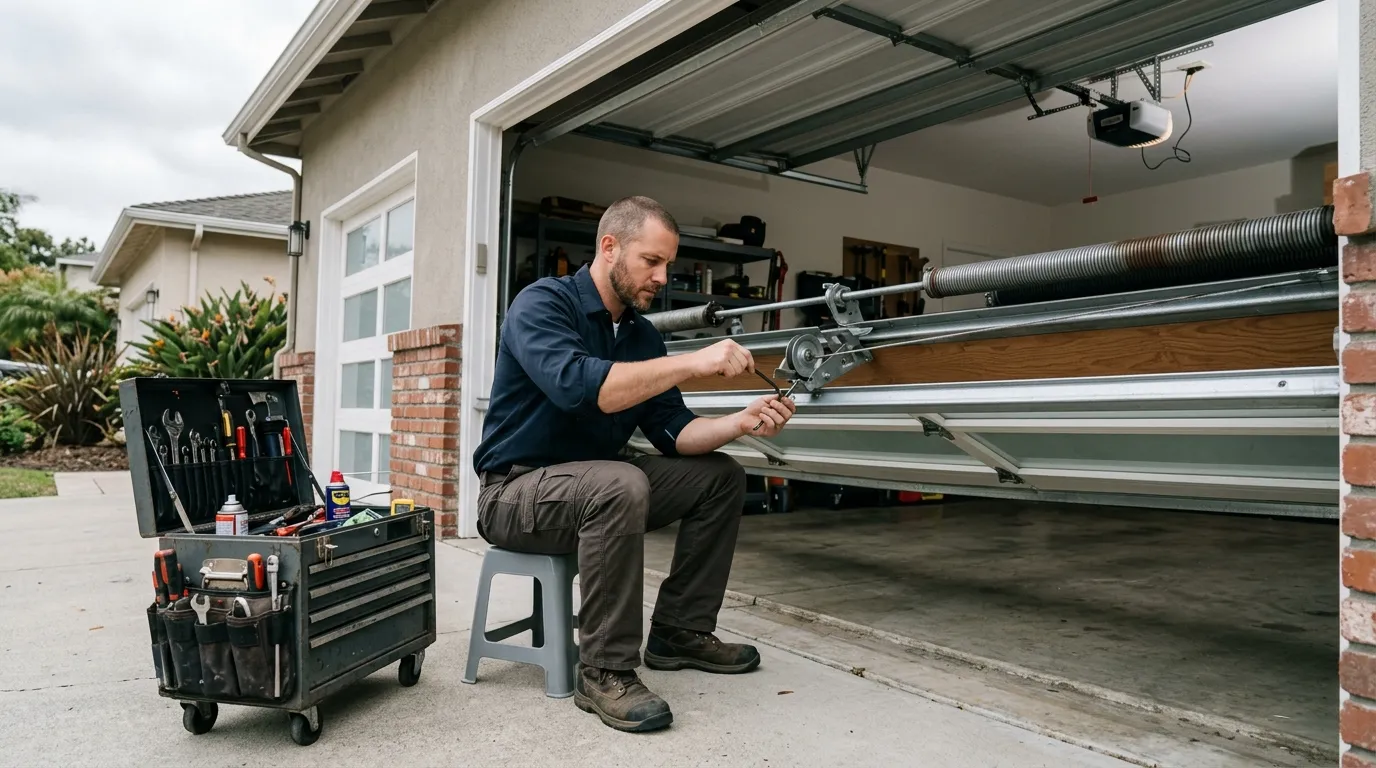
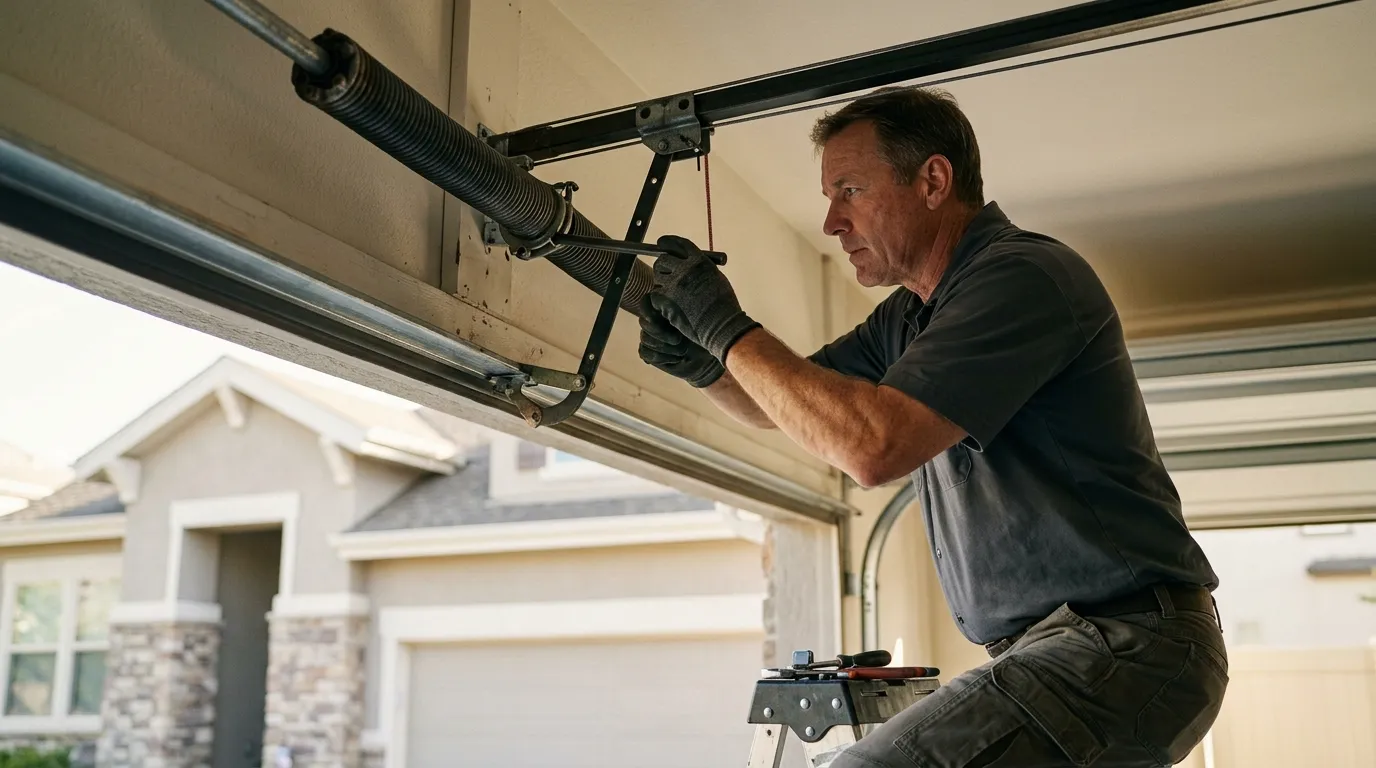
A torsion spring is wound under enough tension to break a bone or worse if it lets go while you're working on it. We don't recommend touching spring adjustment, spring replacement, or anything involving the center bracket yourself, full stop. That's not us protecting billable hours - it's the actual physics of a coiled bar under load.
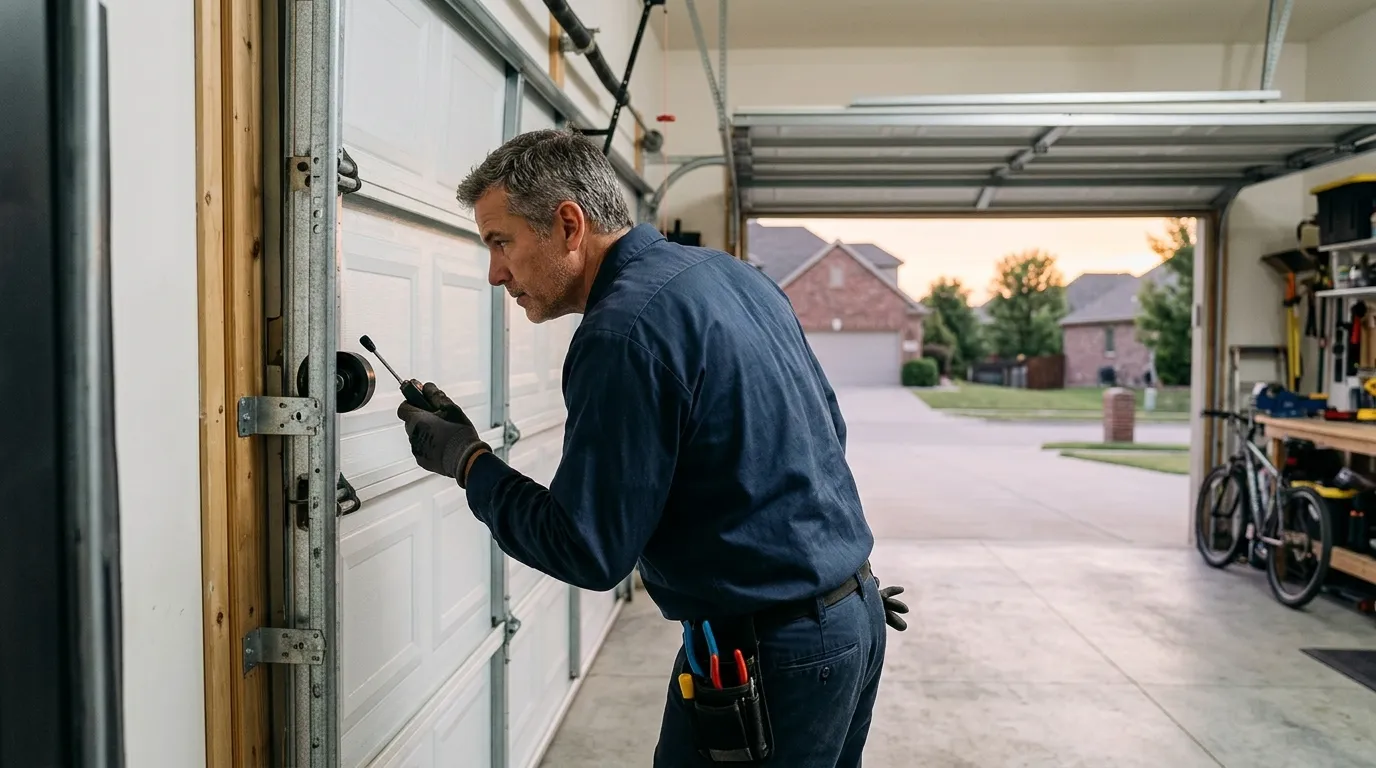
What you can safely check yourself: the photo-eye sensors near the floor on each track (a lot of "won't close" calls turn out to be a sensor knocked out of alignment or blocked by something), the manual release cord if the door is stuck down and you need it up for a car, and whether the wall button and remote are both dead or just one - that tells you if it's a transmitter battery or an opener problem before you call anyone.
Honest limitation: if your opener is more than 15 years old and the circuit board has failed, we may tell you replacement makes more sense than a repair, because board-only stock for older units isn't something we keep on the truck and lead times on a specific obsolete board can run long. We'll say that up front rather than have you wait on a part that might not be worth the wait.
What You Are Seeing
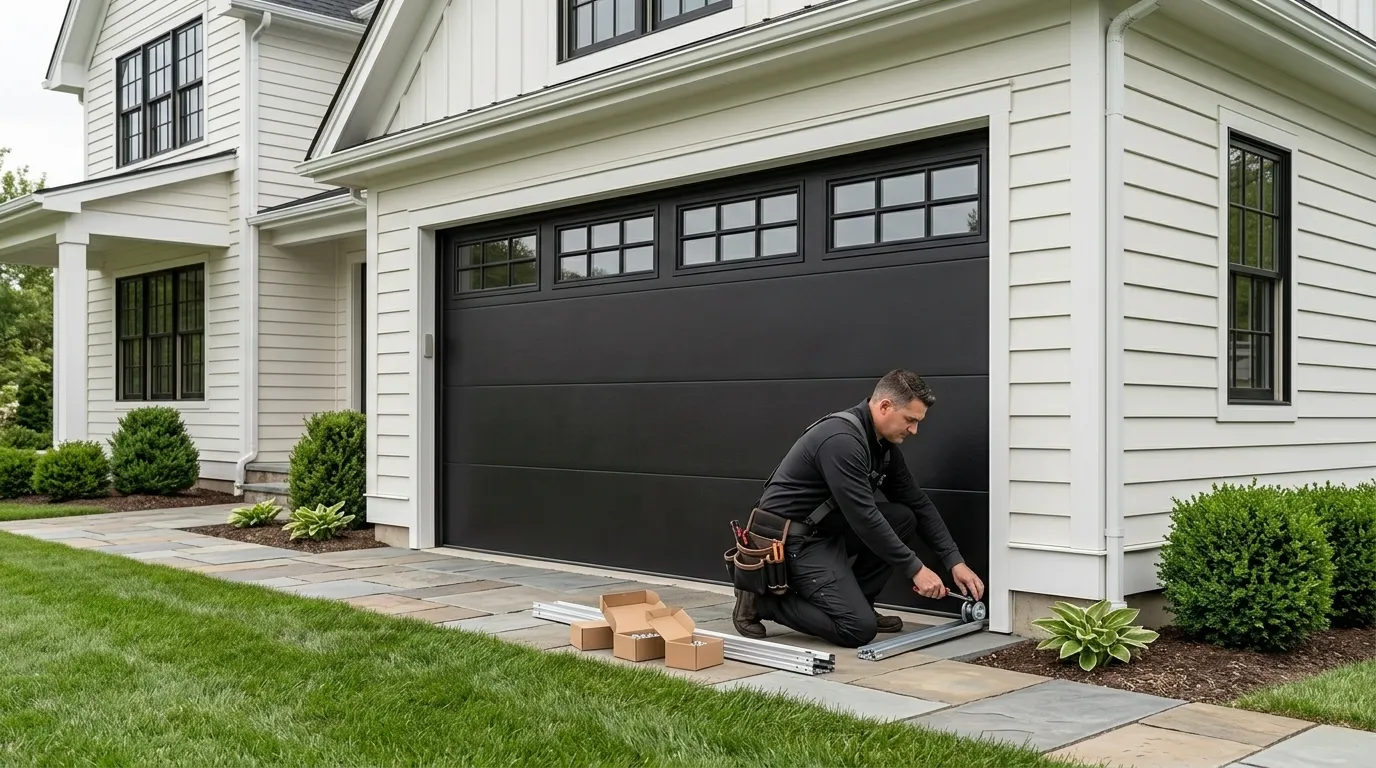
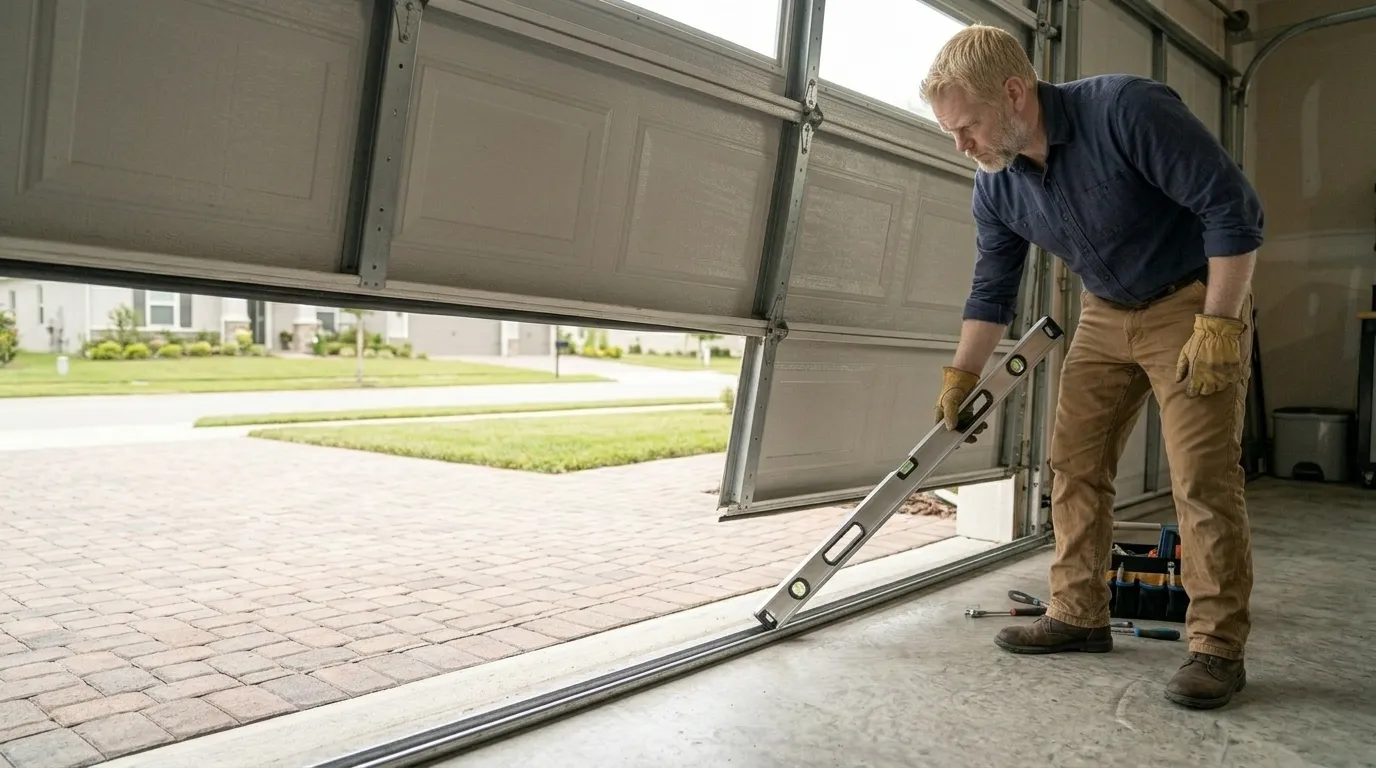
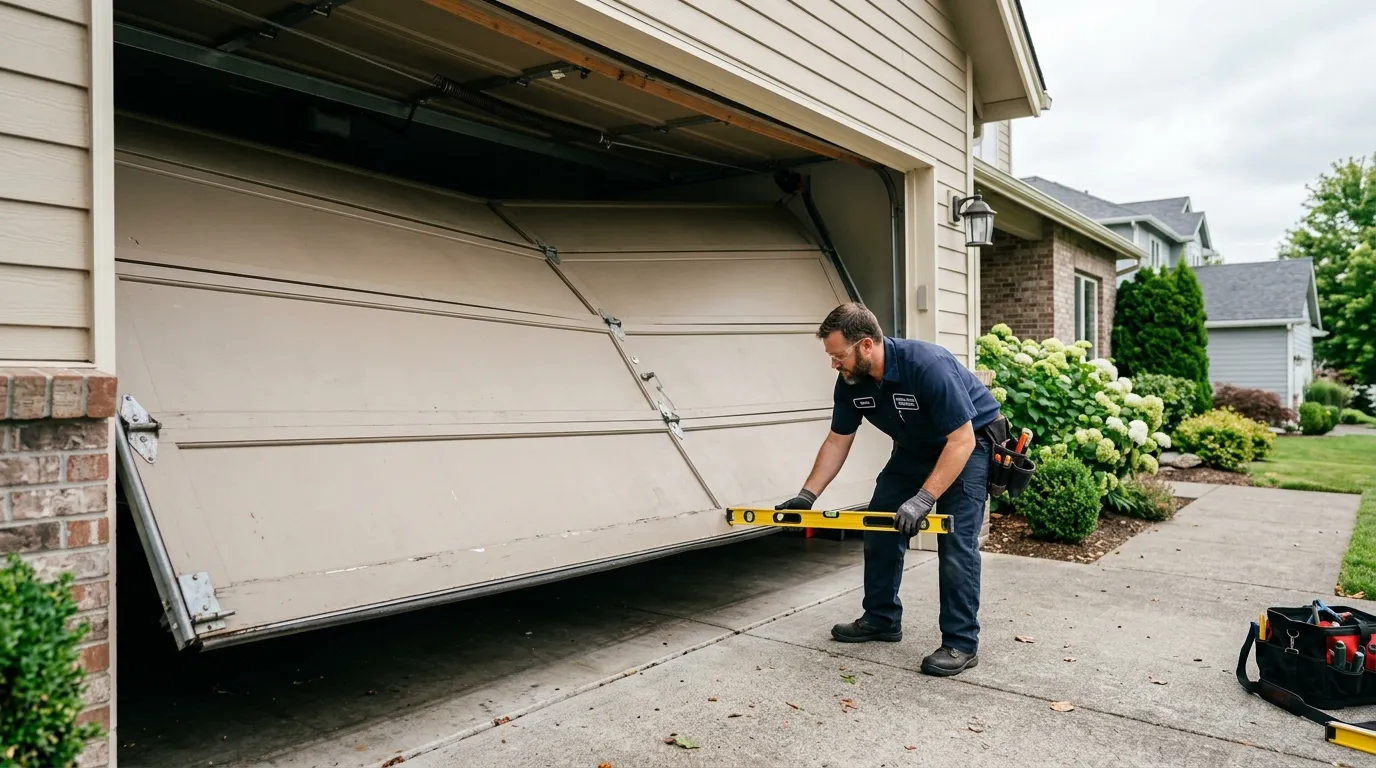
Given how much of the stock here dates to the 1960s and 70s wave, the failures we see most in Manhattan Beach cluster into a few patterns. A door that reverses right after touching the ground, or won't close at all, usually points to the photo-eye or the down-limit setting on an opener that's been recalibrated one too many times over the decades. A door that's suddenly heavy to lift by hand, or that one side visibly droops, is almost always a torsion spring that's lost tension or snapped outright on a house whose original spring is now decades old.
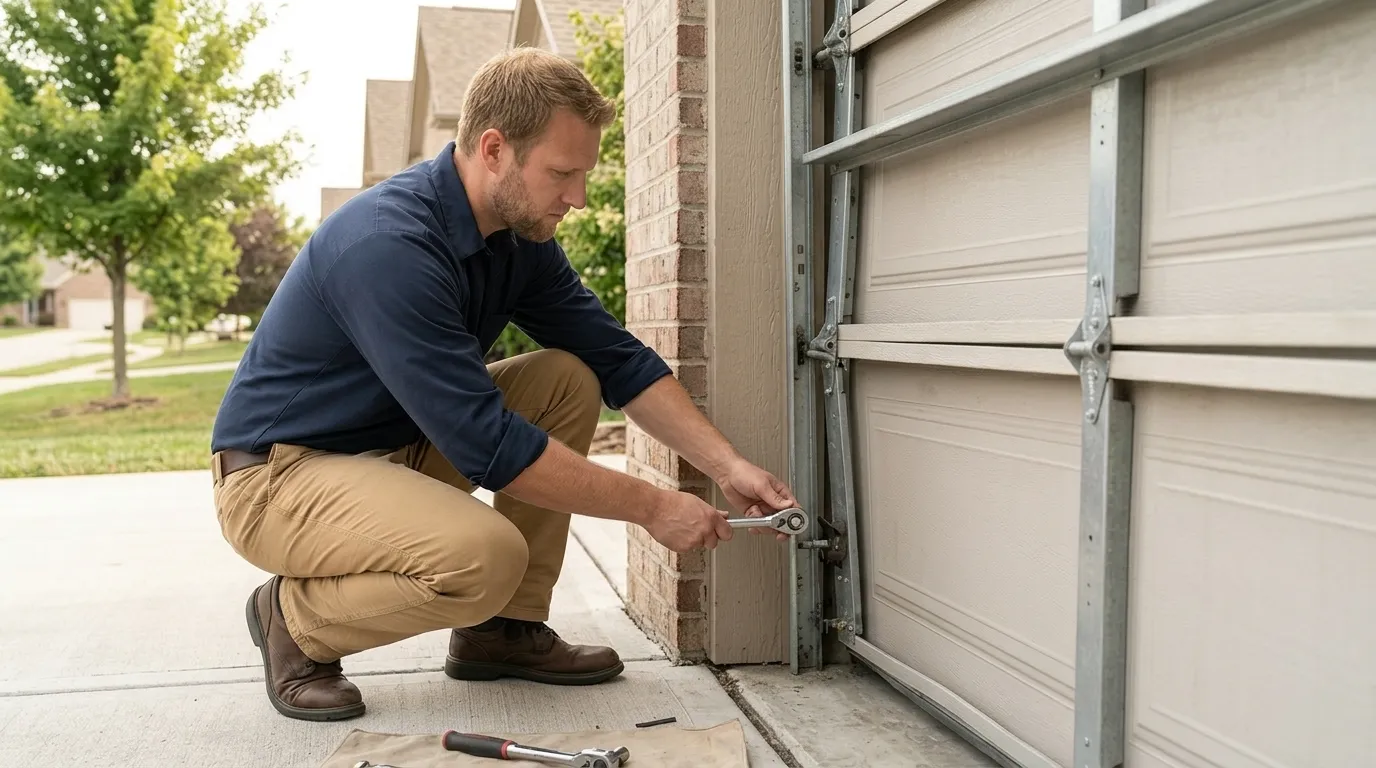
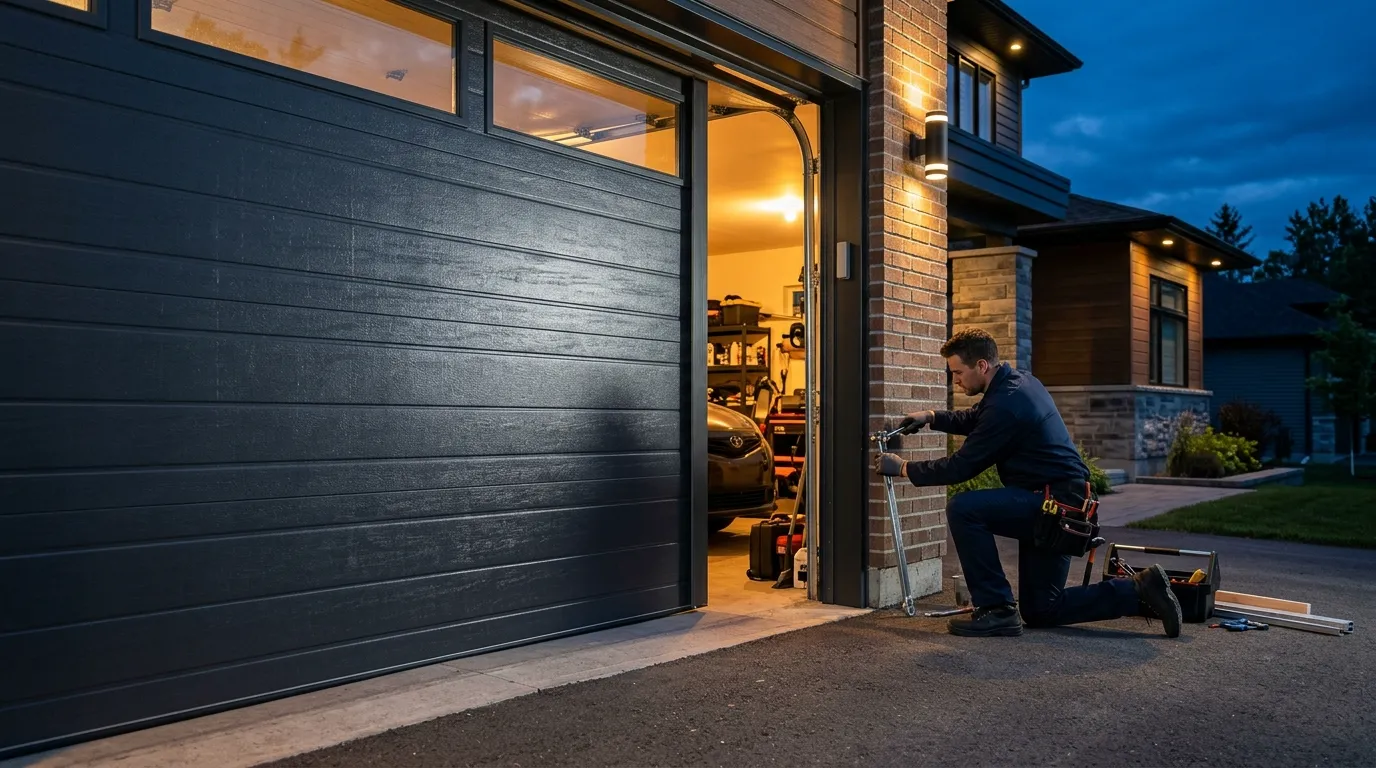
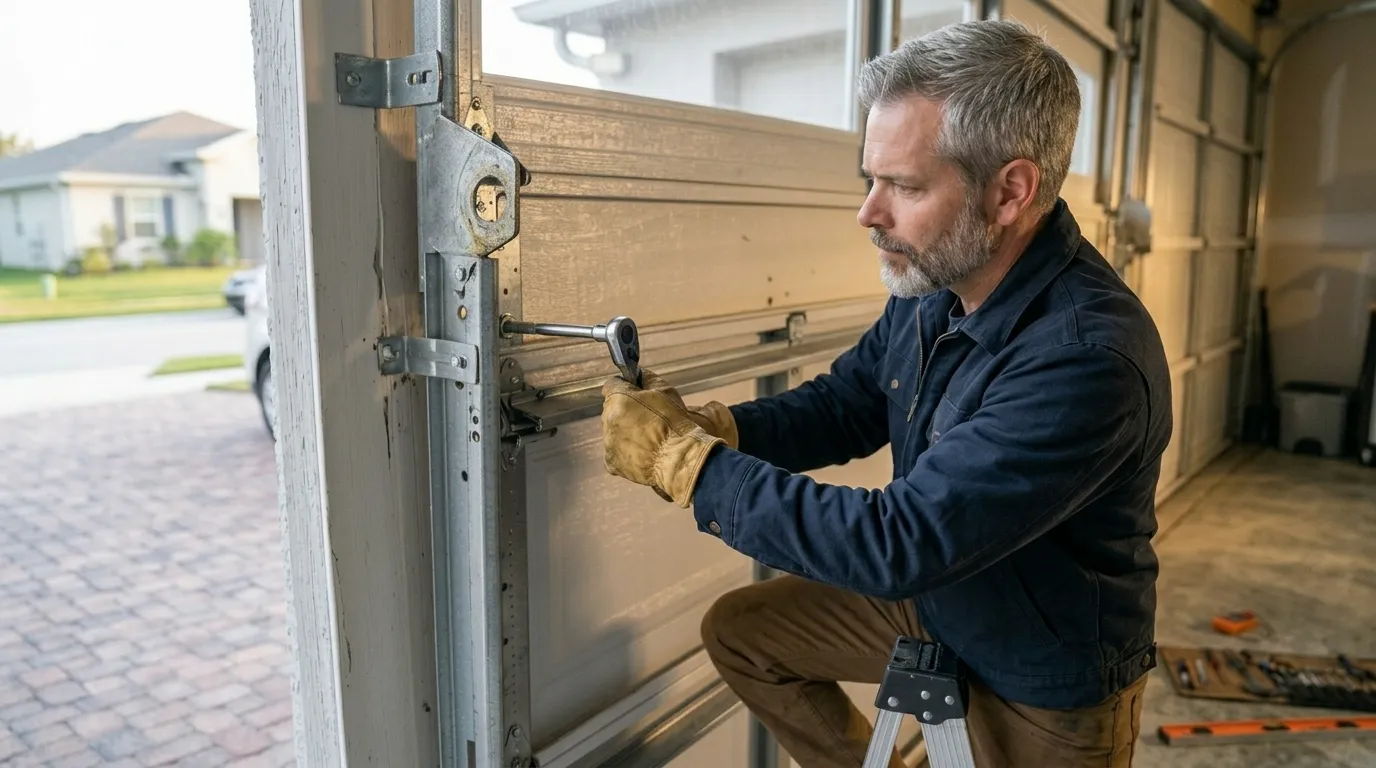
Rollers that grind or bang on the way up point to nylon rollers that have worn out their bearing - common on the older track profiles found in this area's older stock, where the roller size doesn't match what's stocked new. Frayed or visibly kinked lift cables on a double door are a same-week fix, not an emergency, but they don't get better on their own and they're the kind of thing that turns into a dropped door if you wait through another few hundred cycles.