
This Area's Housing
Artesia's houses cluster around a median build year of 1965, which puts most of the neighborhood's garages into the same narrow window: steel doors on torsion springs, hardware sized for the lighter panel sections that were standard in the mid-60s. Across the wider service area, homes span 1947 to 2012 with a median around 1963, and Artesia sits right on that older end. With 4,379 households here, there's a fair concentration of doors that are original or close to it, especially on streets that haven't seen a remodel. Median household income in Artesia runs $97,712, a bit above the broader area's $94,152, which we mention only because it tends to track with whether a household replaces a door outright versus keeps repairing the original. We see both here. A 1965 door with the factory hardware still on it isn't automatically a lost cause, but the springs and cables on a door that age are well past any reasonable service life, and a lot of the failures we get called for are exactly that: sudden cable snap, a spring that finally lets go, not a design flaw so much as sixty years catching up at once.
Older vs Newer Streets
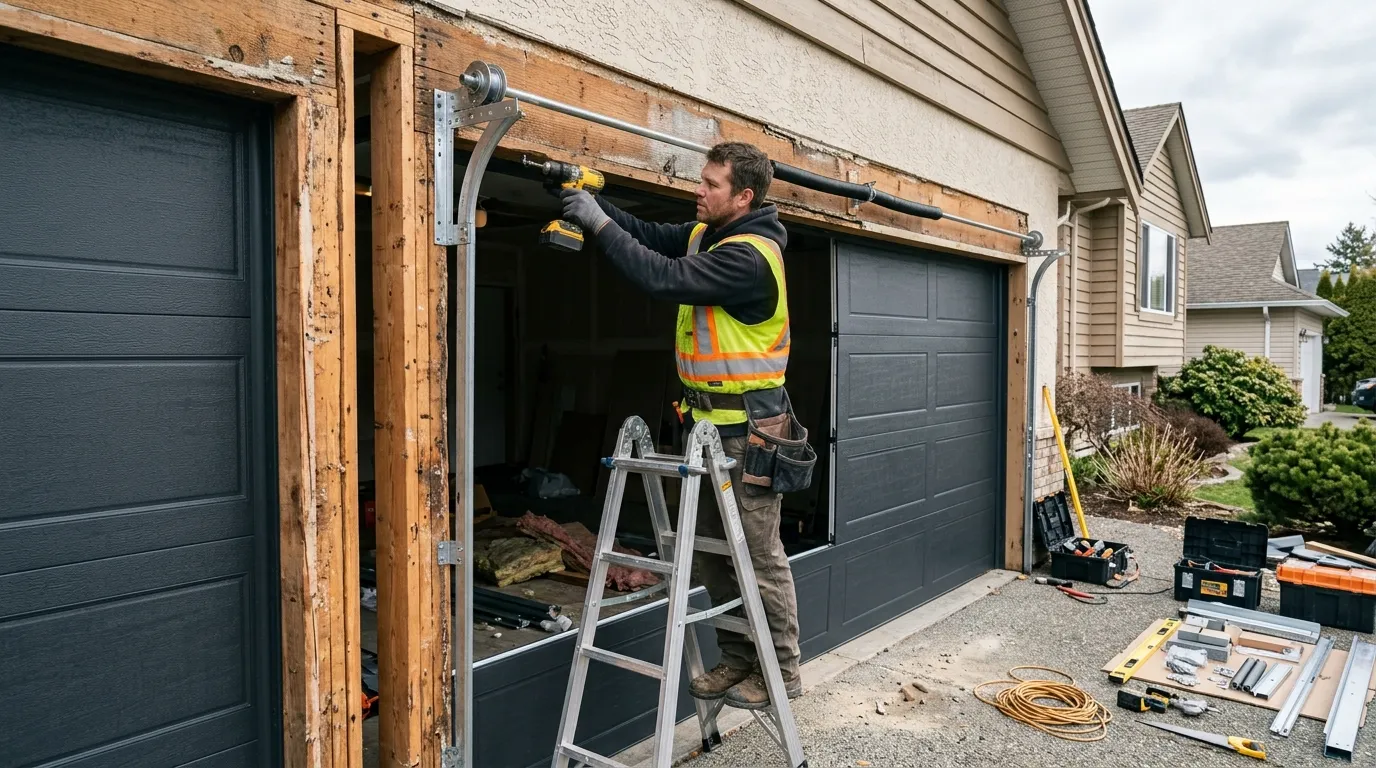
Not every block in Artesia is the same age, even with a median around 1965. Streets built earlier in that run tend to have the older-style extension spring setups mounted along the horizontal track rather than a torsion bar over the header - those are a different repair entirely, with different failure points and different parts. Later infill and any rebuilds pushed toward torsion systems, which behave more predictably but still wear out. The area sits in a mild temperate climate band, so we're not dealing with the freeze-thaw cycles that crack door bottoms or swell wood jambs in colder regions - most of what fails here fails from age and cycle count, not weather. That's a small mercy. It means a door that's been maintained can often outlast its listed service life by years, but it also means when something does go, it's usually because nobody's touched it since it was installed.
How That Shows Up in the Door
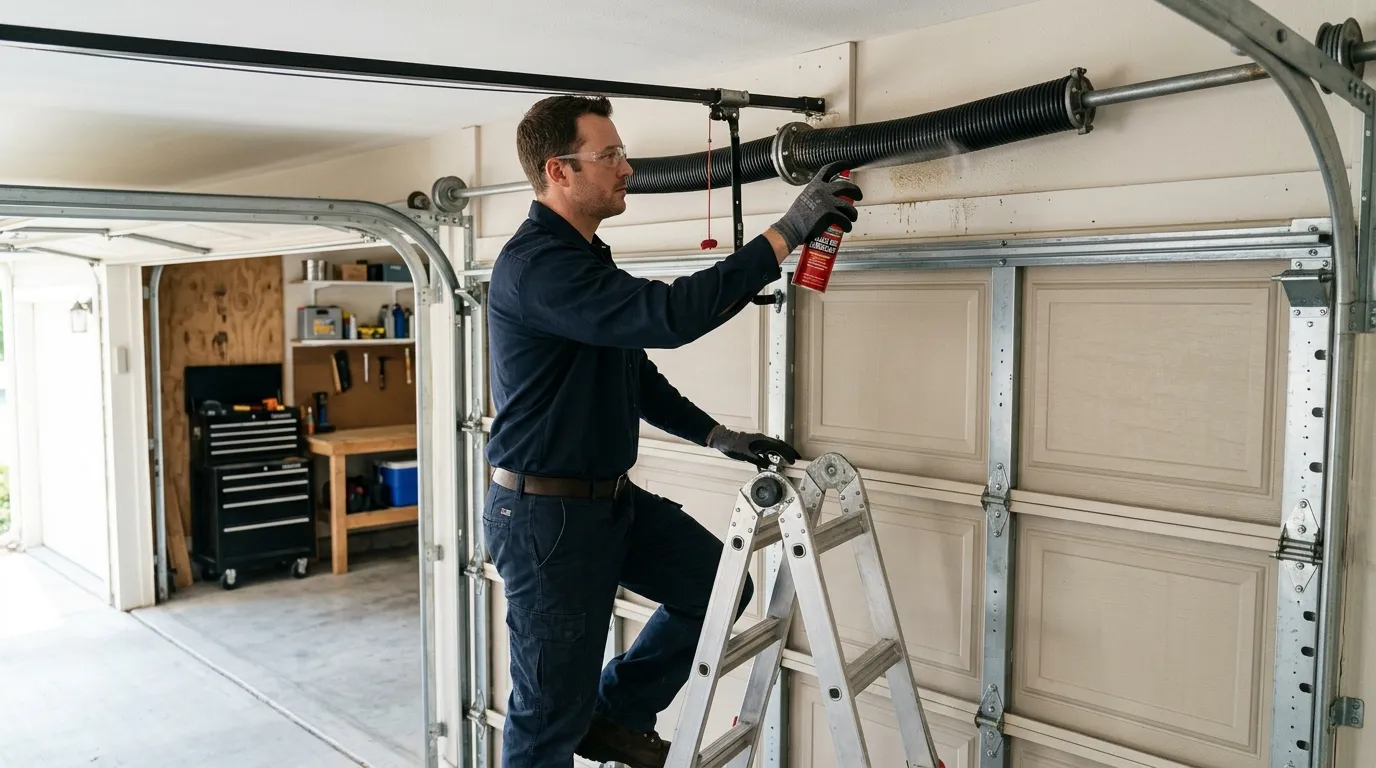
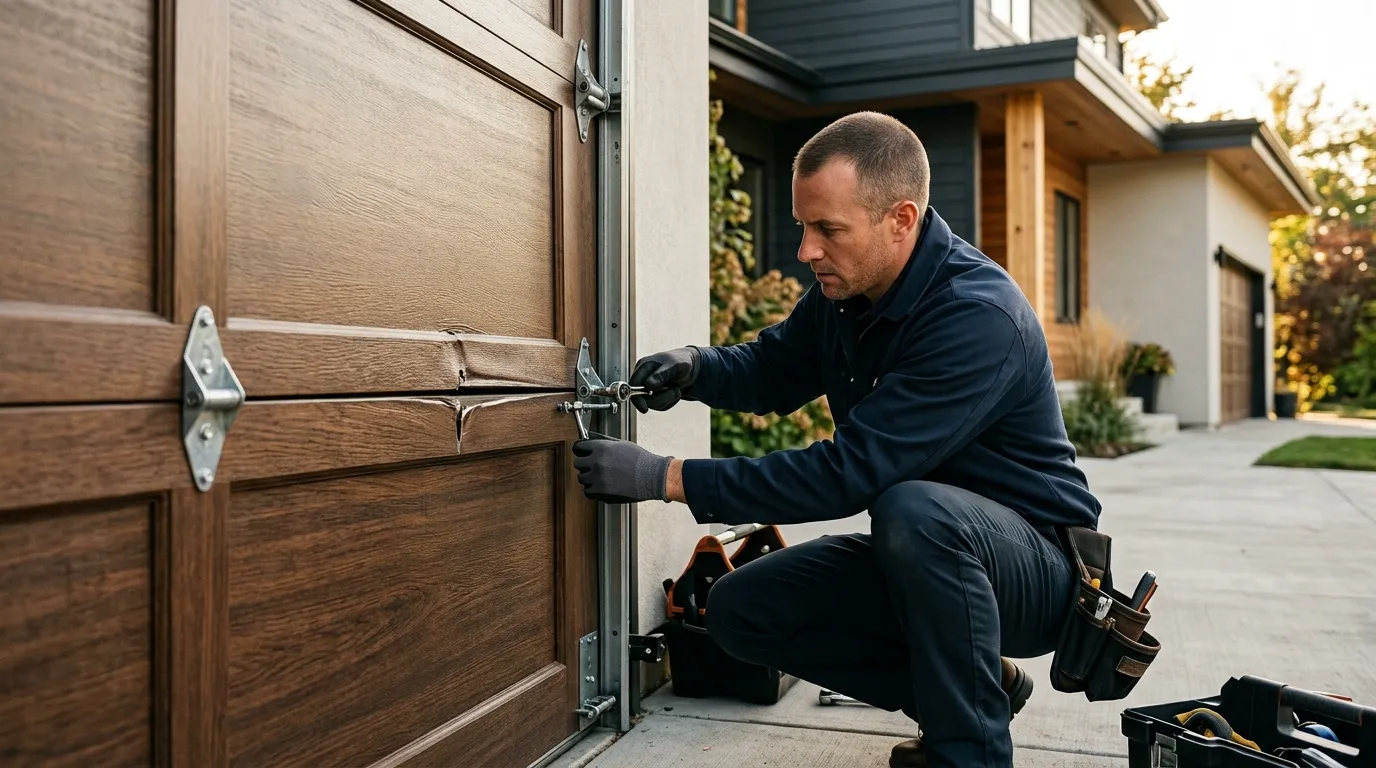
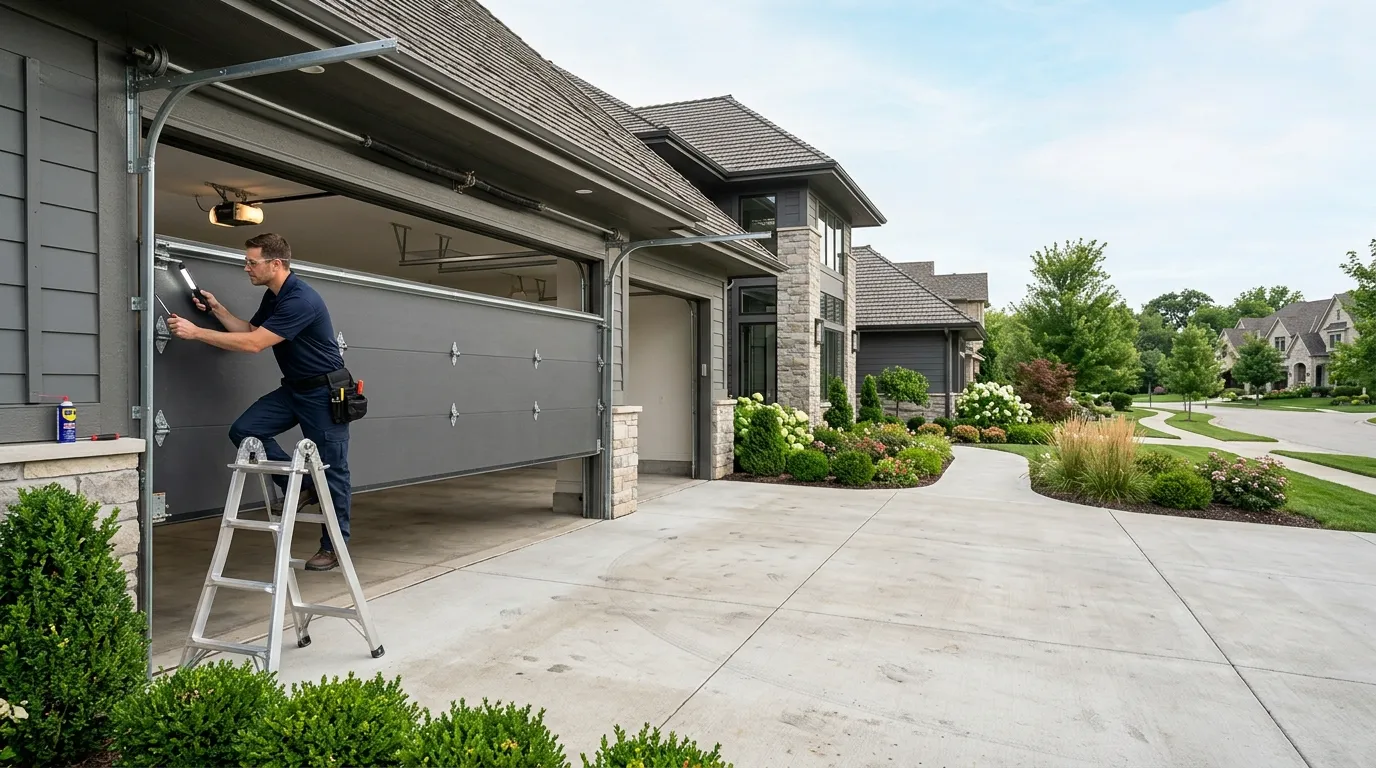
On a 1965-era door, the complaint we hear most is the door feels heavy all of a sudden, or it opens fine but won't stay up on its own. That's classic worn torsion spring, and on doors this age the springs have almost always never been replaced. Second most common: a roller that's been grinding in the track for years finally seizes, and the door binds or jumps off-track entirely. Openers on original installs, if they're original at all, are usually chain-drive units without any of the safety-reversal sensors required on newer systems, and swapping those out is often the more sensible move than trying to keep an old unit alive. We won't push a full door replacement on you if a spring swap and a roller set will do the job - but if the door itself is original steel from the 60s with rust-through at the bottom panel, patching it is a short-term fix at best, and we'll say so.