This Area's Housing
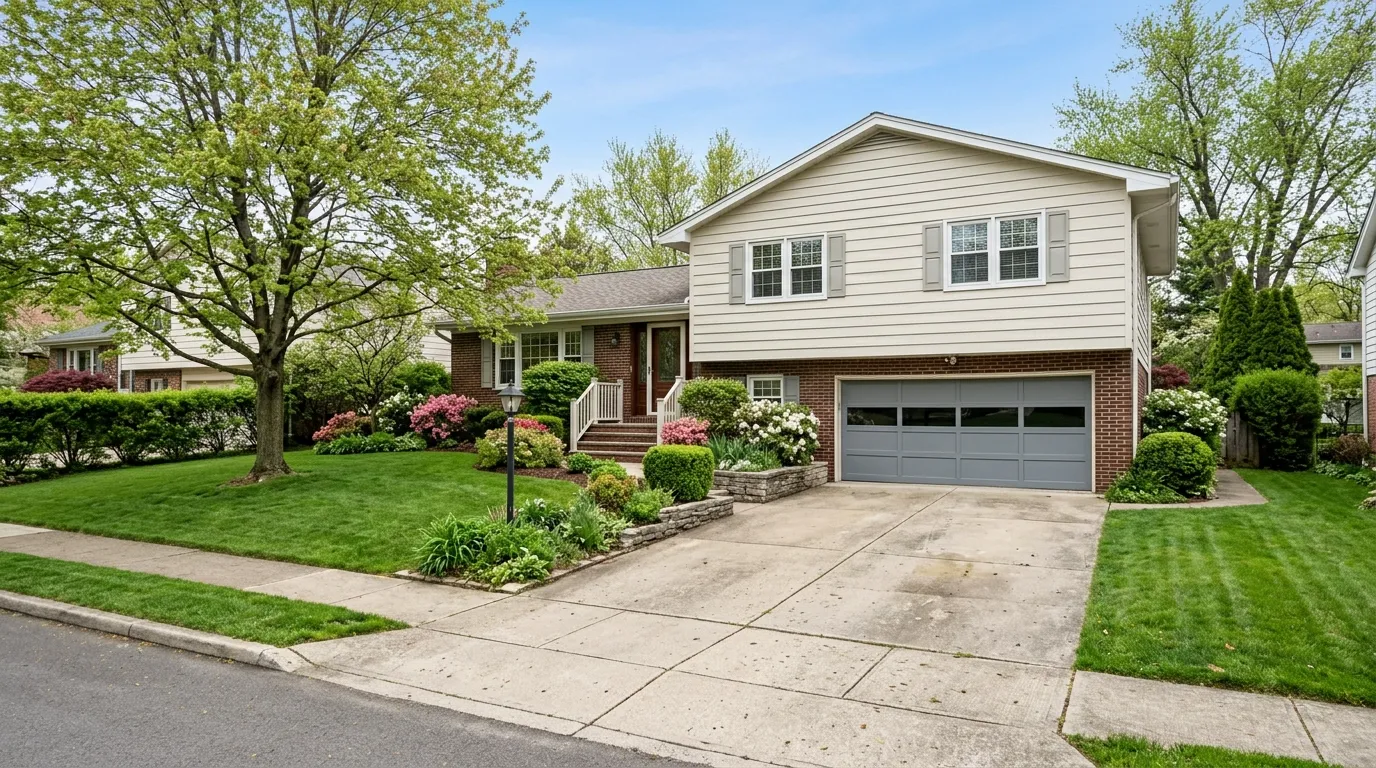
Beverly Hills sits about 12 miles from our shop in Manhattan Beach, and the housing here has its own story. The median year built runs around 1959, which puts a big share of these garage doors squarely in the same window as the wider region's older stock - homes built anywhere from 1947 up through the 2010s, with a service-area median of 1963. What that means on the ground: a lot of original garage openings were sized and framed for doors that are no longer made in the same dimensions, and a lot of the hardware bolted to those jambs has been swapped, patched, or half-replaced over sixty-plus years. With roughly 14,263 households in the area and a median household income near $127,979, we see a mix of owners doing a straight repair on an original door and owners doing a full teardown-and-replace once the springs, track, and opener all hit end of life around the same time. Neither approach is wrong. It depends on what's actually failing and whether the frame is square enough to trust with a new door.
We don't guess at this from a spreadsheet - the age of the door tells us what's likely broken before we even open the truck.
Older vs Newer Streets
Not every block in Beverly Hills is the same age, even with a median build year around 1959. Streets that went up in the late 1940s and early 50s tend to have narrower original garage openings and older torsion or extension spring setups that have been re-tensioned more than once. Streets built out through the 60s and into later decades - closer to the region's broader 1947-2012 range - are more likely to have wider double-car openings and openers that have already been replaced once or twice.
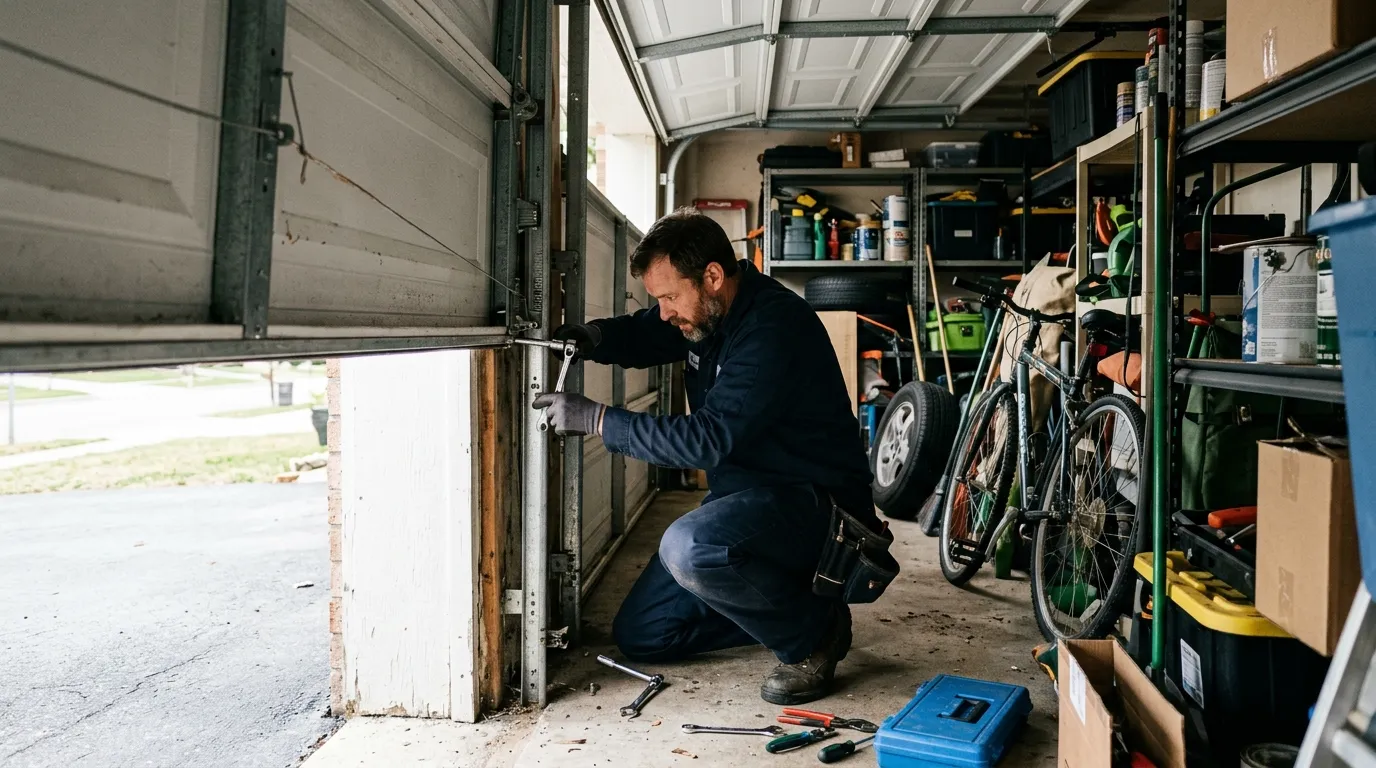
The practical difference is in what fails first. Older openings often show up as track misalignment or a spring that's been the wrong size for the door weight since some prior repair. Newer-for-the-area doors tend to fail at the opener's gears or the safety sensors before the door itself gives out. We ask the build era of the house on the phone for a reason - it changes what we expect to find, and it changes what's in the truck when we pull up.
How That Shows Up in the Door
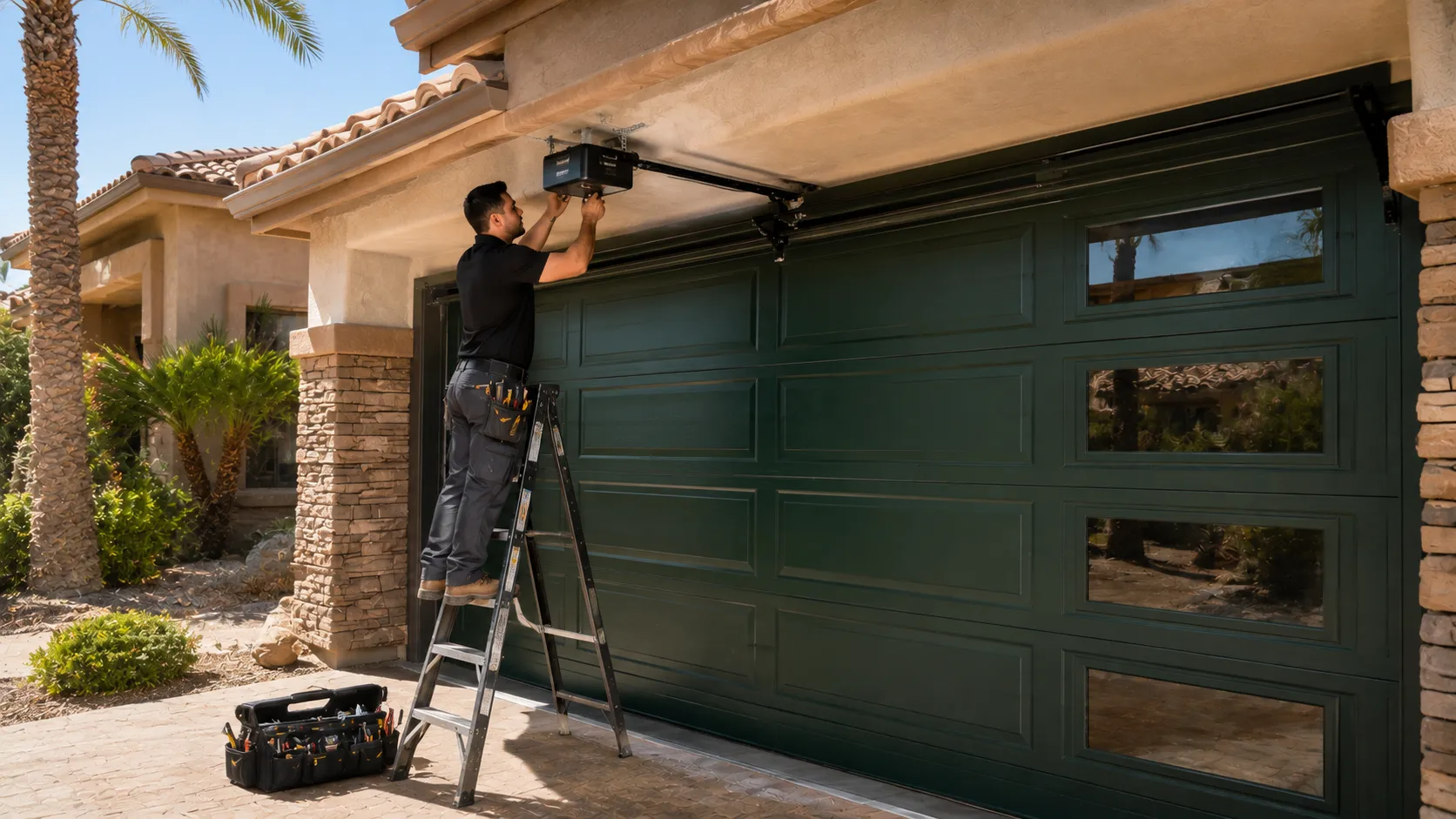
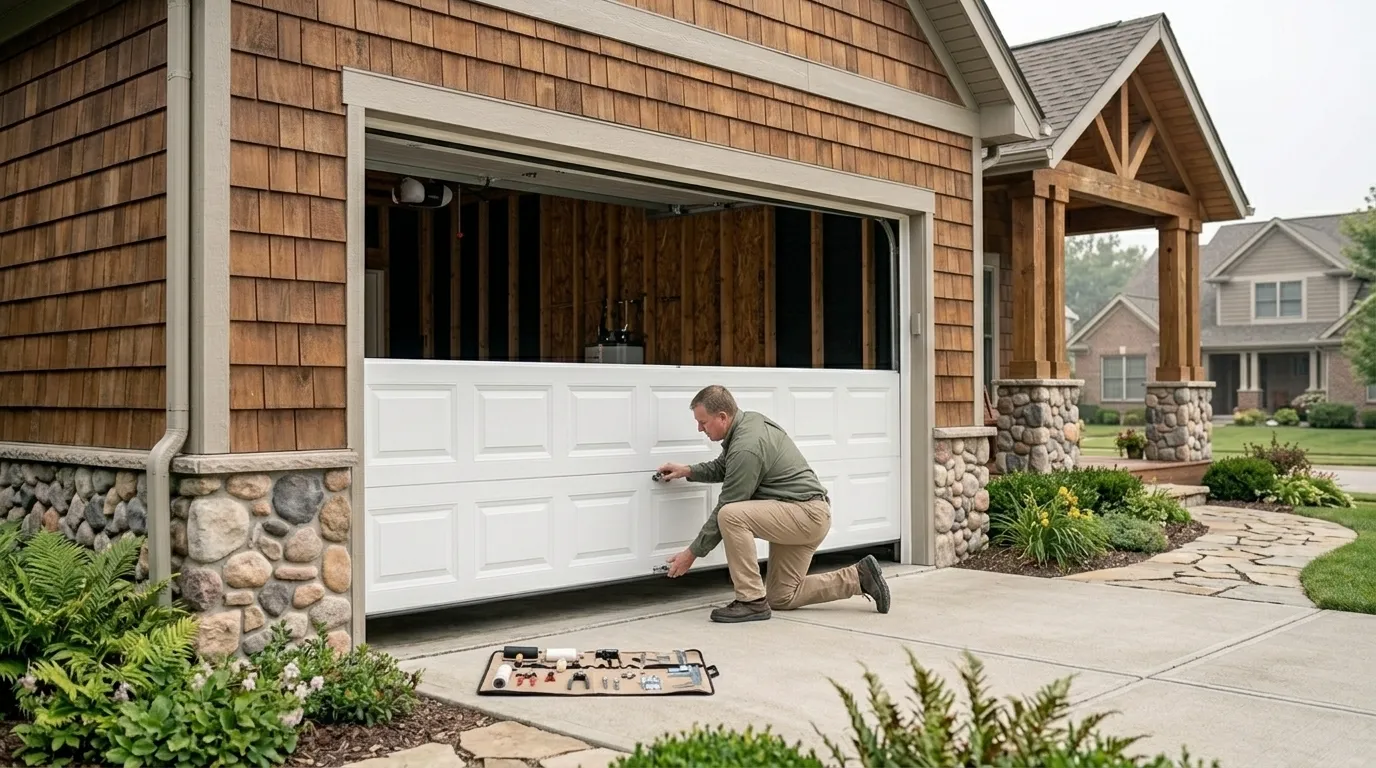
On a house from around 1959, the garage door problem is rarely the panel itself - it's the stuff you can't see from the driveway. Torsion springs on hardware that old are usually past a reasonable service life even if they haven't snapped yet, and the drums or cables around them have often been mismatched during an earlier quick fix. We check that combination first on any older-stock call in this area.
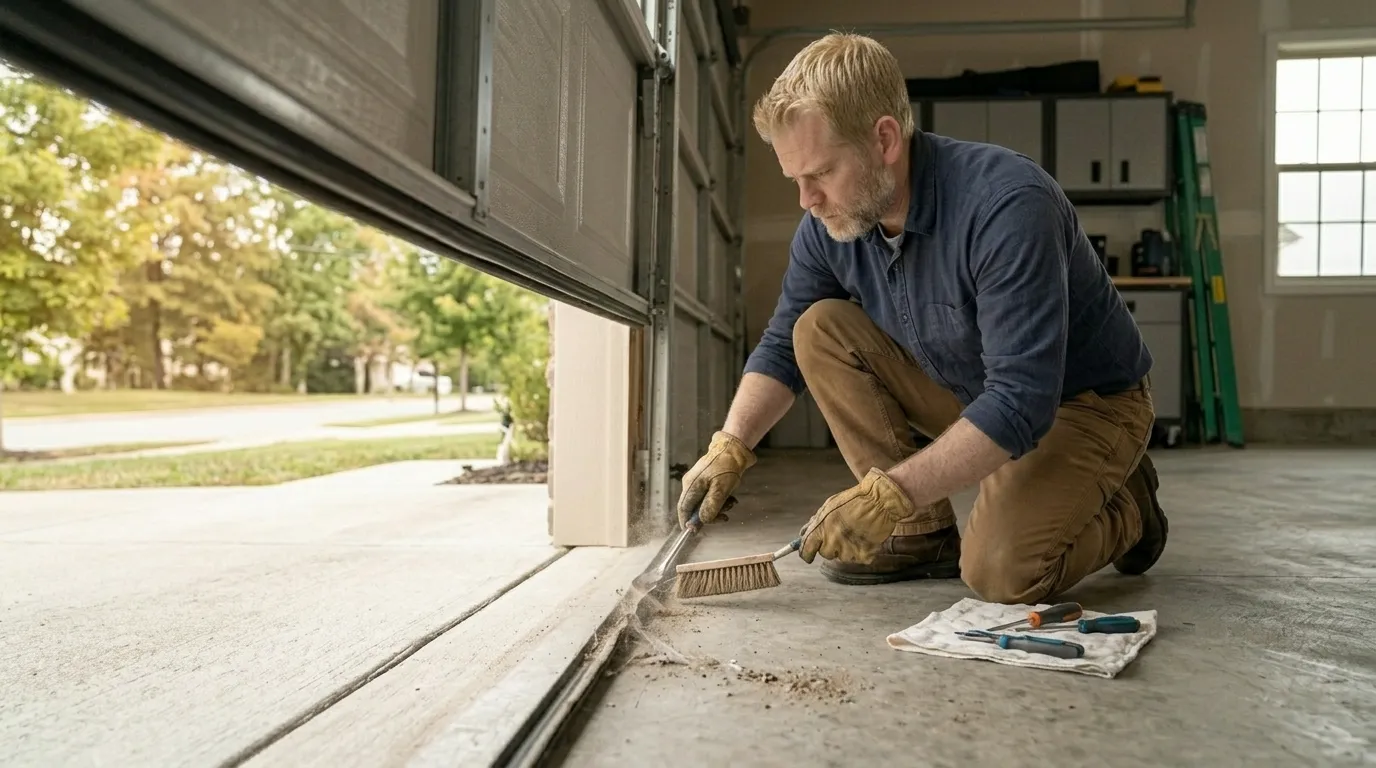
On the region's mild temperate climate, we don't deal with the freeze-thaw cracking or heavy weatherstripping failure you'd get somewhere with real winters - that's one thing working in this area's favor. What we do see more of is UV and heat cycling on original wood or early steel panels that have never been refinished, and opener motors that have quietly slowed down for years before they finally quit. If a door is original to a 1959-era house and the spring, cables, and opener are all near end of life at once, replacement usually costs less over time than three separate repair calls - that's a case where fixing it piece by piece isn't the better deal.