Checking It Yourself
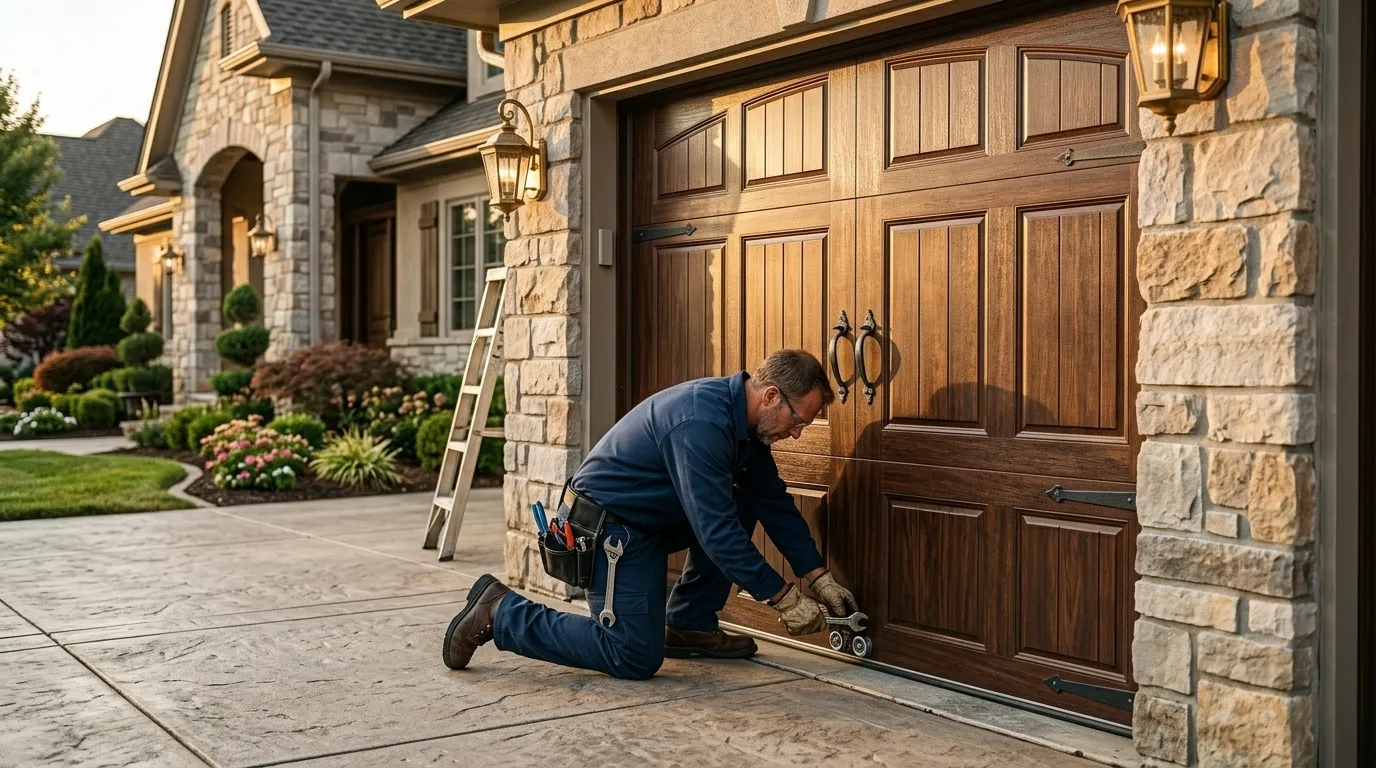
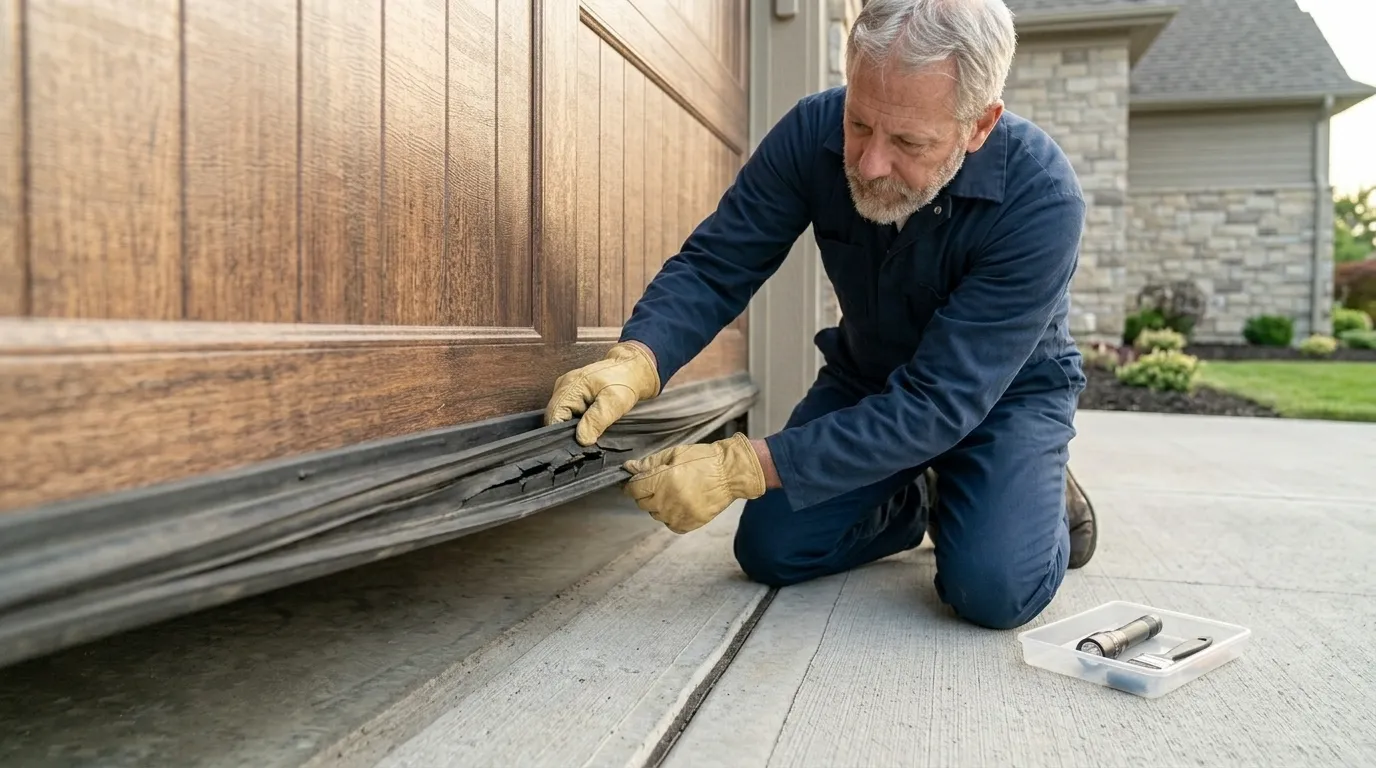
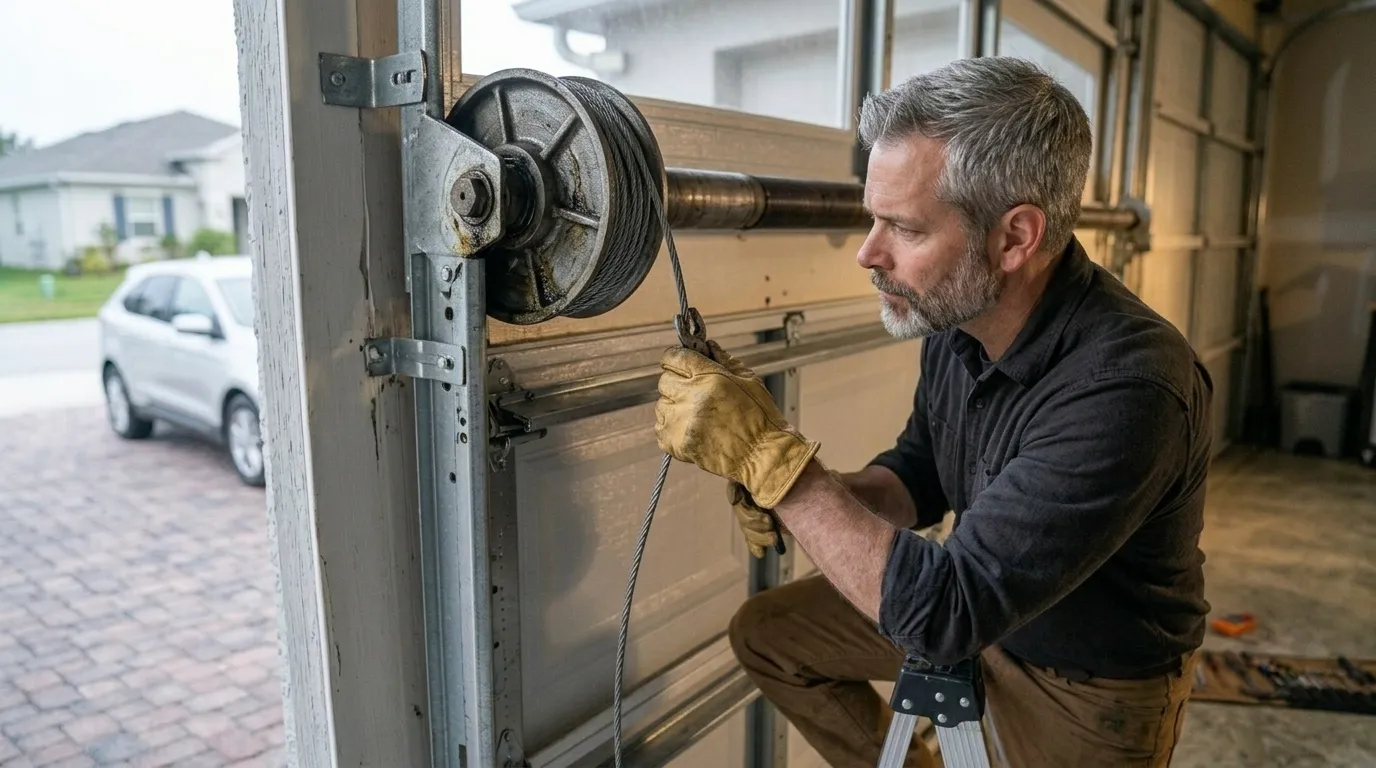
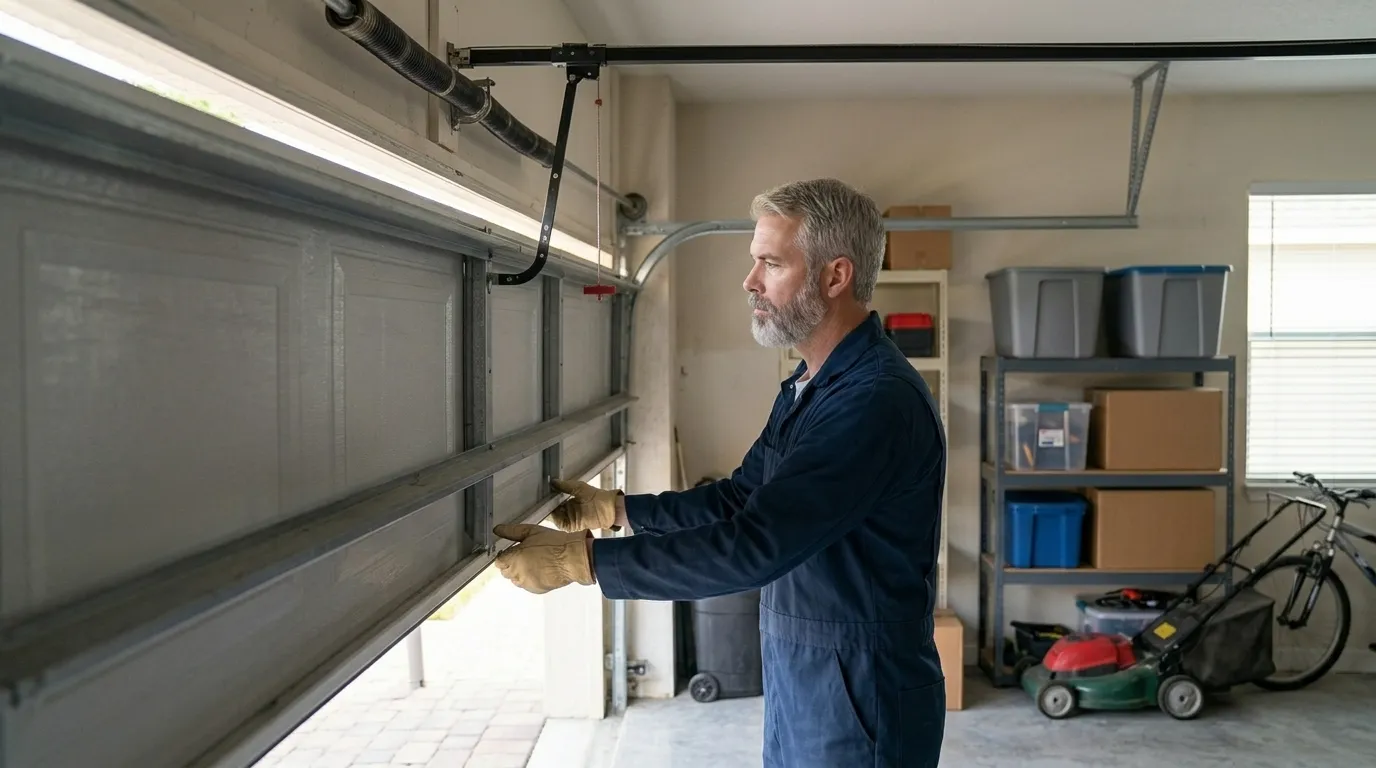
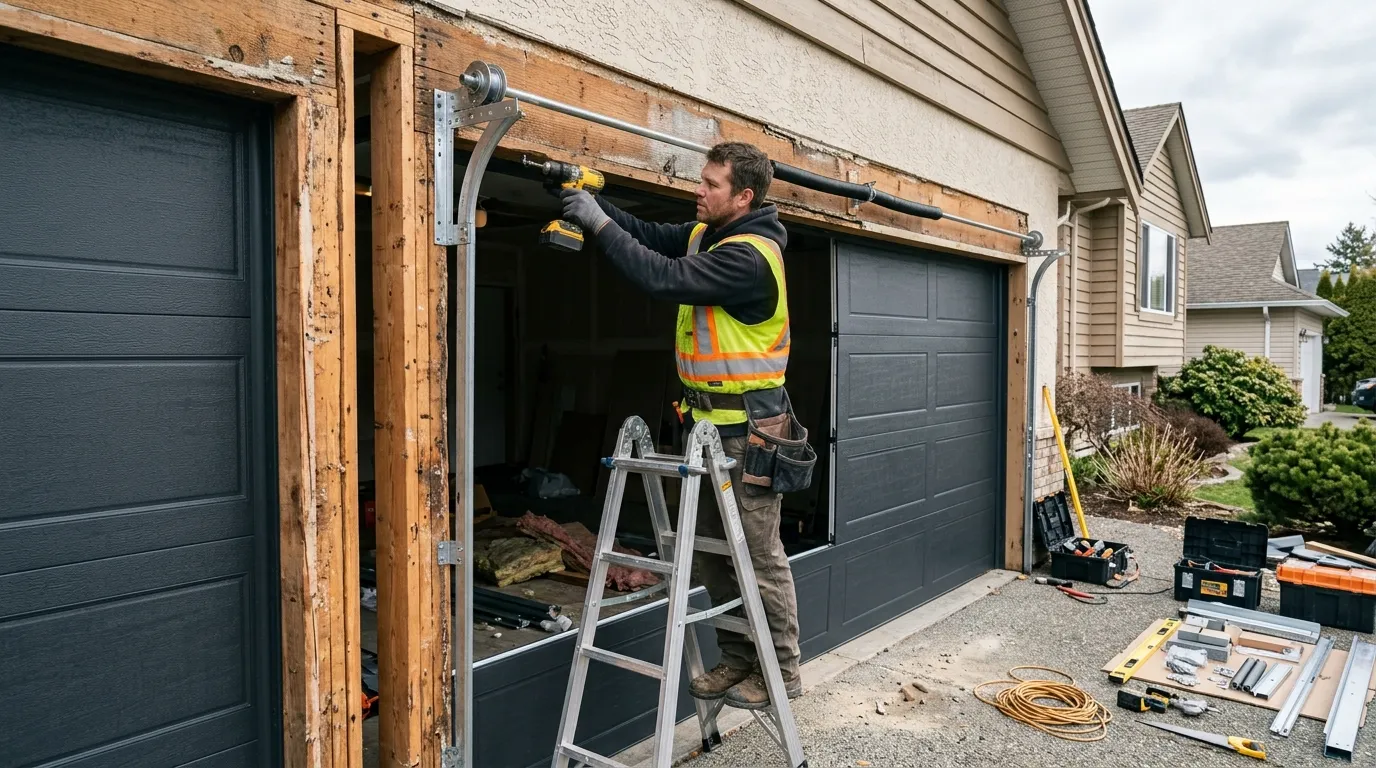
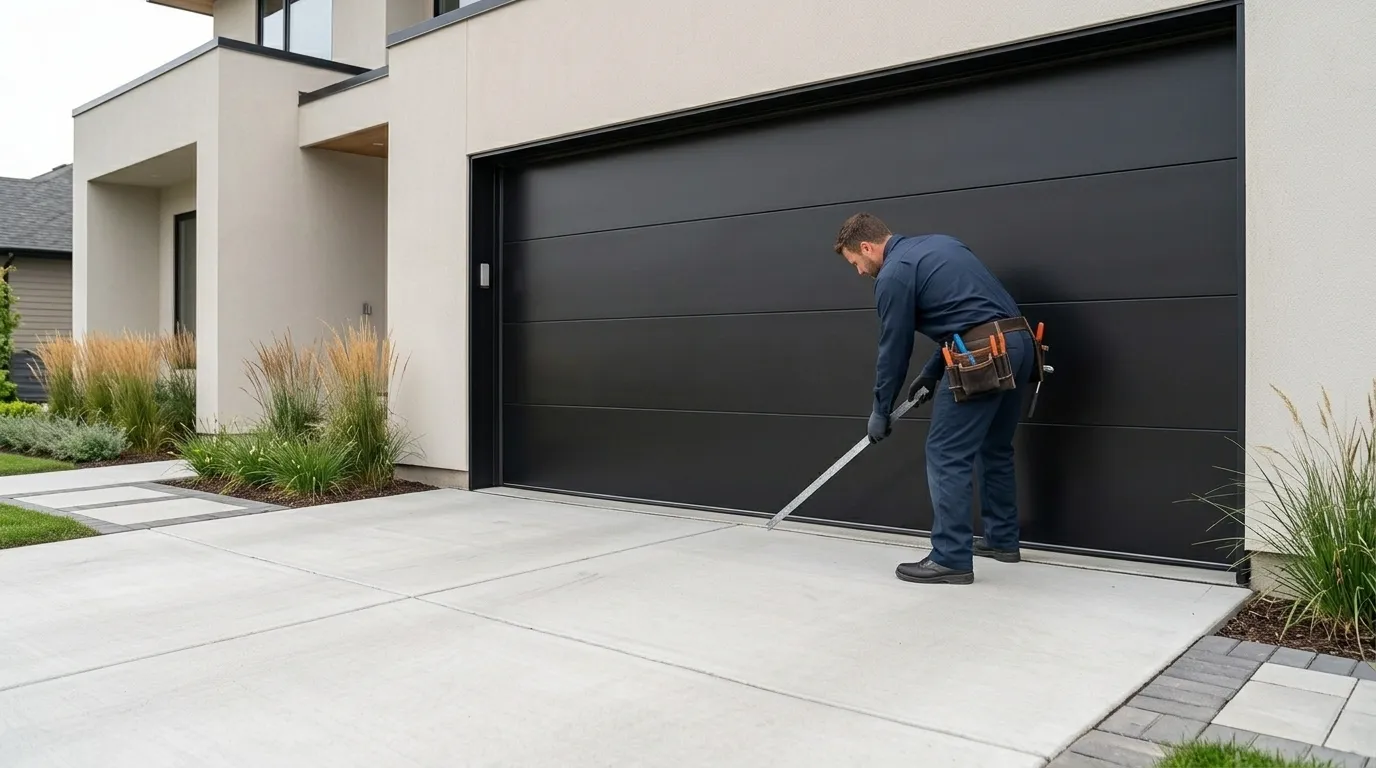
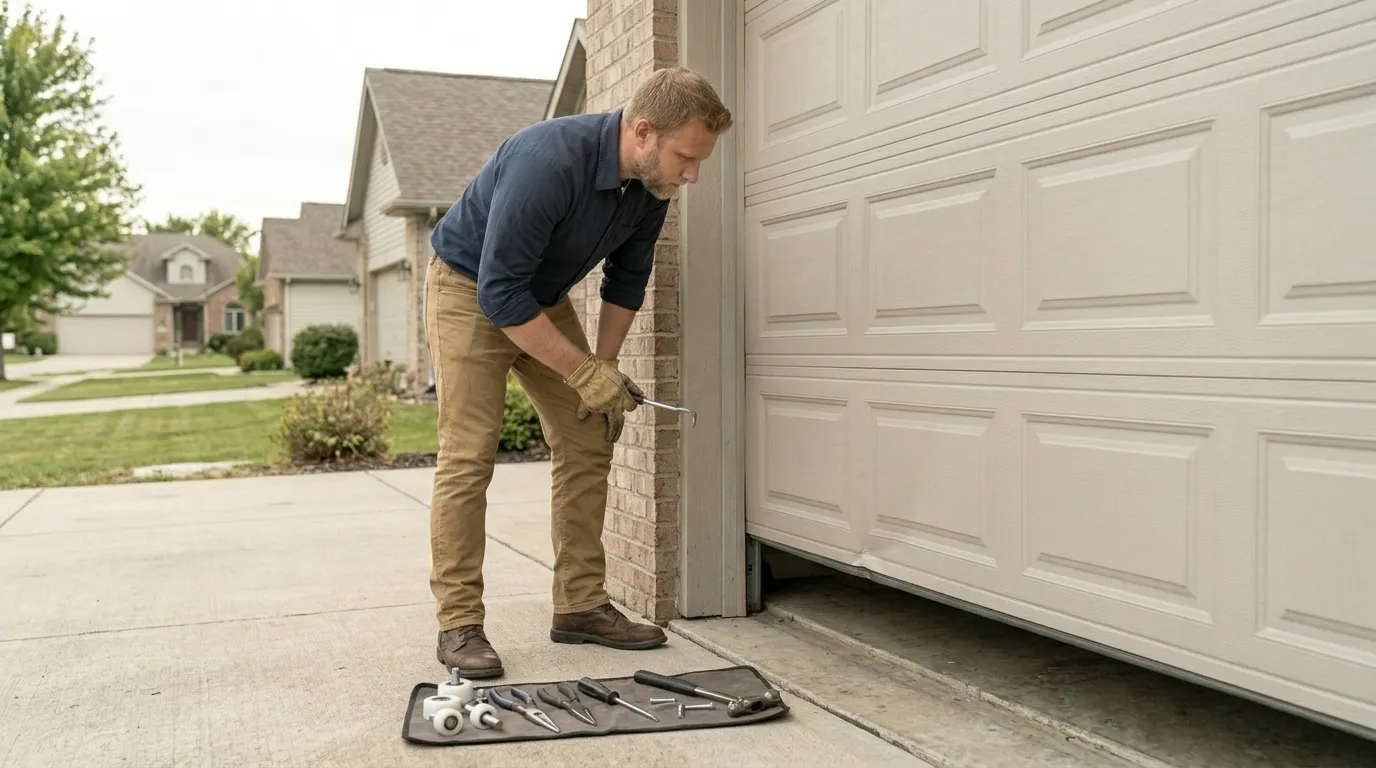
Most of the housing stock around here went up between 1947 and 2012, with the median landing around 1963, so a lot of the doors we get called on are original or close to it. Start by pulling the manual release and lifting the door by hand halfway up. If it stays put on its own, the springs are still doing their job. If it drops or wants to slam down, the spring has lost tension or broken, and that's a repair, not a DIY fix. Look at the track for rust bloom at the rollers and check the bottom panel for water staining near the seal. On a door from the 1960s or 70s stock that's common across this part of town, the panels themselves are usually steel and hold up fine even when the hardware underneath doesn't. One honest note: if the door is original to a 1960s build and the track is bent or the drum is pitted, we're not going to tell you a five-minute adjustment will fix it. Sometimes the right call is a new opener and hardware set on the old panel rather than chasing worn parts that nobody stocks in that gauge anymore.
The Seasonal Bit
This area sits in a mild temperate band, so we don't get the freeze-thaw cycles that crack panels or seize springs the way colder climates do. That's good news for an older door: metal doesn't contract and expand hard enough here to shorten spring life the way it does inland or up north. What does show up locally is salt air working on exposed hardware, especially on doors closer to the coast side of town, where you'll see surface rust on hinges and track bolts well before the door itself has any real wear. If your door is from the older stock and the hardware looks chalky or orange at the fasteners, that's a maintenance visit, not a sign the whole unit needs replacing.
How Local Conditions Play In
With a median household income around $94,152 across the service area, a lot of owners here are weighing a repair against a full replacement on a door that's otherwise structurally sound, and for a lot of these 1960s and 70s builds, repair wins. The housing stock spans 1947 through 2012, so we see everything from original doors to units already replaced once, and the calculation is different for each. An original door on a 1960s house usually has good bones and just needs the spring, cables, and rollers brought up to date. A door already replaced once in the 1990s or 2000s is closer to the end of its practical life and a second repair may not be worth it. We work across this side of the county, from El Segundo a mile out to Playa del Rey to the north and as far as Palos Verdes Estates, and the door age question comes up the same way in each of those pockets: it's rarely the panel that's failed, it's the hardware around it.