Checking It Yourself
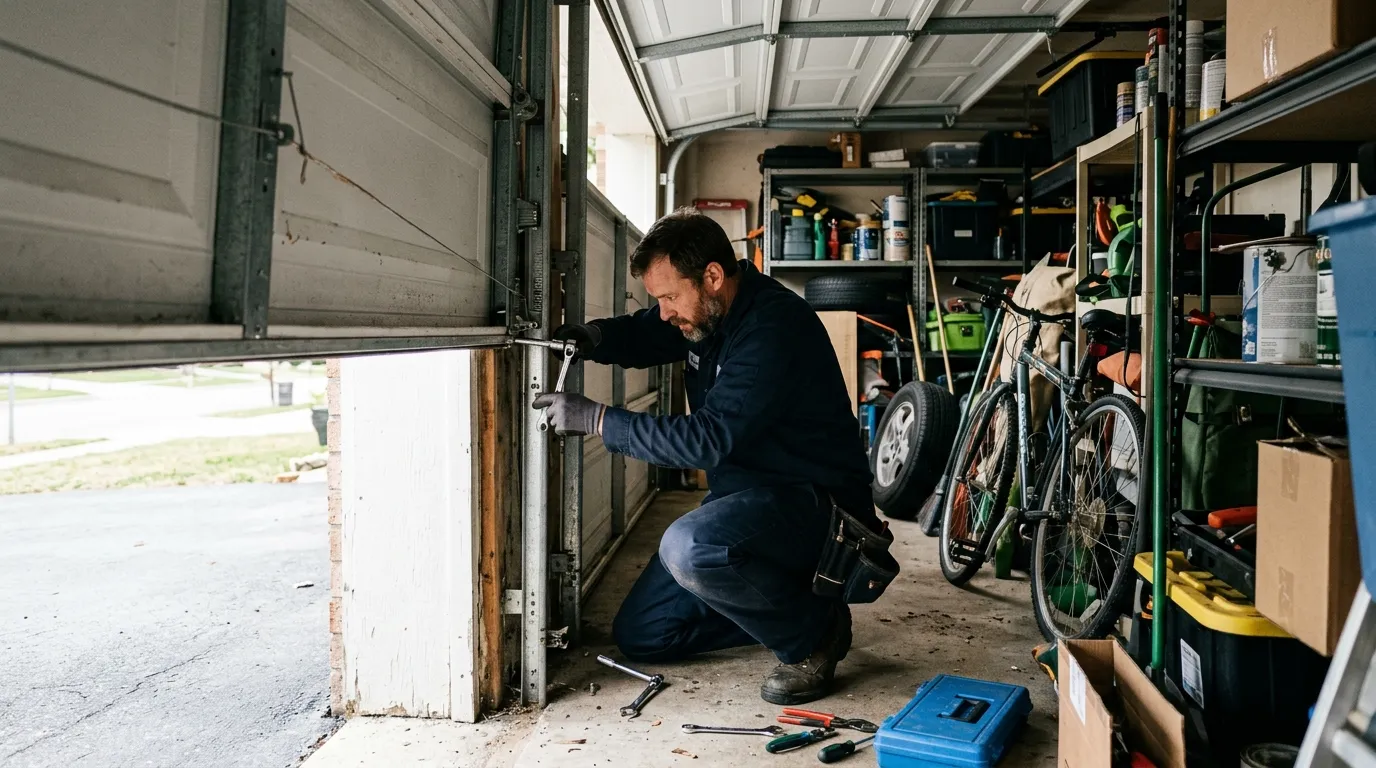
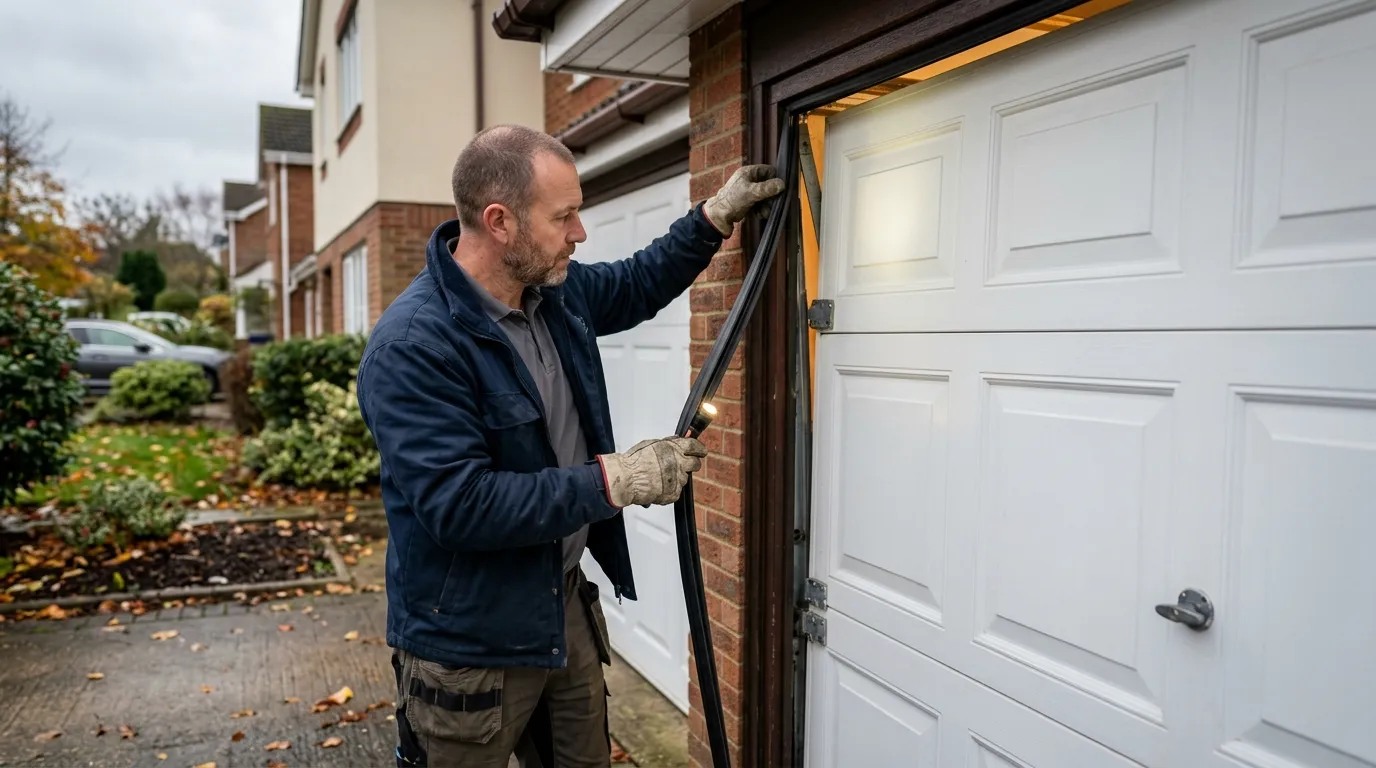
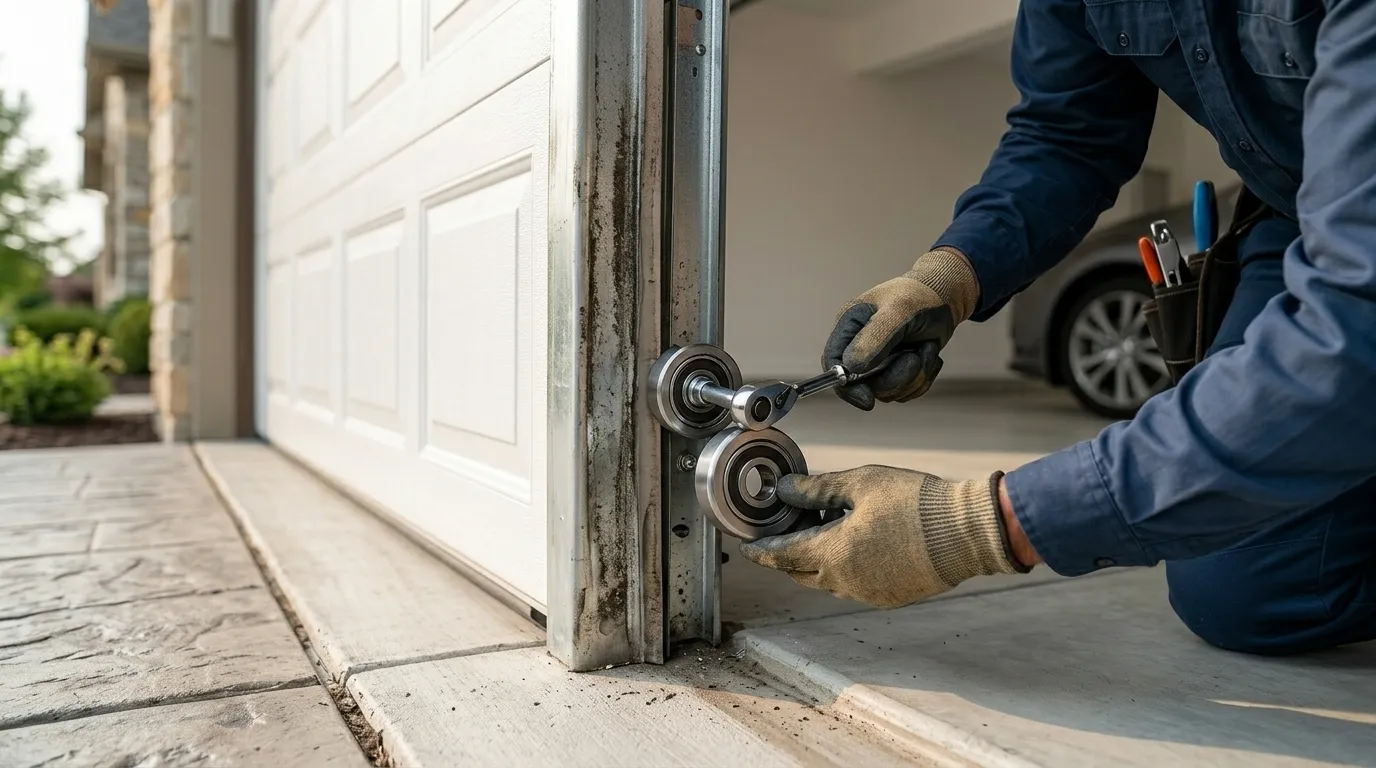
Before you call, look at three things. Pull the release cord and lift the door by hand - if it feels heavier on one side or won't stay up around waist height, a spring is losing tension. Look at the tracks for gaps where the rollers ride; on houses built in the 1960s and 70s, which make up most of the stock across the 24 areas we cover, those tracks are often the original steel and have never been re-aligned. Third, listen. A door that grinds or bangs on the way down usually means a roller has gone flat or a hinge has worked loose, not that the opener is failing.
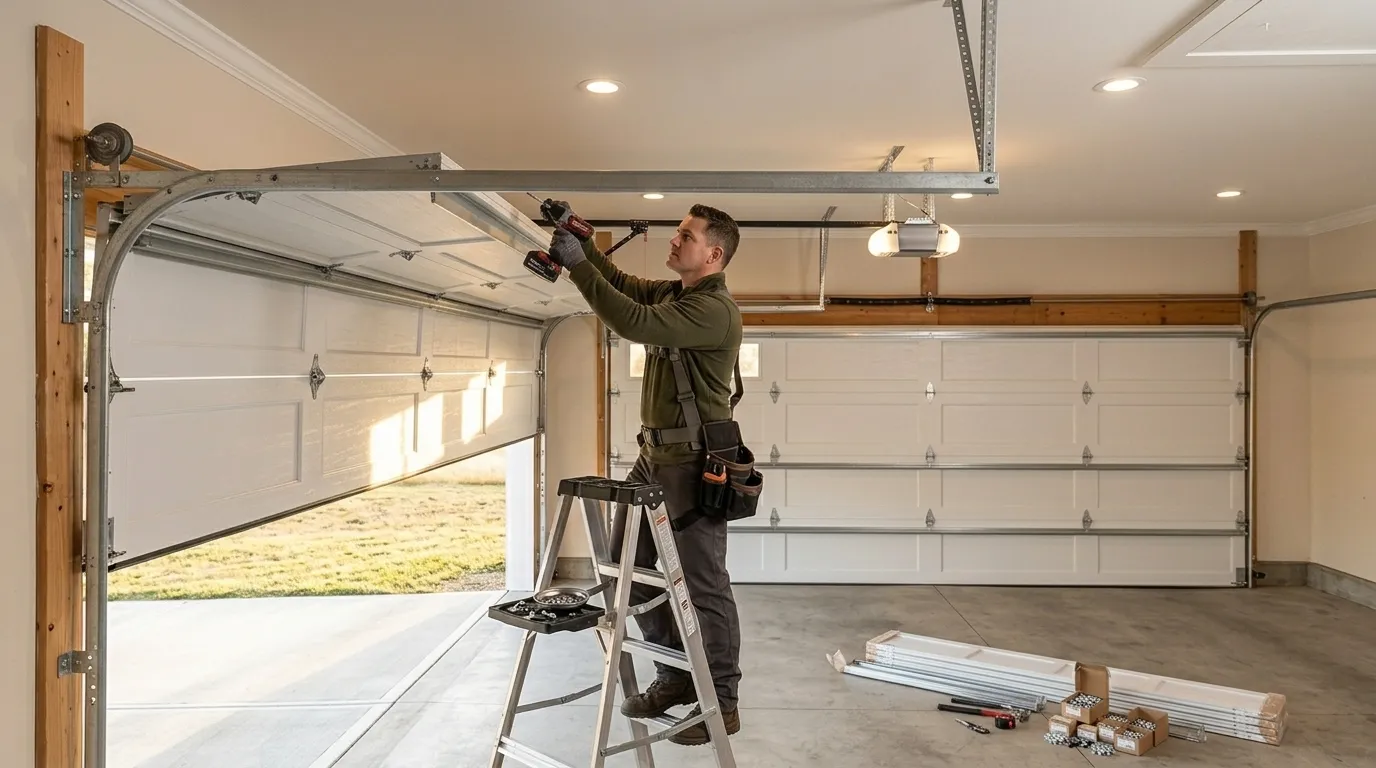
What you shouldn't do yourself: touch a wound torsion spring, or try to free a door that's stuck with the opener still engaged. Springs on doors from this era were sized for hardware that isn't always what's up there now after past repairs, and that mismatch is exactly what turns a small job into an ER visit. If the door won't budge and the opener is straining against it, disconnect power at the wall and wait for the call.
The Seasonal Bit
This stretch of coast sits in a mild temperate band, so we don't see the freeze-thaw cycling that cracks concrete aprons or snaps cold-brittle springs the way inland climates do. That's the good news, and it means we're not out here every fall re-tensioning springs for a hard winter that isn't coming.
The trade-off is steadier, low-grade wear instead of sudden seasonal failure. Metal parts here corrode and stiffen gradually rather than in a sharp cold snap, so the failure mode tends to be a spring or roller that's been quietly degrading for years rather than one that lets go overnight in January. A service call in this climate is less about
How Local Conditions Play In
placeholder