Checking It Yourself
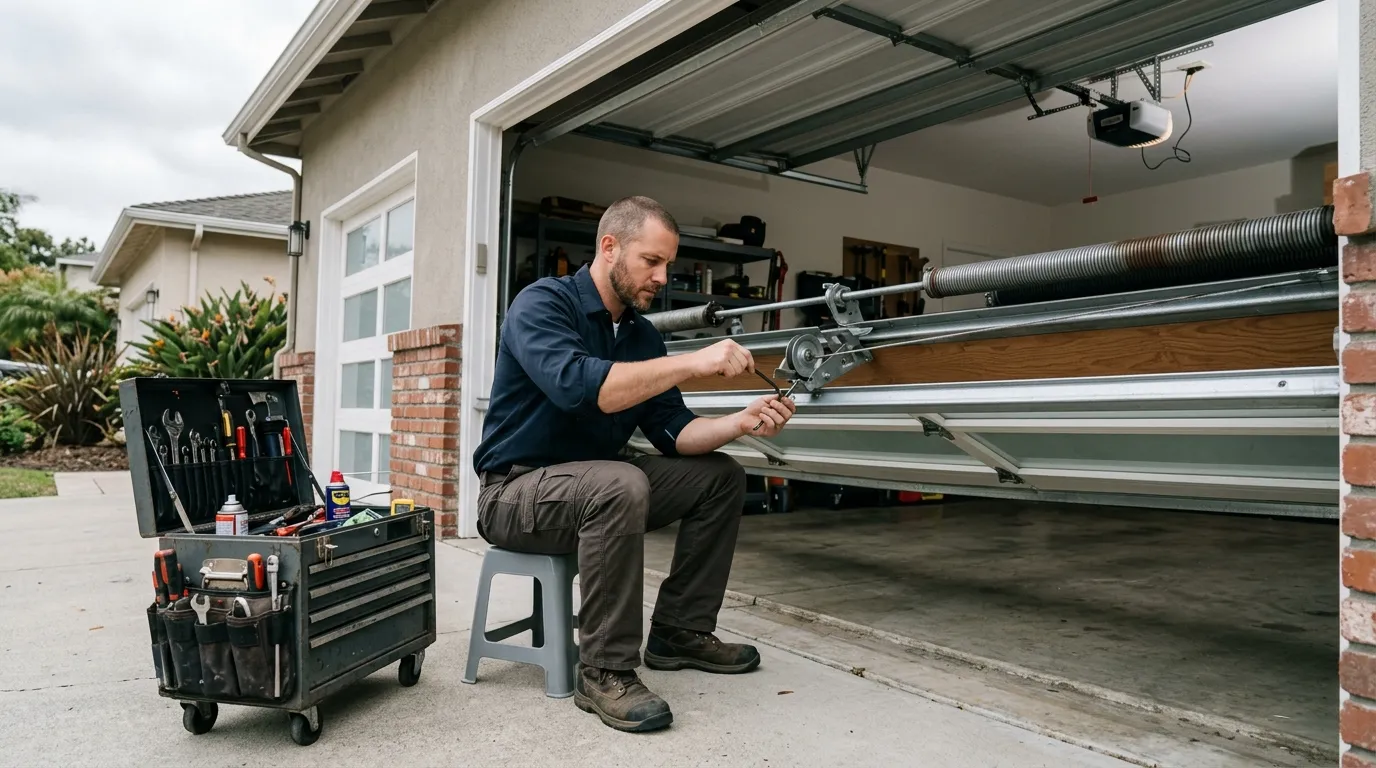
Before you call anyone, look at the spring itself. If it's a torsion spring mounted above the door on a shaft, check for a visible gap in the coil - that's a break, and the door will feel heavy or won't open at all. Don't try to open the door manually if you see a gap; the shaft can still be under tension from the other spring on a double-spring setup.
A lot of the houses around here went up between 1947 and 2012, with most dating to the 1960s and 70s. That means a good share of the springs in this town are original replacements from decades back, on hardware that's aged along with the house. If your door is hard to lift by hand, or drops fast instead of sliding down slow, that's the spring, not the opener.
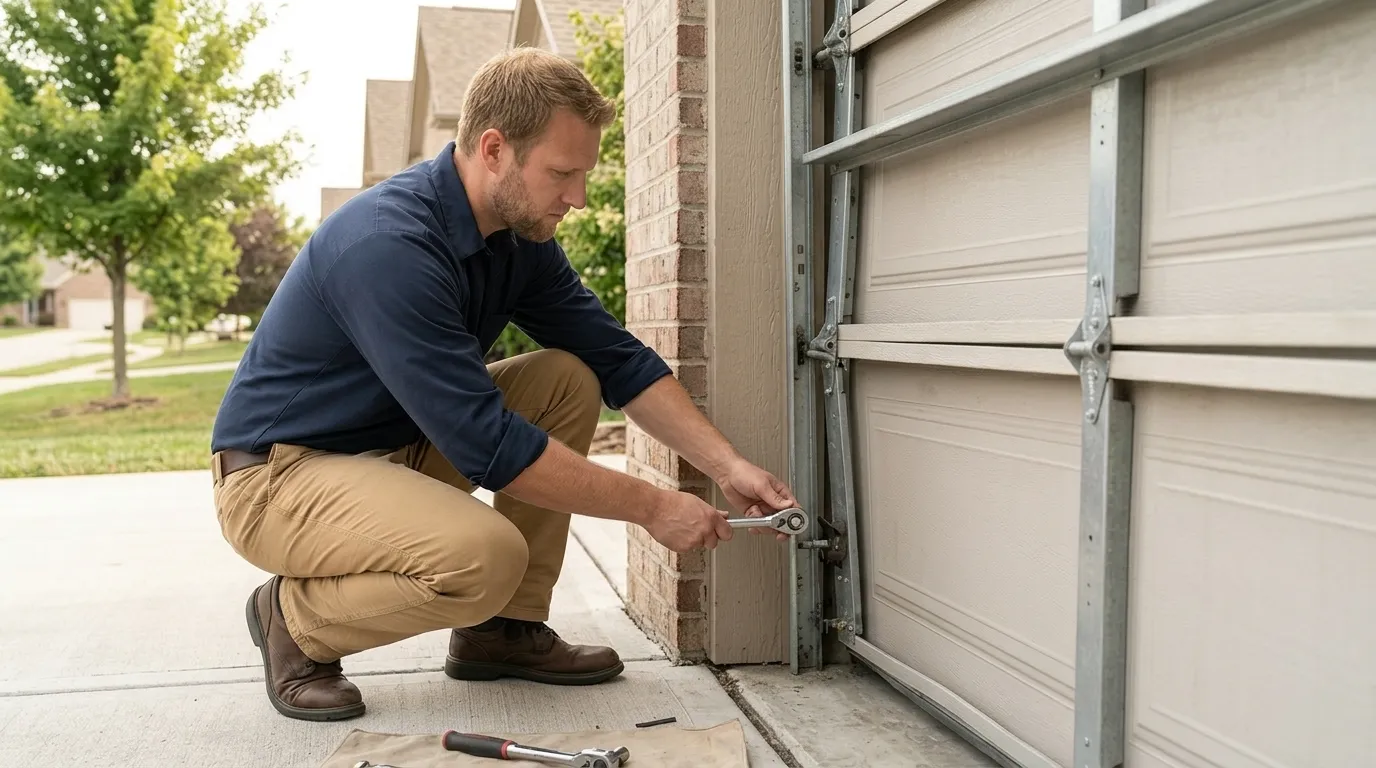
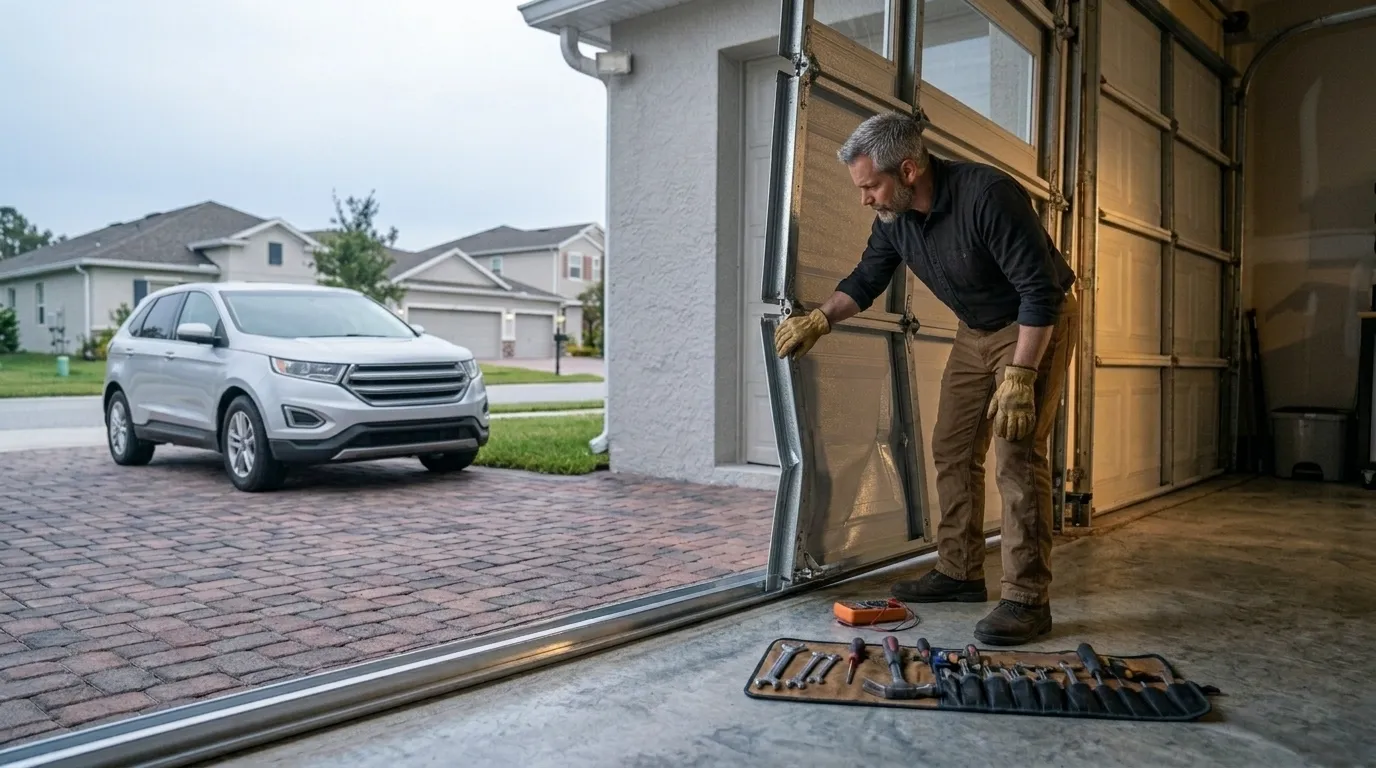
One thing to leave alone: if the spring has already let go and the cable or bottom bracket looks bent, don't force the door open with the opener. That's a job for a call, not a fix you do yourself. Forcing it can bend the track or snap a cable under load.
The Seasonal Bit
Manhattan Beach sits in a mild temperate climate band, which means we don't get the deep freeze-thaw cycles that crack concrete or seize hardware the way colder inland or northern towns do. That's the good news - the door itself isn't fighting ice or road salt.
But mild doesn't mean flat. Overnight lows here still drop enough to stiffen an aging spring's coil by morning, and that's usually when the failure shows up - first open of the day, door won't budge or drops hard. If your spring has been getting noisier or slower over the past few months, a cold snap is often just the trigger that finishes what fatigue already started.
Because the swings here are gentler than in a true four-season climate, a lot of homeowners never think to check the spring seasonally at all. That's a fair assumption most of the year - it's just not a safe one to carry into a cold stretch if the spring's already old.
How Local Conditions Play In
Put the two things together - housing built mostly in the 1960s and 70s and a mild but not static climate - and you get a specific failure pattern: springs that are old enough to be near the end of their service life, sitting quiet for most of the year, then giving out on the handful of colder mornings when the metal has the least flex left in it.
We can't tell you the exact age of your spring without seeing it - a lot of doors in this area have had at least one spring replacement since the house was built, and some haven't. What we can say is that a spring failing on a cold morning in a house from this era is common enough that it's not a coincidence, and it's not usually a sign the door or opener is broken beyond the spring itself.
One limitation worth being straight about: we don't stock every spring size on the truck for every door width and wind rating. If your door is an unusual size, there can be a short wait on the exact part.