This Area's Housing
Maywood's housing skews older than the wider service area. Where the broader region runs a median build year of 1963, Maywood's homes cluster closer to 1952. That's a full decade earlier, and it matters for garage doors because it means more of the original hardware is still hanging on the wall.
With 6,355 households in Maywood, this isn't a sprawling market, but it's a consistent one. A lot of these houses have never had the garage door touched since the original builder installed it, or they got one replacement somewhere in the 1980s or 90s when the first setup finally gave out.
Median household income here runs $61,655, noticeably below the $94,152 figure for the wider area we cover. That gap shows up in the calls we get - more repair requests to keep an old door running another few years, fewer full replacements booked on the first visit. We work with that. A tuned-up torsion spring and a new set of rollers on a 1950s door can outlast a cheap new opener if the track and jamb are still square.
We're not guessing at this. It's the pattern the numbers show, and it's the pattern we see on the trucks.
Older vs Newer Streets
Within Maywood there's a real split between the older core, built close to that 1952 median, and any later infill that came in on newer setback rules or replaced an older structure entirely. The two don't fail the same way.
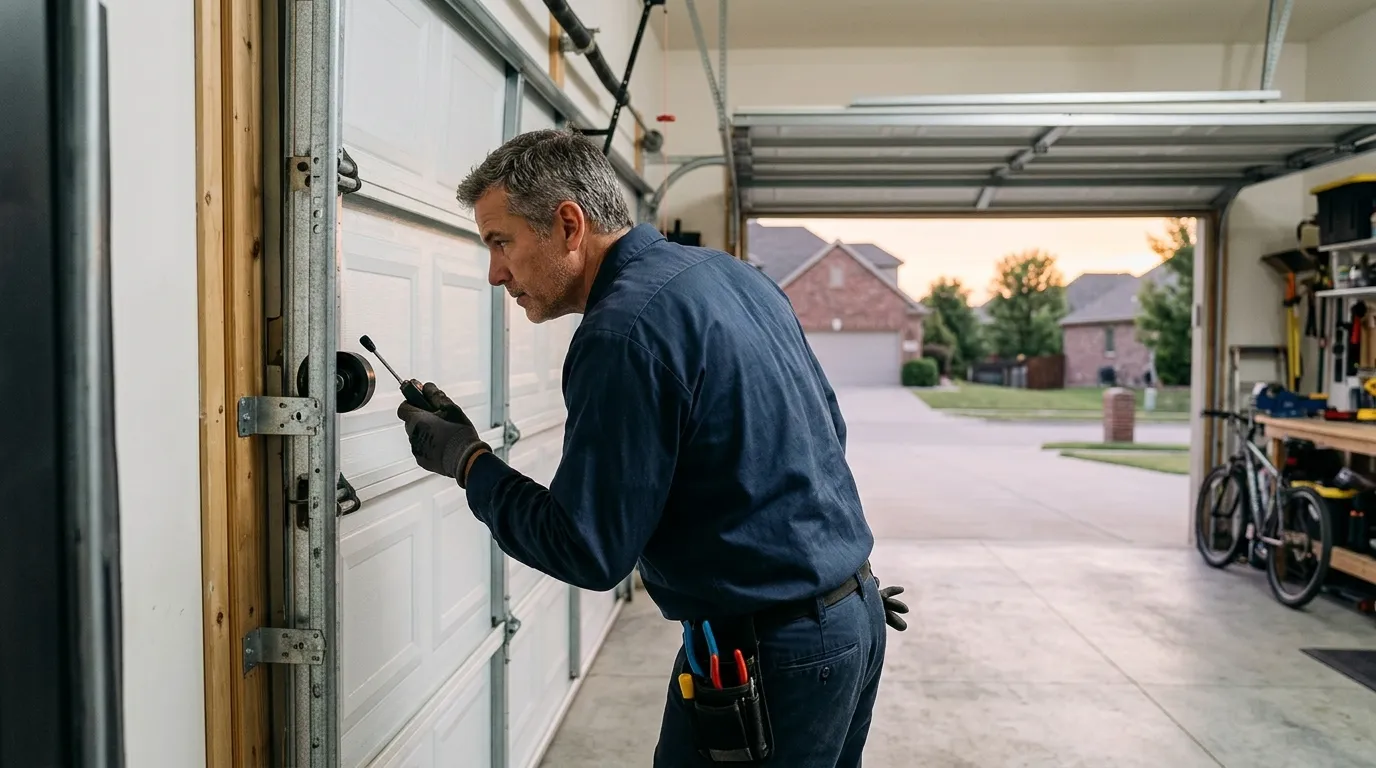
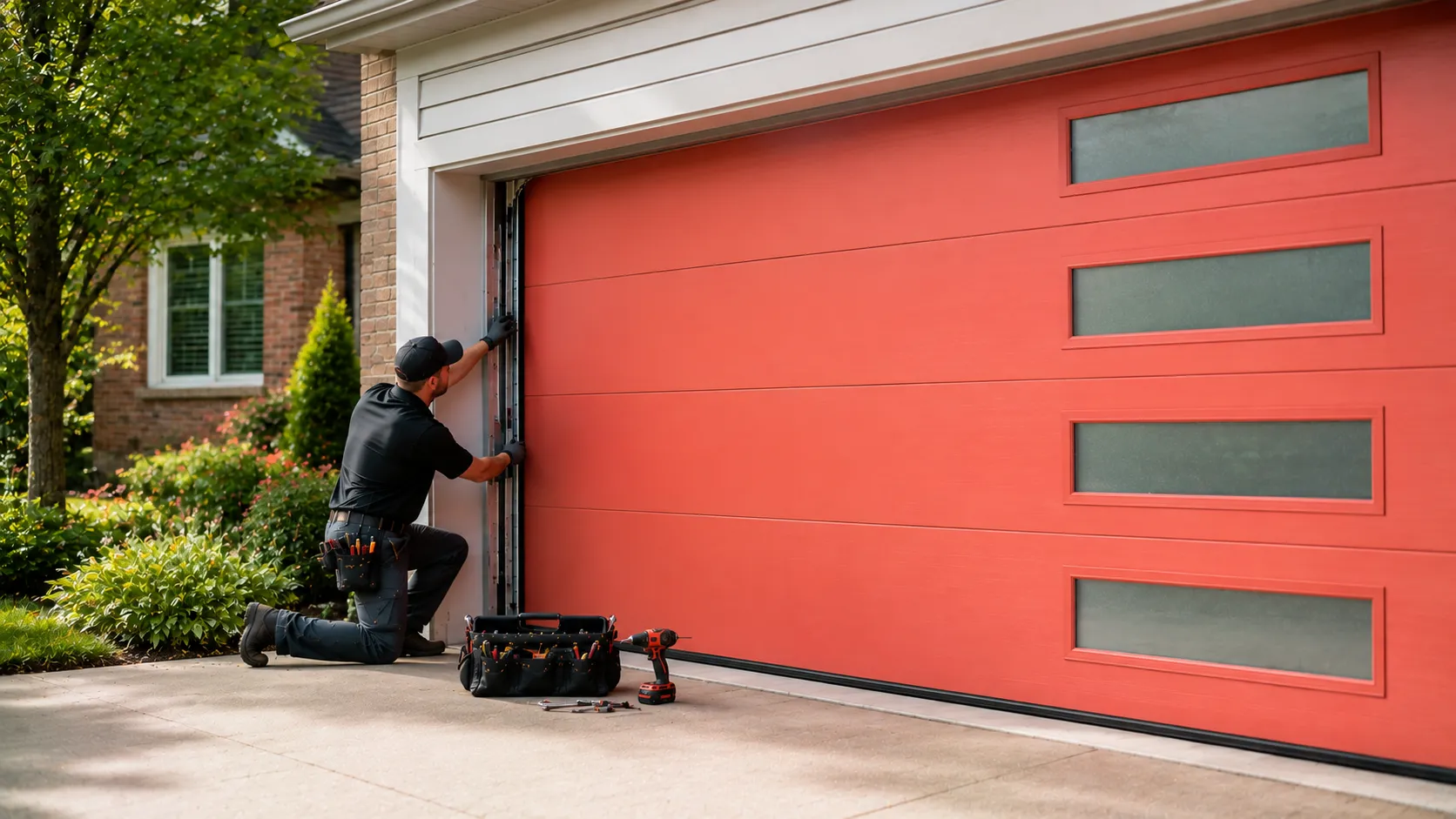
On the older stock, we're usually looking at a single-panel or early sectional door on side-mounted torsion hardware, often with a spring size that manufacturers stopped making decades ago in the exact original spec. Steel jambs have shifted slightly over 70 years, so a replacement door has to be measured on site, not ordered off a stock size sheet.
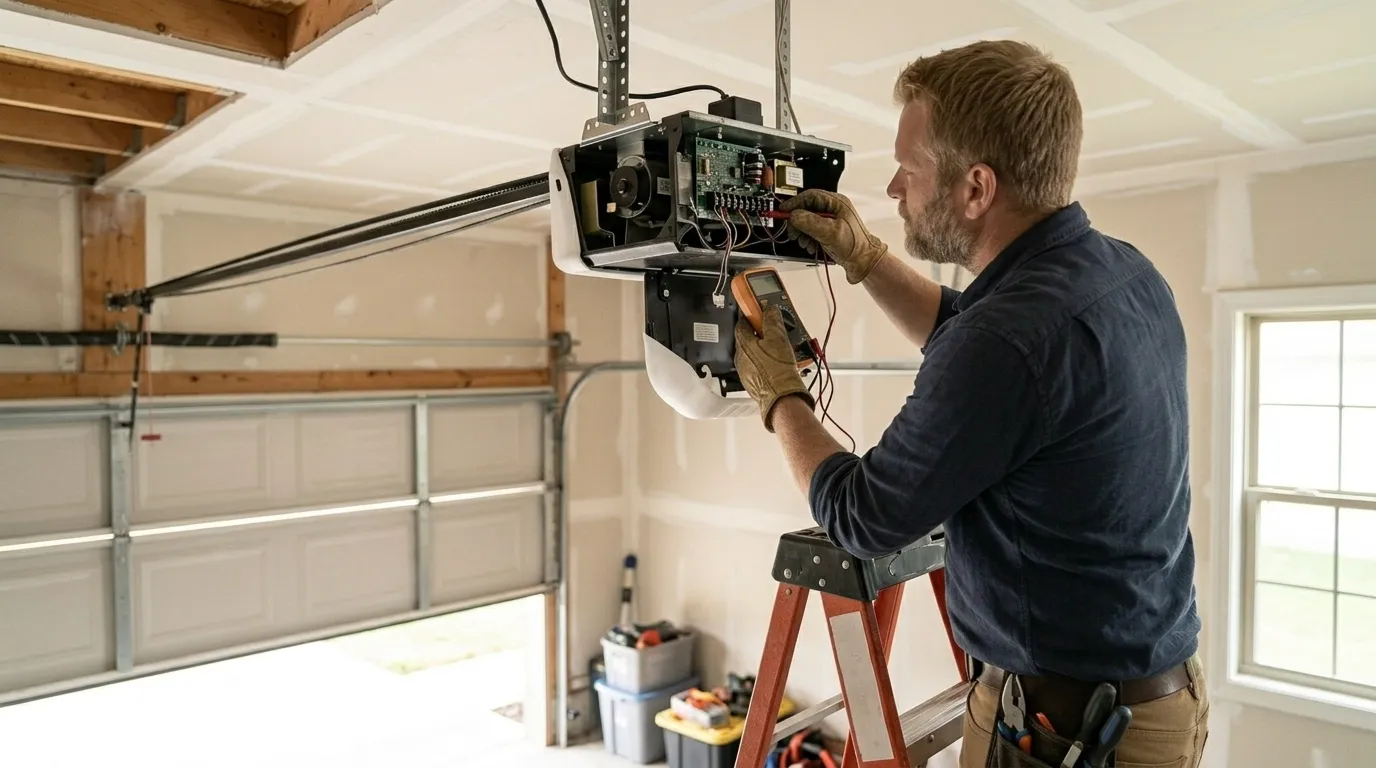
On anything built or rebuilt later, you're more likely to see a standard sectional door on centered torsion springs with a modern extension bracket - closer to what you'd find on a house from the 1980s onward. Parts are easier to source and openers are more likely to already be a chain or belt drive rather than the old screw-drive units.
Both exist on the same streets in Maywood. The house next door isn't a reliable guide to what's behind your own garage wall.
How That Shows Up in the Door
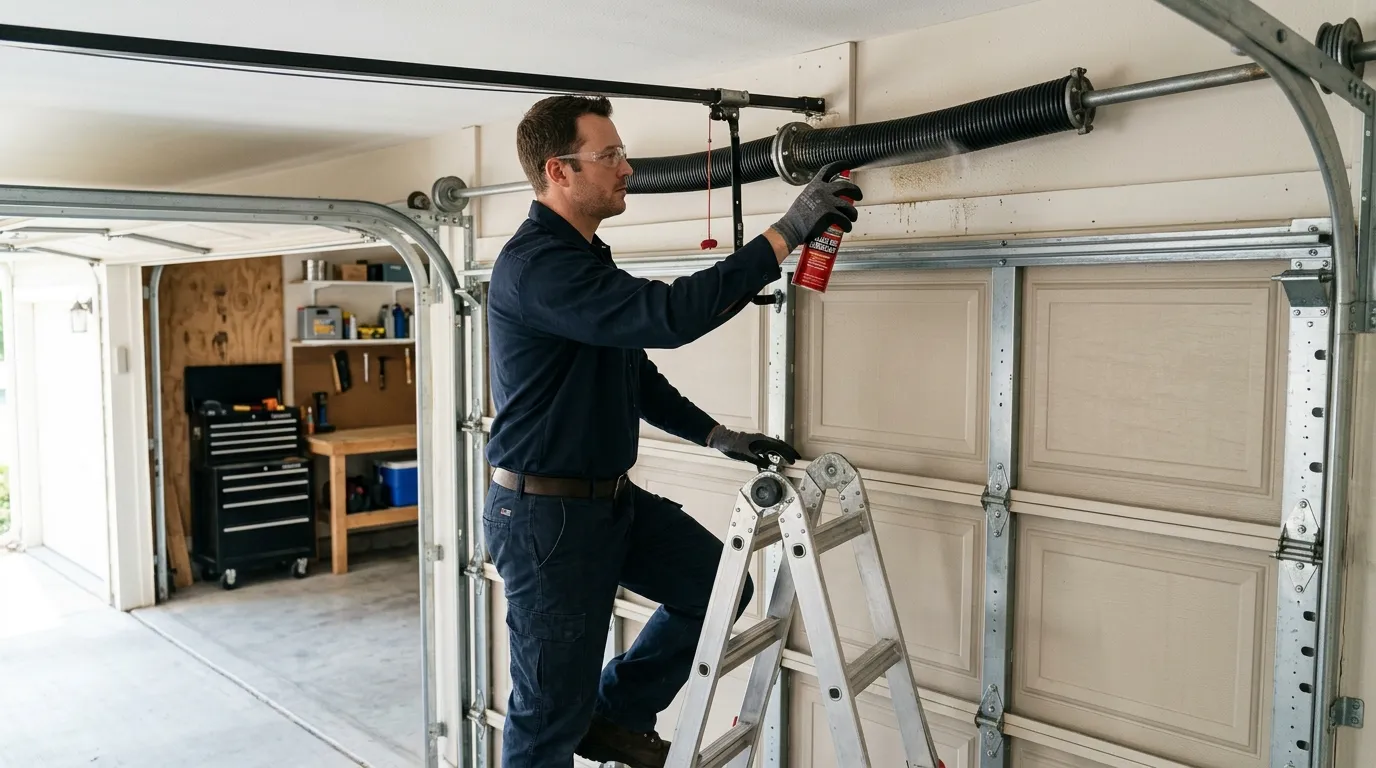
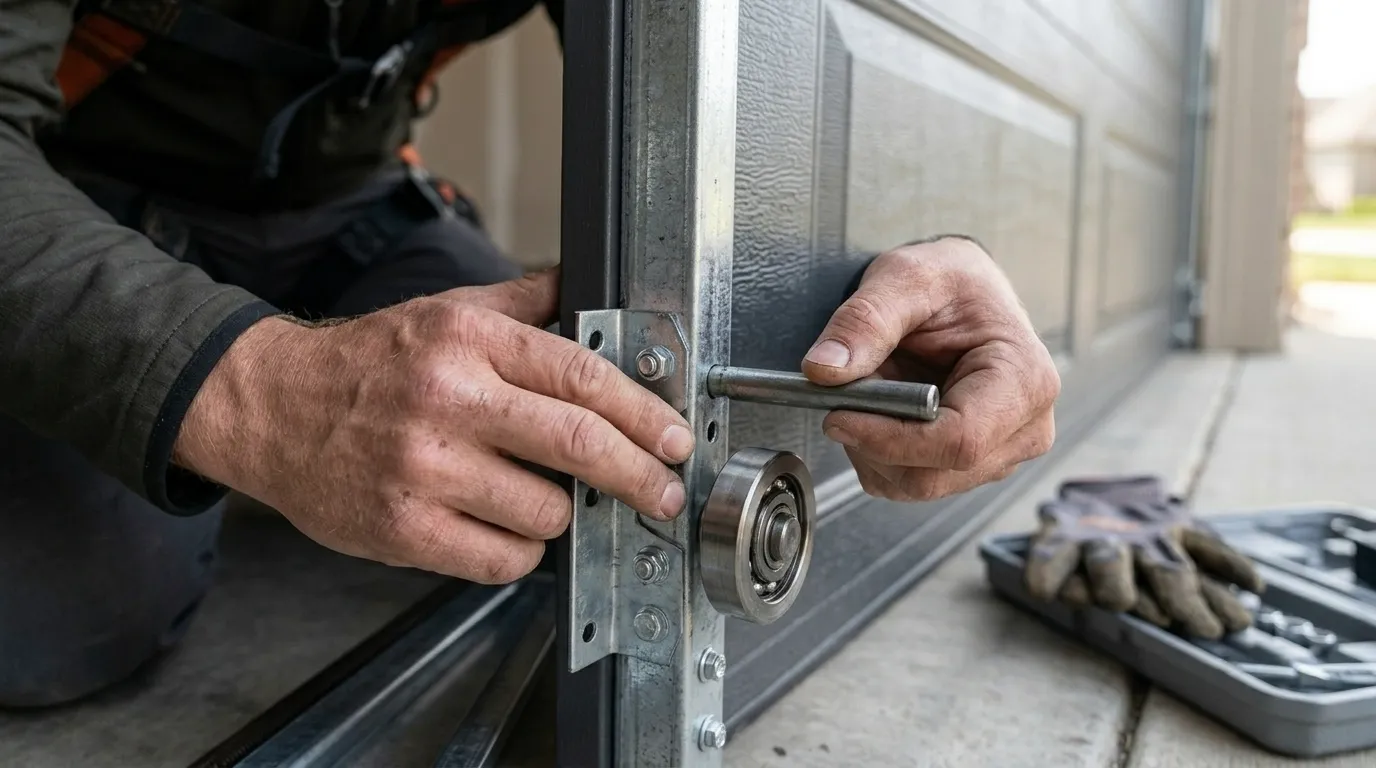
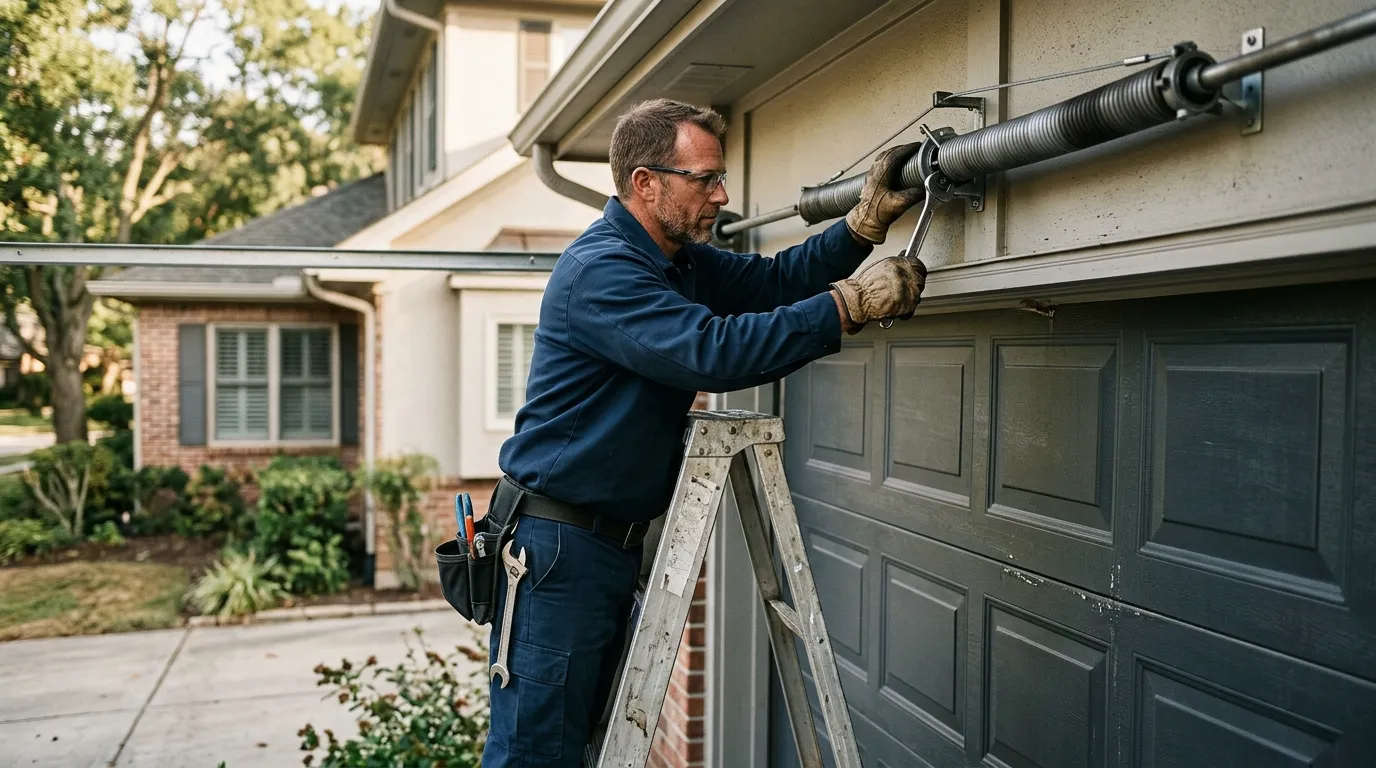
On a 1952-era door in this climate band - mild temperate, no hard freezes or heavy humidity swings to blame - the failures we see are mechanical age, not weather damage. Torsion springs that have cycled for 60-plus years snap at the winding cone. Rollers wear down to bare steel and start grinding in the track. Cables fray where they've rubbed the same drum edge for decades.
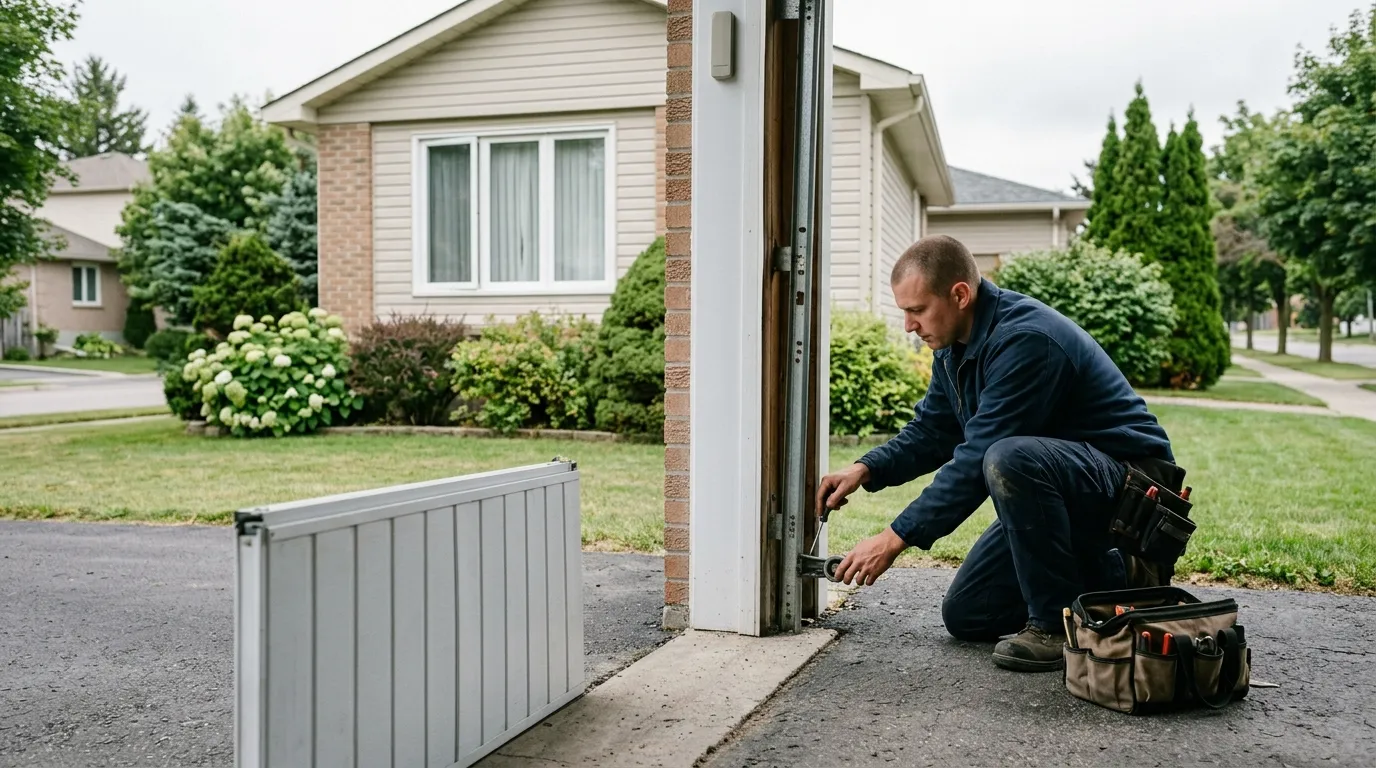
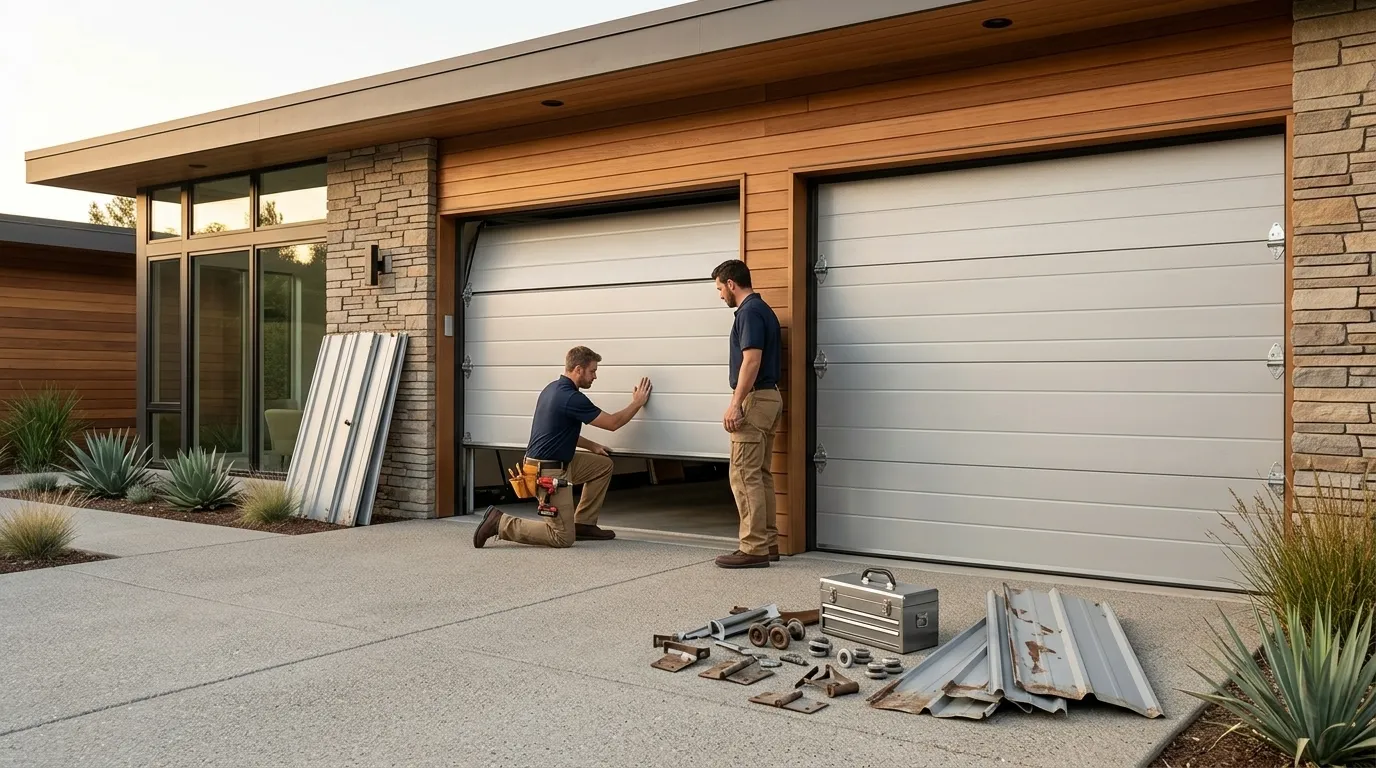
We don't push a full door replacement as the default here. If the track is still straight and the jamb hasn't shifted, a spring and hardware overhaul on an original door can be the more sensible call, and it costs less than tearing out something that still has good bones. Replacement makes sense when the panel itself is bent, rusted through, or the door is a size nobody makes hardware for anymore.
Whichever it is, we bring the diagnosis with us, not after we're already back on the freeway toward Manhattan Beach.