Checking It Yourself
Walk out to your garage on a cool morning and put your hand flat against the inside of the door panel. If it's a single layer of steel or old wood and it feels close to the outside air temperature, you've got an uninsulated door - common on houses in this area built in the 1960s and 70s, before insulation requirements applied to garage doors at all. Look at the edge of the door where panels meet. If you see bare metal ribbing with nothing behind it, or old wood that's never had a foam layer added, that's your original door.
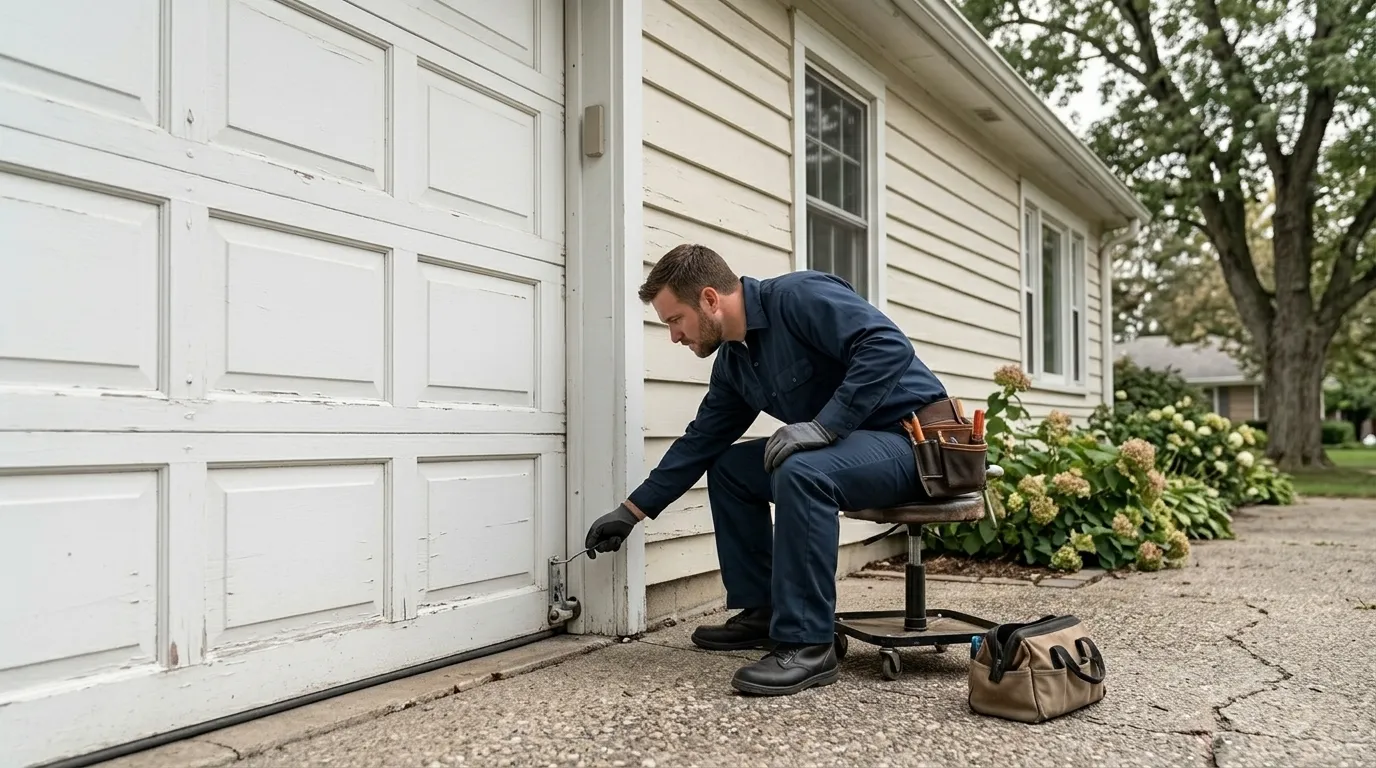
Check the bottom weatherstrip too. On houses from this era it was often an afterthought, a thin vinyl strip nailed on later rather than a proper astragal seal. If light shows under the door in daylight, that seal isn't doing its job.
One honest note: not every uninsulated door needs replacing. If your garage is detached from living space and you don't use it as a workshop or extra room, the lack of insulation may never actually cost you anything. We won't tell you to swap a door that's doing its job fine just because it's old.
The Seasonal Bit
The mild temperate climate here means an uninsulated garage door isn't fighting the kind of swings that push people in colder regions to insulate fast. You're not dealing with hard freezes that crack panels or humidity extremes that warp wood the way other climates do. That takes some urgency off the decision - a door here can go decades without insulation and never cause a real problem for the house.
Where it does matter is temperature swing inside an attached garage, especially if there's a room above or beside it. An uninsulated steel door will transfer outside air temperature into that space almost directly. In this climate that's usually a comfort issue, not a pipe-freezing one - a few degrees warmer or cooler than you'd like, not an emergency.
How Local Conditions Play In
Because so much of the housing stock here and in nearby areas like El Segundo, a mile off, and Lawndale, four miles out, dates to that same 1960s-70s window, we see the same original door on a lot of jobs - same era, same single-layer construction, same thin weatherstrip. It's a pattern tied to when this stretch of the coast got built out, not a coincidence.
When we're called out to a door in one of these older houses, the insulation question usually comes up alongside a spring or opener repair, not on its own. If the door itself is sound - tracks straight, panels not dented, hardware serviceable - insulation can be added or the door swapped for an insulated model without touching anything else. If the door's also failing mechanically, it often makes more sense to replace the whole unit at once rather than patch an old single-layer door and redo the work again in a few years.