Checking It Yourself
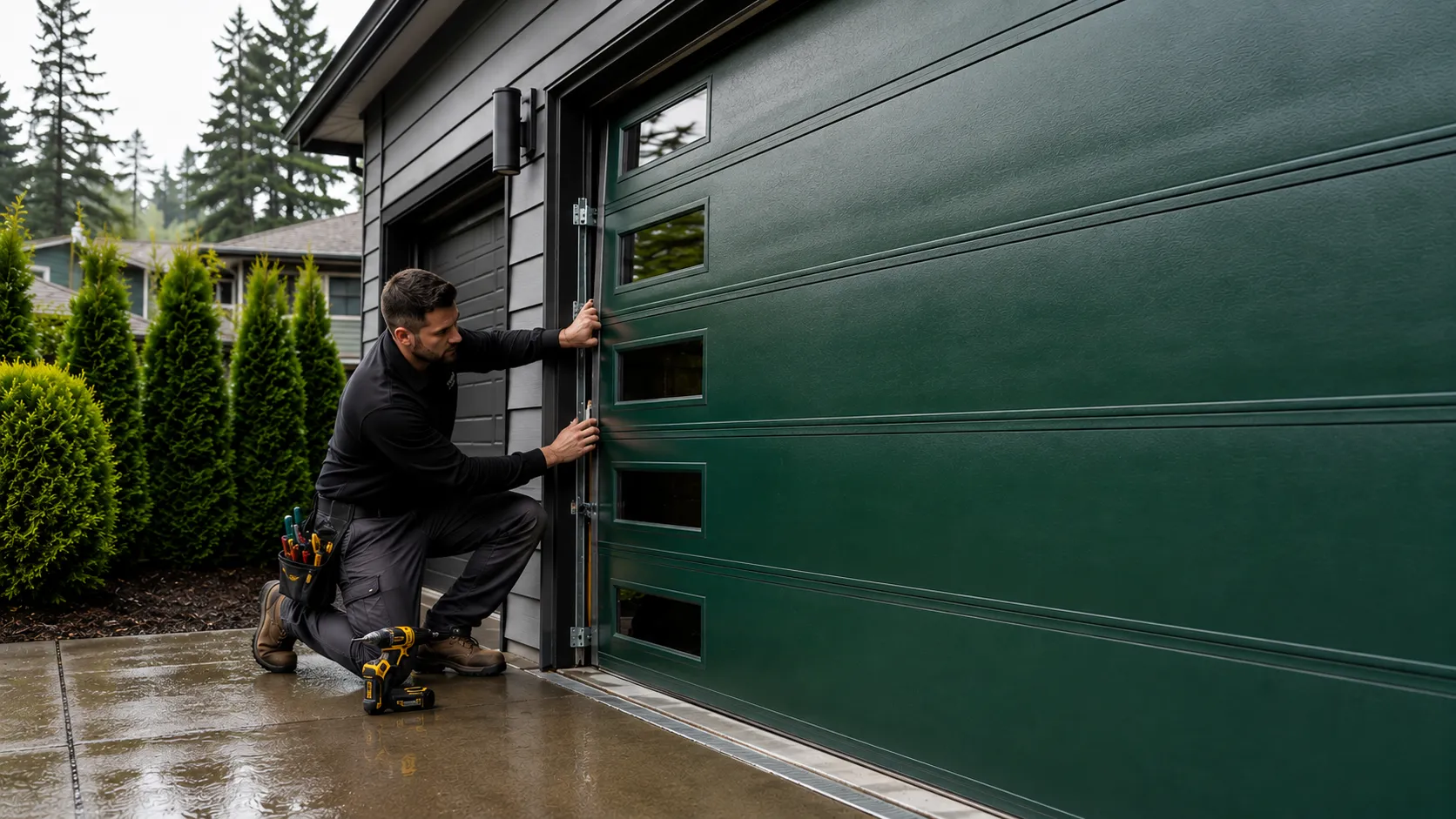
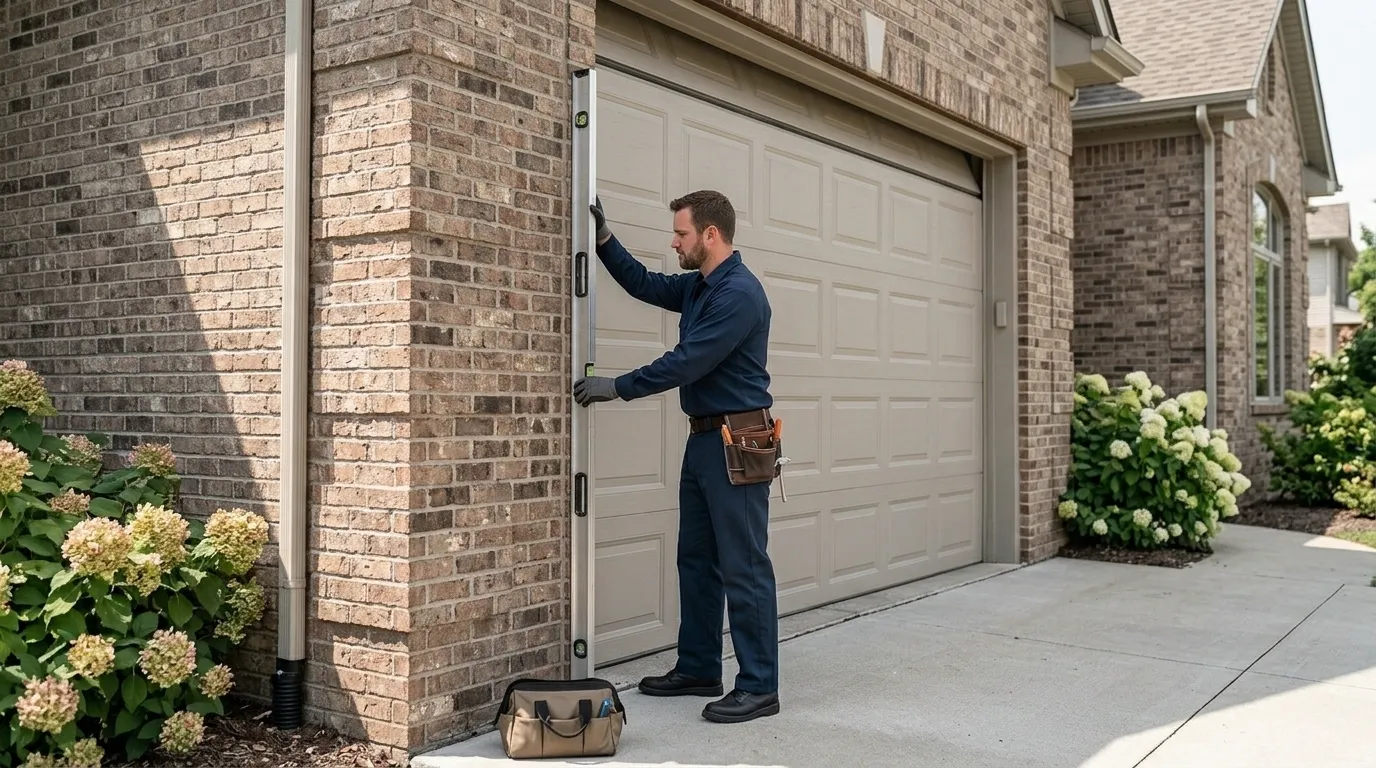
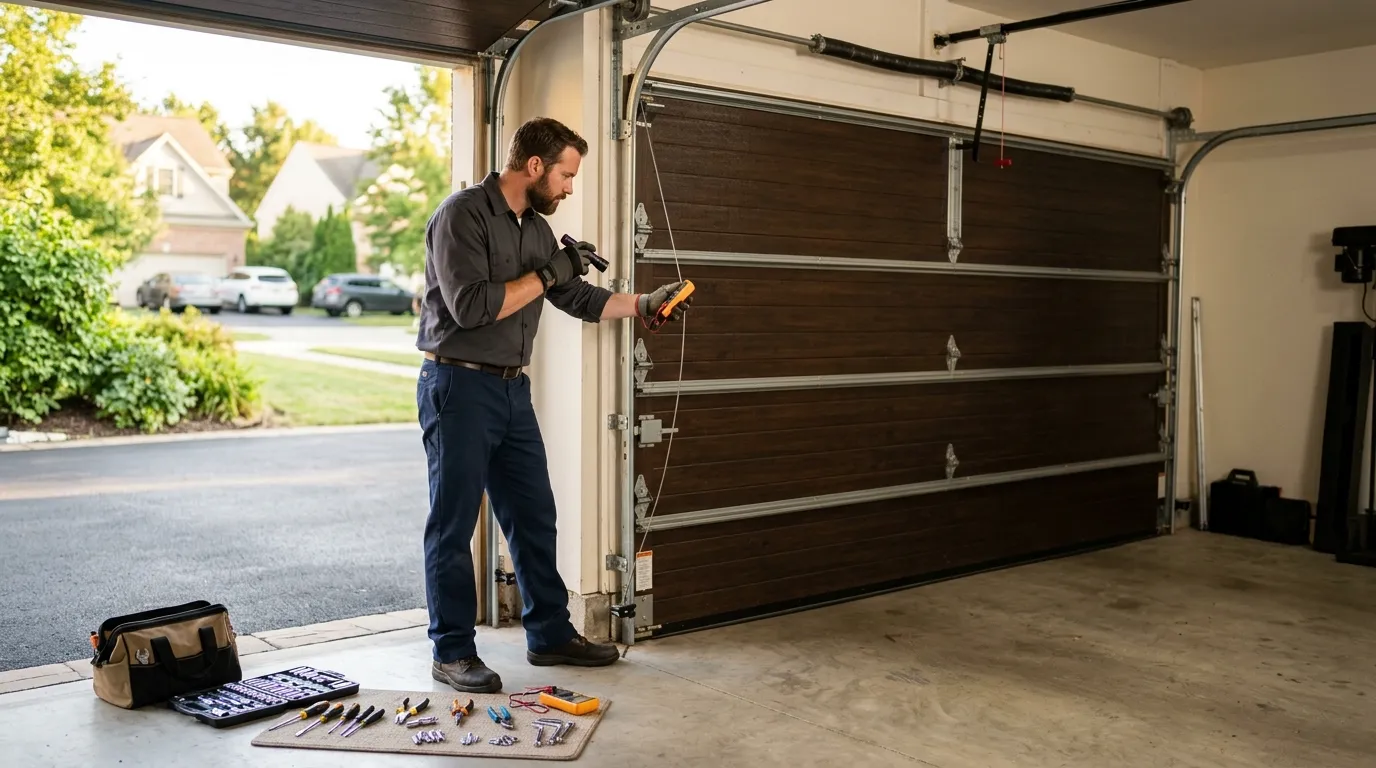
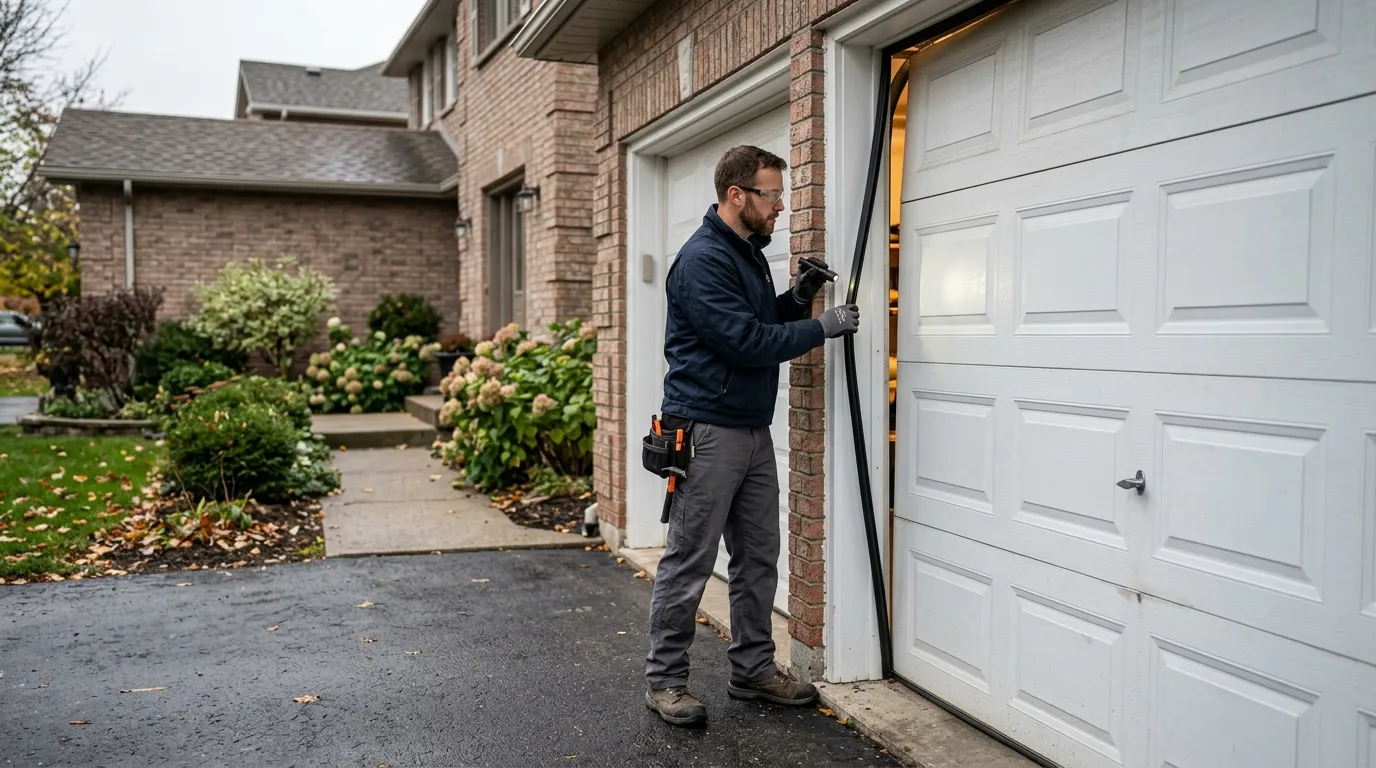
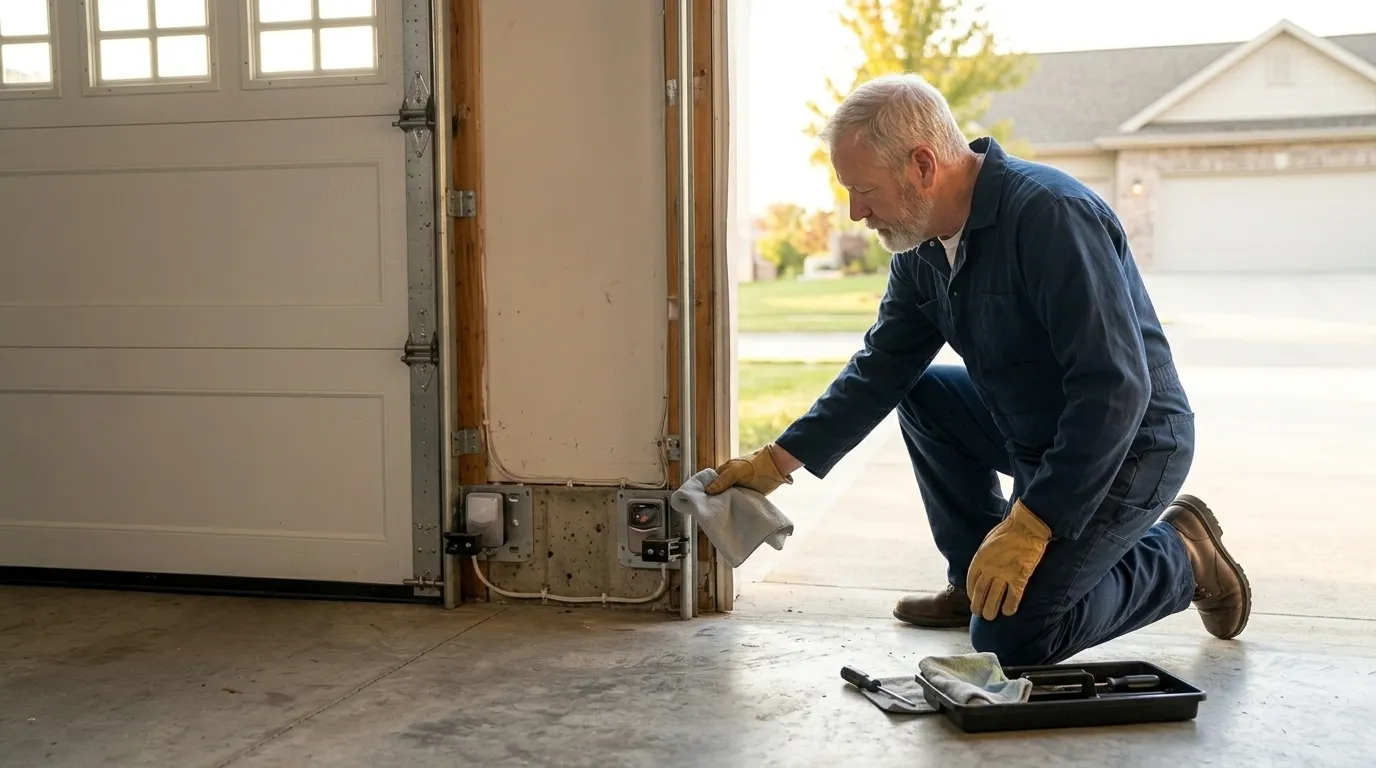
Before you call anyone, look at three things. First, stand at the side of the door and sight down the track from front to back - if it bows out or in anywhere, that's your problem, not the opener. Second, check the brackets bolting the track to the jamb framing; on houses built anywhere near the median year of 1963 here, those brackets are original steel, and six decades of house settling can walk them a quarter inch out of plumb. Third, run a hand along the rail looking for pitting or a chalky white residue - that's oxidation working into the galvanized coating, and it's common on this stretch of coast even without any dramatic weather event to point to.
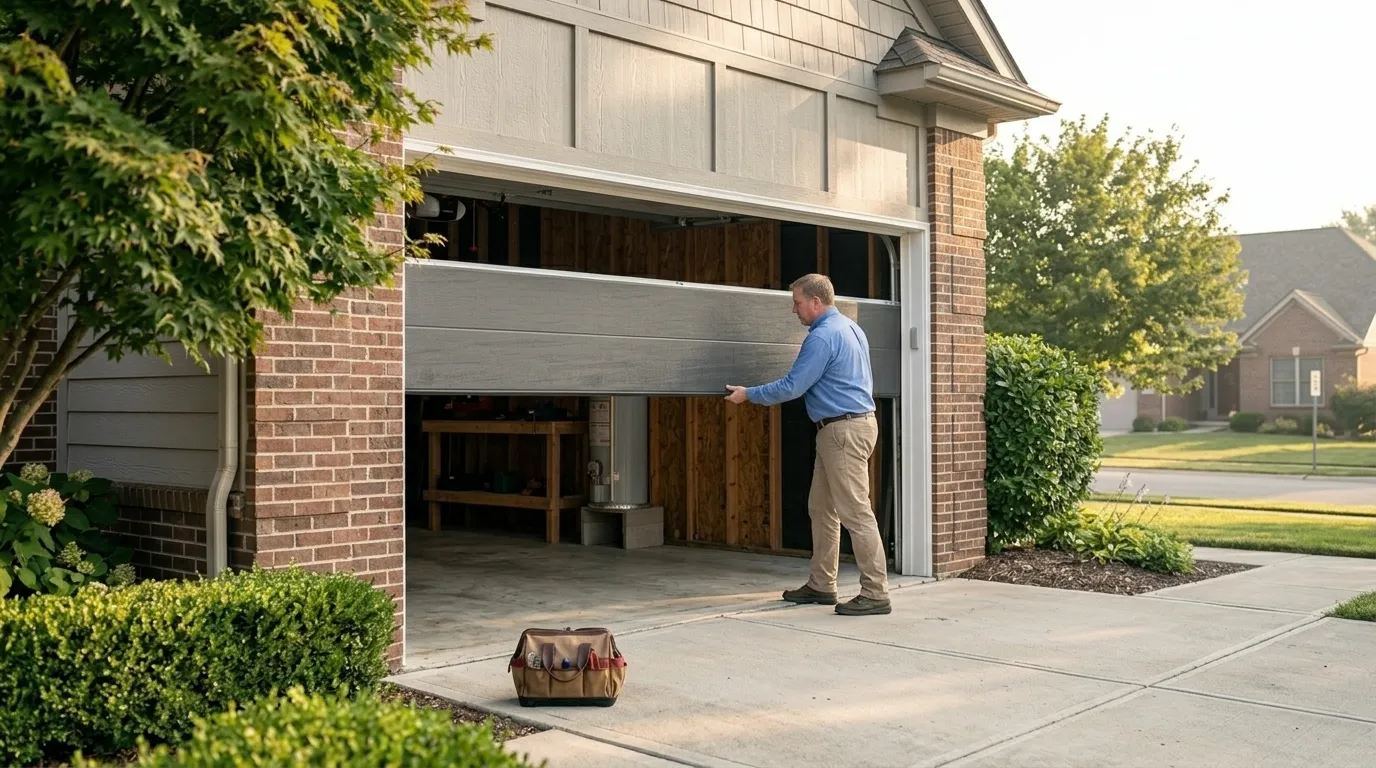
If the door binds only at one spot every time, that's a bent section or a loose bracket, and it's often a bolt-tightening job. If it comes off the rollers entirely, or the track has separated from the wall, stop opening it by hand or by opener until someone looks at it. A door that's already off track can drop the panel section without warning, and that's not a job to improvise.
The Seasonal Bit
Manhattan Beach sits in a mild temperate band, not a freeze-thaw zone, so you're not dealing with the classic inland problem of a concrete slab heaving in winter and dragging the track bracket with it. That's a real limitation on how much a seasonal-cause diagnosis applies here - if a contractor tells you the slab shifted from frost, that's not a Manhattan Beach problem, that's a script written for somewhere else.
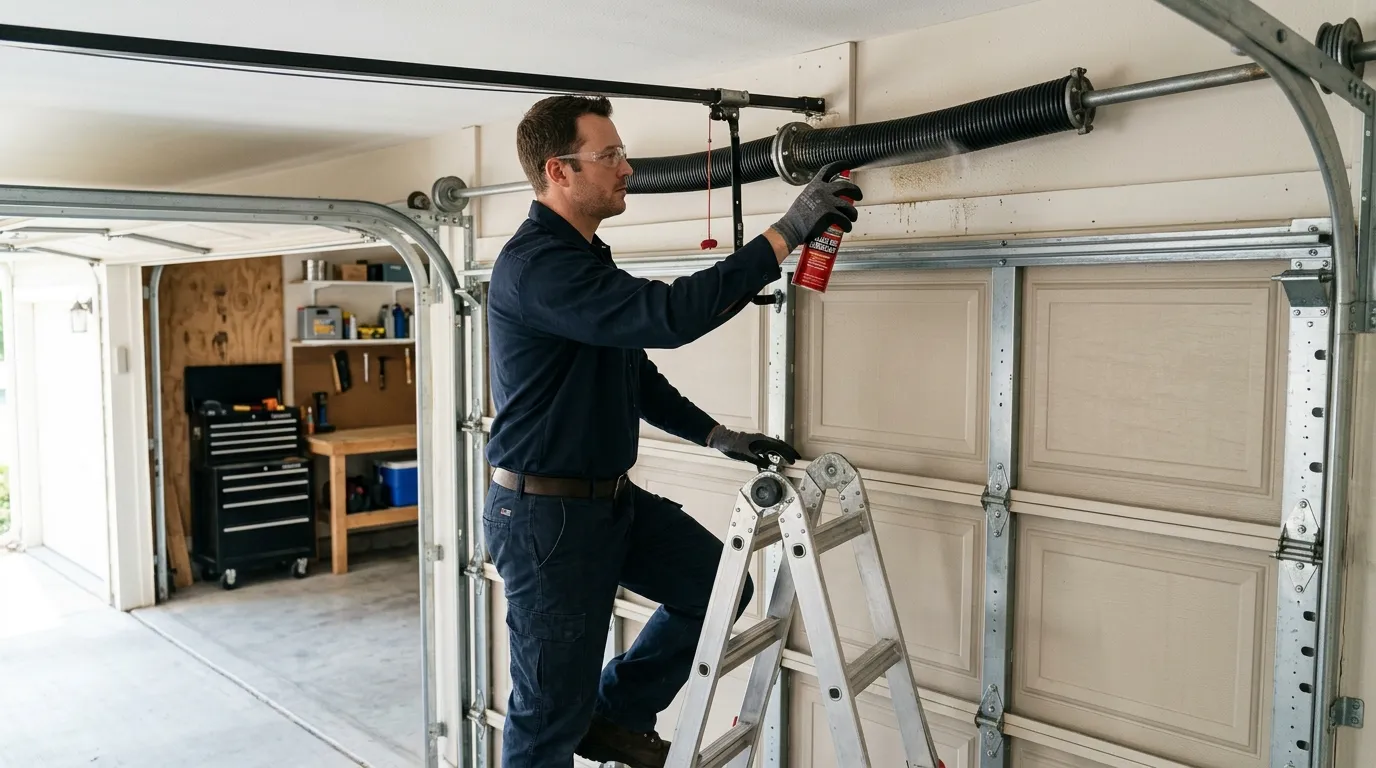
What you do get here is a steadier, quieter wear pattern: consistent marine humidity working on hardware year-round instead of a hard seasonal swing. Track brackets and roller bearings corrode a little faster near the coast than they would forty miles inland, even in a mild climate, because the corrosion doesn't need a freeze to get started - it just needs damp air and time. So the
How Local Conditions Play In
placeholder