This Area's Housing
Bell's houses cluster tighter around one era than most of the towns we cover. The median build year here is 1956, seven years earlier than the 1963 median across our wider service area. That gap matters more than it sounds. A house built in the mid-1950s was framed for a garage door and opener setup that predates the aluminum torsion hardware common by the late 1960s. Across the roughly 8,824 households in Bell, a lot of garages still carry the bones of that original construction, even where doors themselves have been swapped out once or twice since.
With median household income at $60,641, well under the wider area's $94,152, we see a pattern: owners keep a working door running longer before they replace it outright, and repairs tend to matter more per job than they might somewhere with more disposable income for a full swap. That's not a knock on the town. It's just the math of an older, working-class housing stock, and it shapes what kind of calls we get and how we price the work when we're out there.
Older vs Newer Streets
Not every block in Bell reads the same age. Streets built closer to that 1956 median tend to have narrower garage openings and doors mounted on hardware that was never designed for a modern opener's lifting force without some kind of retrofit bracket. Newer infill and rebuilt properties elsewhere in our coverage area, closer to the 1963 area median or later, are more likely to have the door and opener installed together as a matched, code-compliant pair from the start.
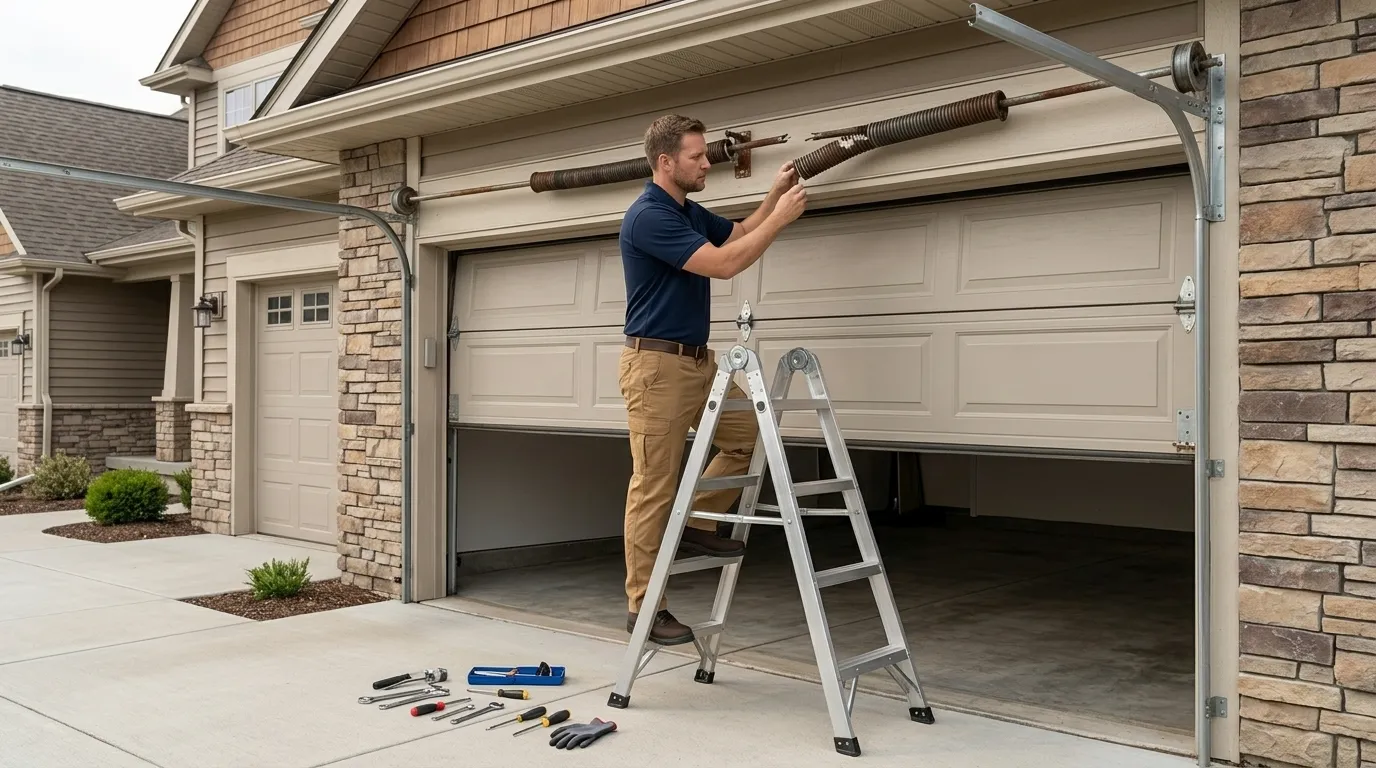
The practical difference shows up the moment a spring breaks. On an older Bell street, we're often working with a door that's been re-cabled or re-tracked once already by someone else, which means the fix isn't always a clean swap. On a newer street, the parts are more standard and the job is usually more predictable. Neither is better or worse to work on, but the estimate and the timeline can look different for that reason alone.
How That Shows Up in the Door
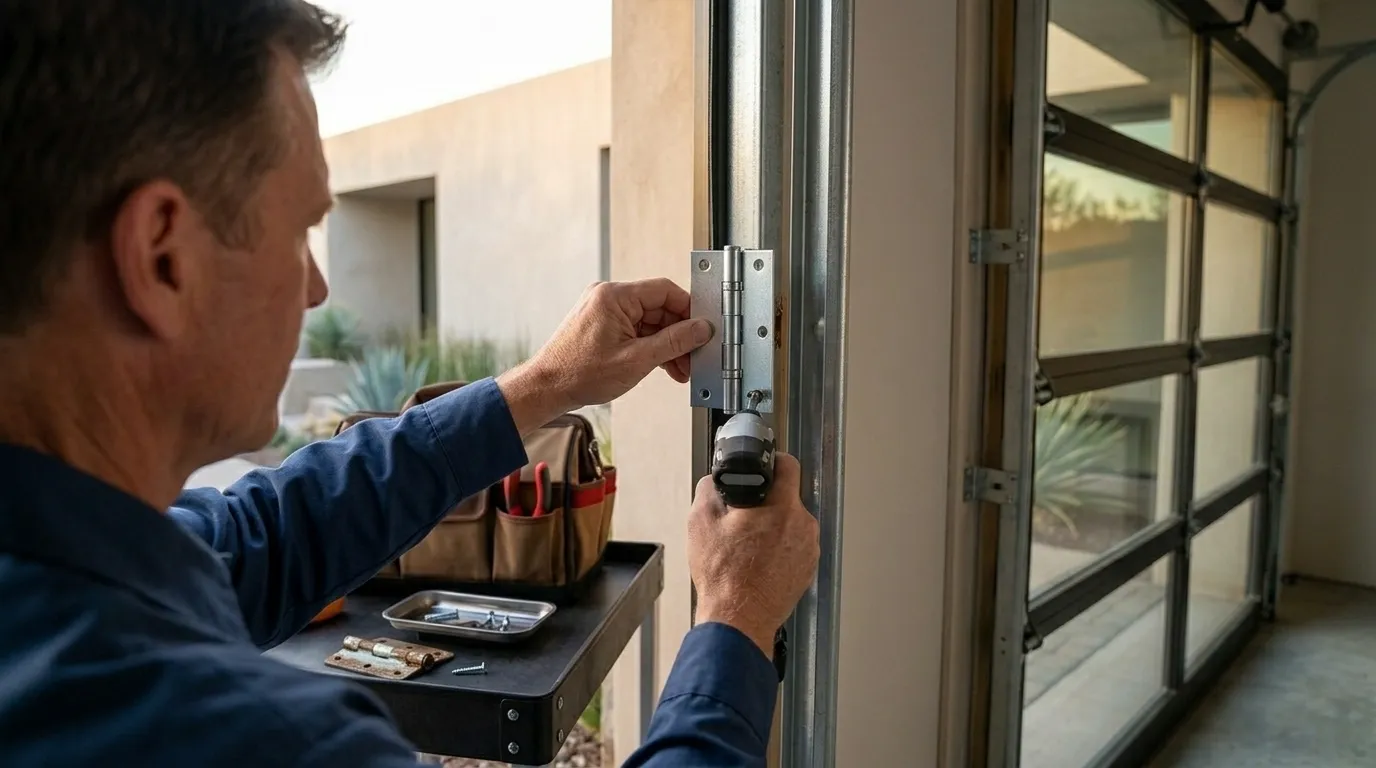
In practice, the 1956 median build year in Bell means we see more single-layer steel and older wood-composite doors than we do in areas built a decade or two later. These doors are heavier per square foot than current insulated steel panels, which puts more strain on torsion springs sized for a lighter door if a spring was ever replaced with a generic size instead of matched to the original. It also means rollers and hinges wear on shorter cycles, since the door itself weighs more moving through the same track.
We're not going to tell you every older door needs replacing. Plenty of them are fine with a spring swap, new rollers, and a track alignment, and that's a fraction of the cost of a full replacement. But if the track is bent from years of an out-of-balance door, or the panel itself is rusted through at the bottom, replacement usually ends up cheaper than chasing repairs on a door that's fighting its own weight. Mild coastal-adjacent temperatures here mean rust and warping aren't as aggressive as in harsher climates, so a lot of these older doors have simply outlasted their original hardware rather than the panel itself failing.