The Complications
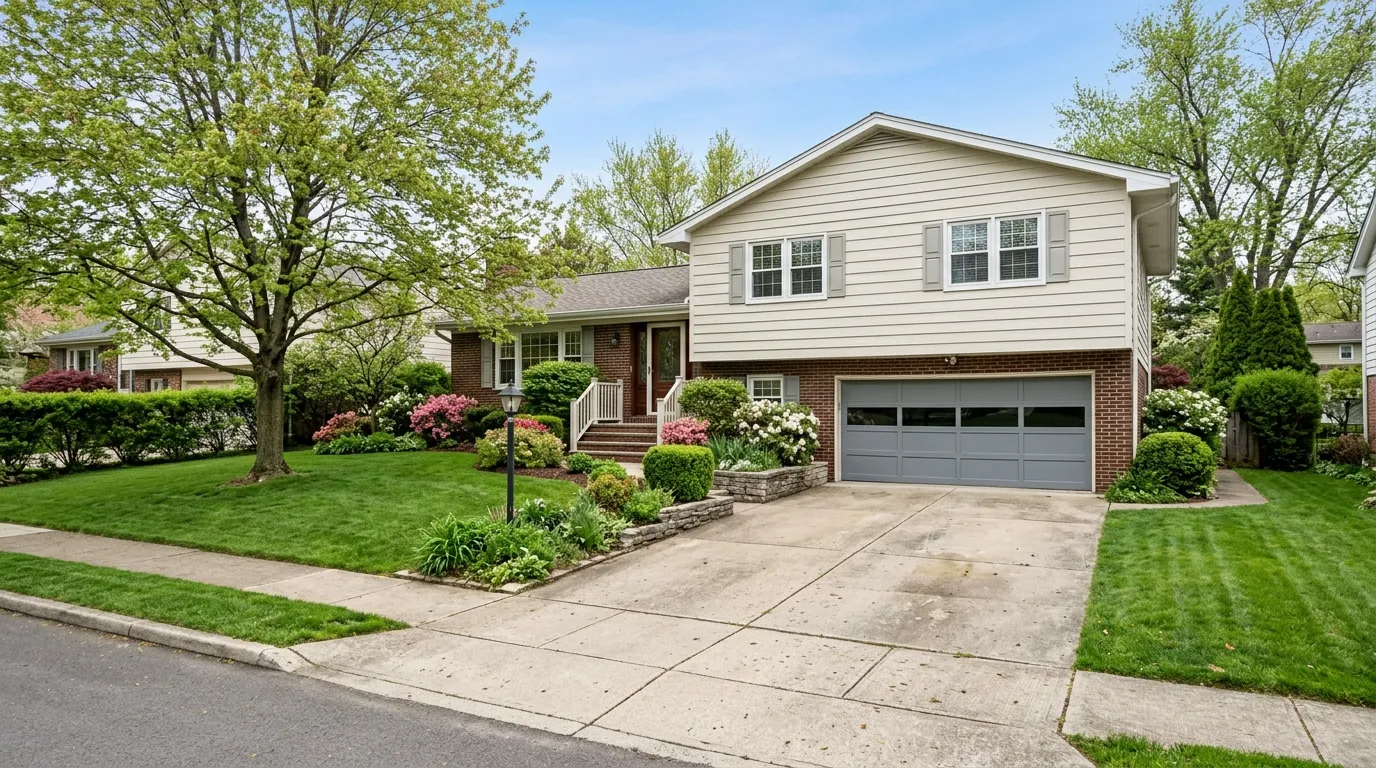
West Carson's houses mostly went up around 1972, which puts this pocket about a decade newer than the 1963 median across the wider service area we cover. That gap matters more than it sounds. A house built in the early 1960s often still has its original torsion spring hardware and a single-panel door on old brackets. A 1972 build is more likely to have an extension-spring setup with a sectional door, and the opener - if it's been swapped once already - is probably a chain-drive unit from the 80s or 90s rather than anything original.
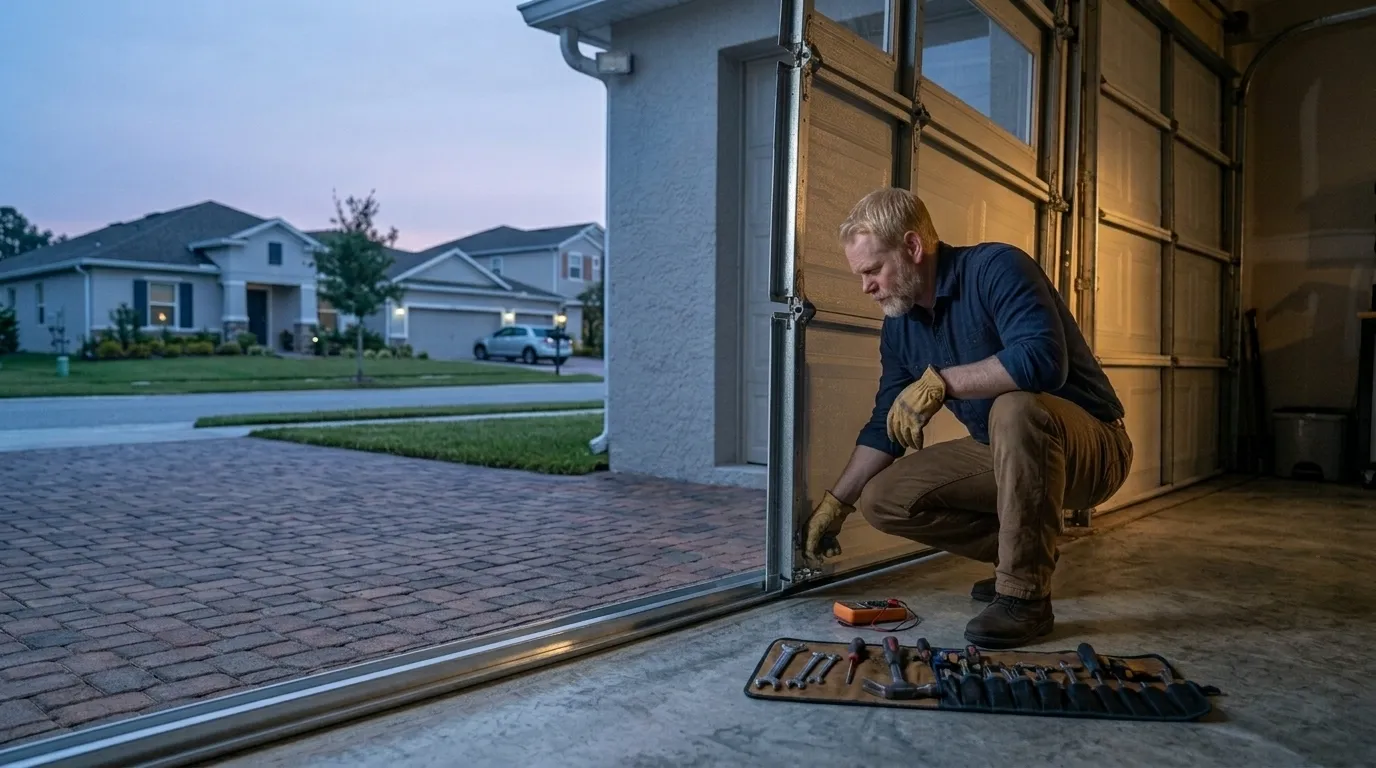
The fault we see here tends to run toward worn extension springs losing tension unevenly, or a track that's racked slightly out of true because the door's heavier sectional panels have sagged over fifty-plus years of use. That's a different repair than the one-piece door problems you'd find on an older block closer to the coast.
Climate isn't the driver of failures here the way it is in places with real freeze-thaw cycles. This is mild temperate territory, so we're not chasing rust from ice or warped panels from big humidity swings. Most of what fails, fails from age and cycle count, not weather.
How Long You Are Without the Door
Most single-spring or opener repairs on the sectional doors typical of this area's 1970s stock are a same-visit job once the tech is on-site with the right part. Where it stretches out is when the part isn't a stock size - older extension-spring systems on doors from this era sometimes use lengths that aren't common anymore, and that can mean a second visit once the part arrives.
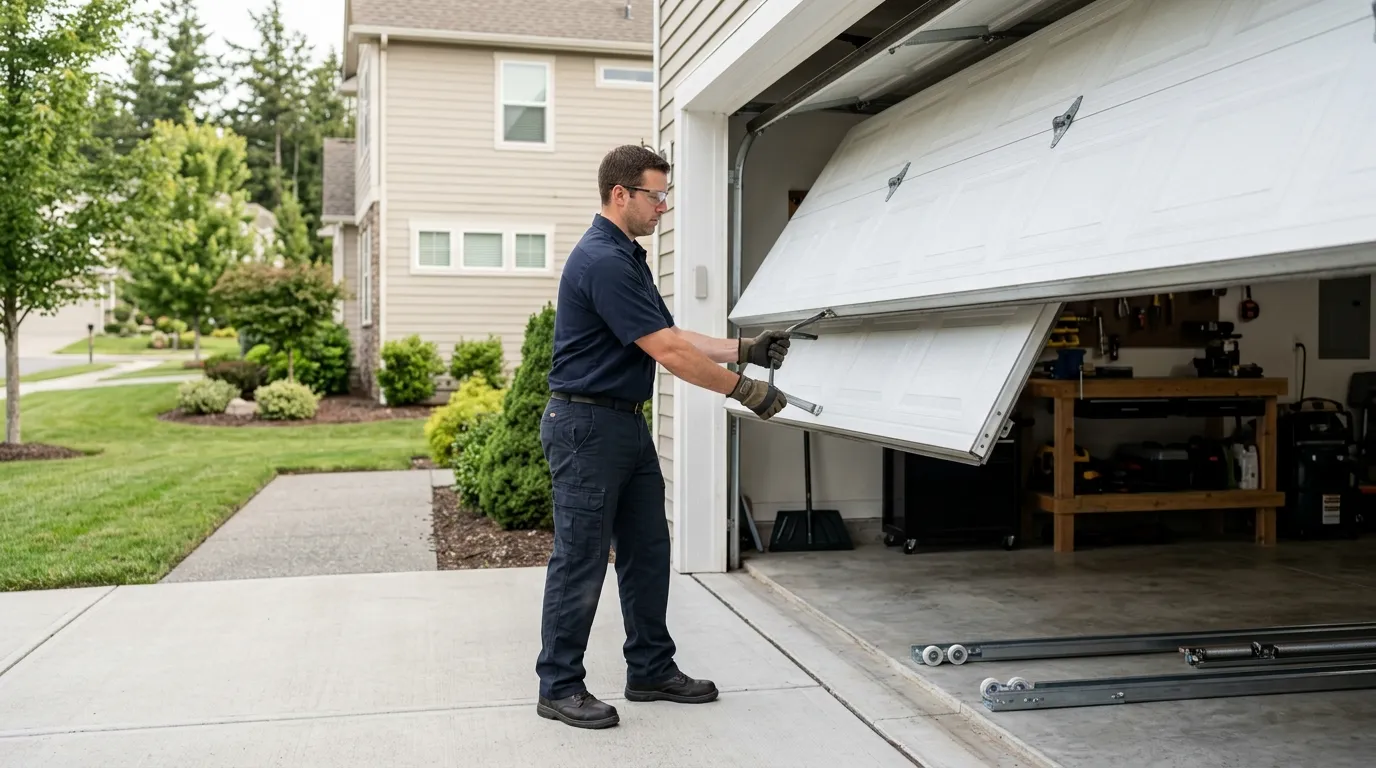
We won't pretend every job wraps in one trip. If your door's track has racked from decades of unbalanced spring tension, straightening or replacing that track is more than a spring swap, and it's worth doing right rather than fast. A door that's been fought with for years on a bad spring often has more wrong with it than the spring alone.
What the Fix Involves
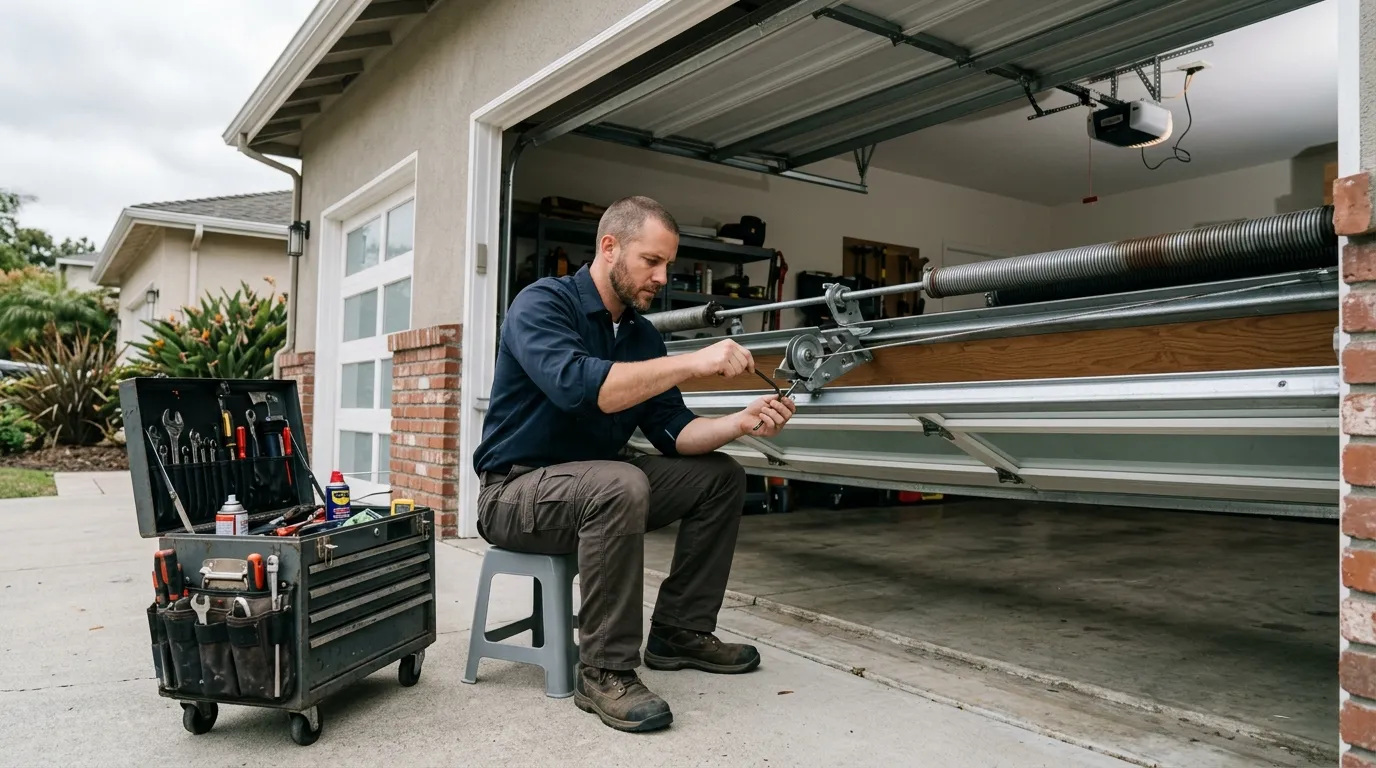
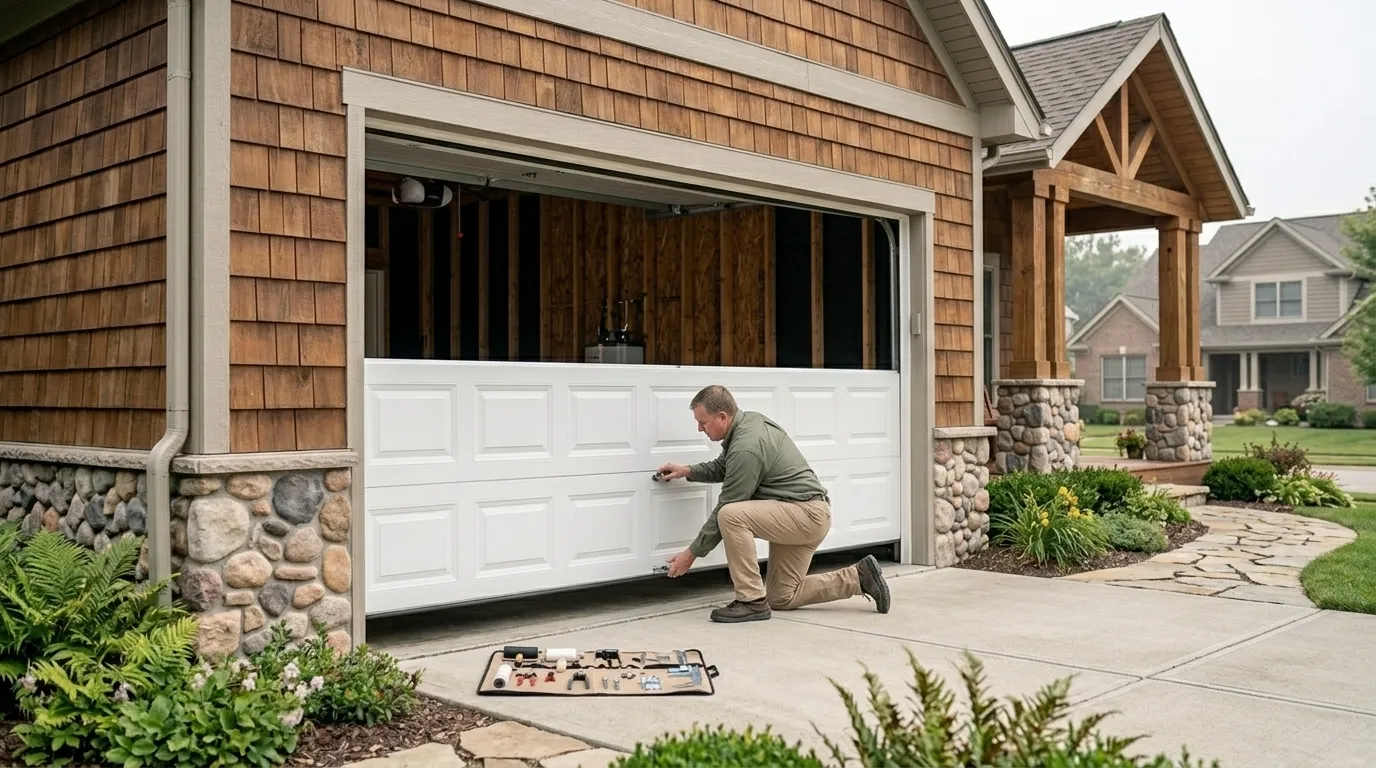
For the extension-spring failures common on 1970s sectional doors, the job is pulling the old springs, checking the cable and pulley for wear from the uneven load, and setting new springs to match the door's actual weight - not just swapping like for like, since panels sag and add weight over the decades. If the opener is original or close to it, we check whether it's worth repairing versus replacing; a 30-plus-year chain-drive unit with a failing capacitor usually isn't worth chasing parts for.
We're honest about the limit here: if the door itself has enough sag or rot in the panels that the hardware can't hold it properly no matter what we adjust, a spring fix is a stopgap, not a solution, and we'll say so instead of billing you twice for the same problem six months apart. For a look at what we cover in West Carson specifically, see our West Carson garage door page. If you're comparing against the main service hub, that's the Manhattan Beach repair page.