
The Complications
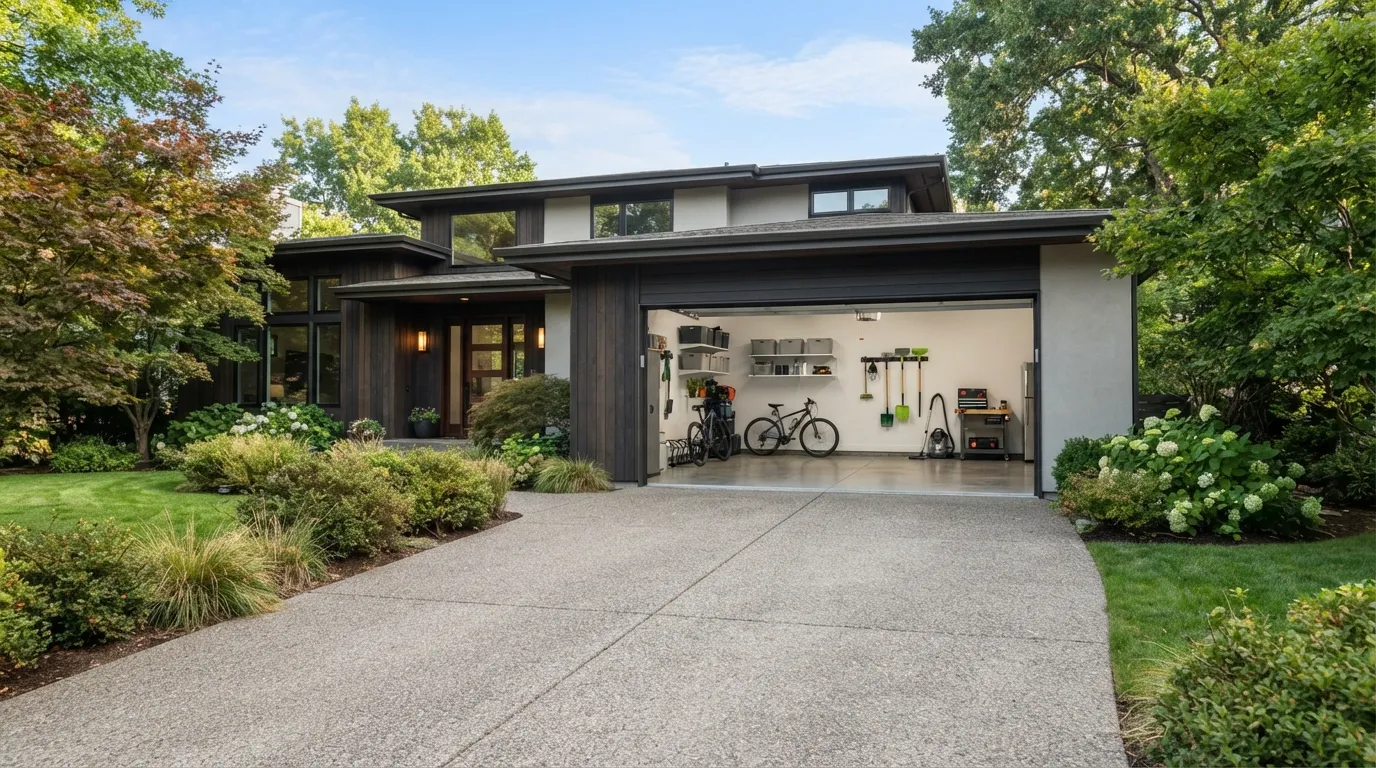
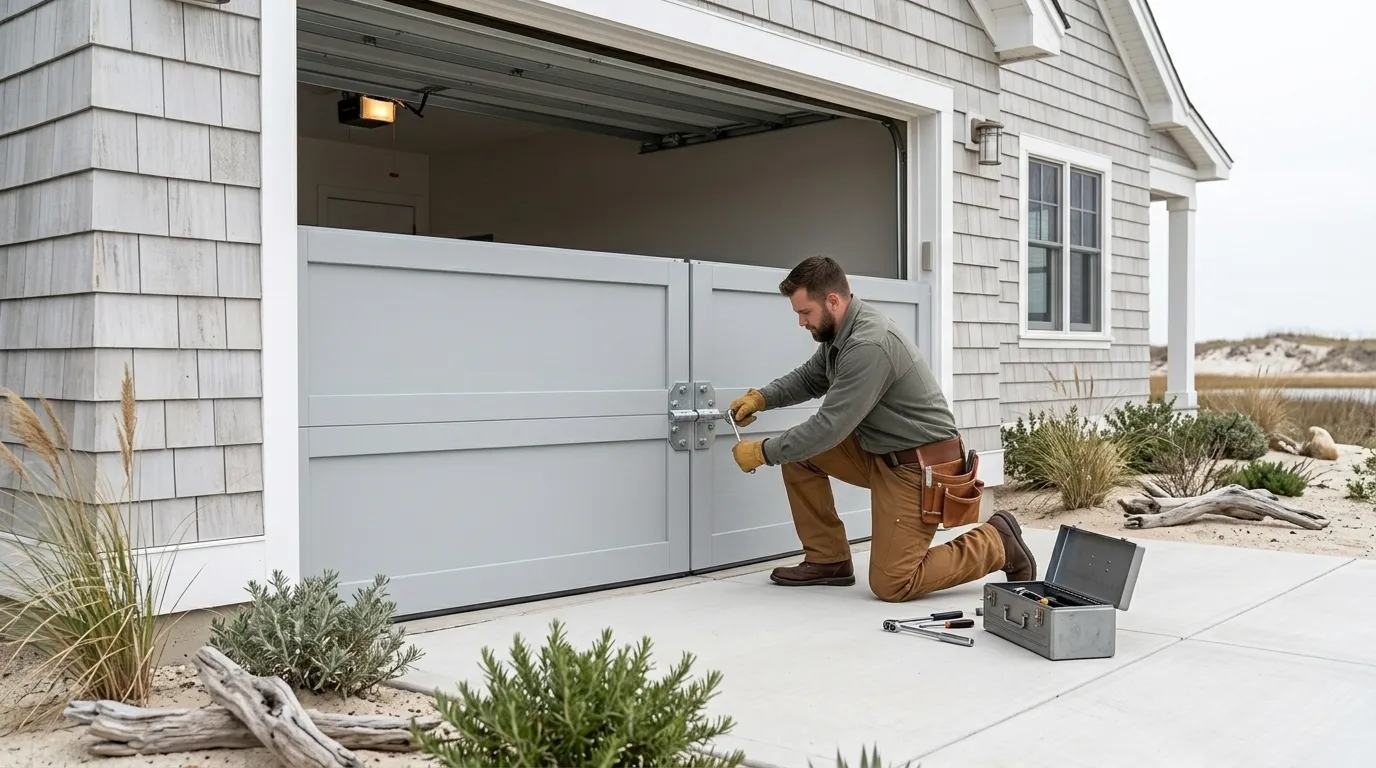
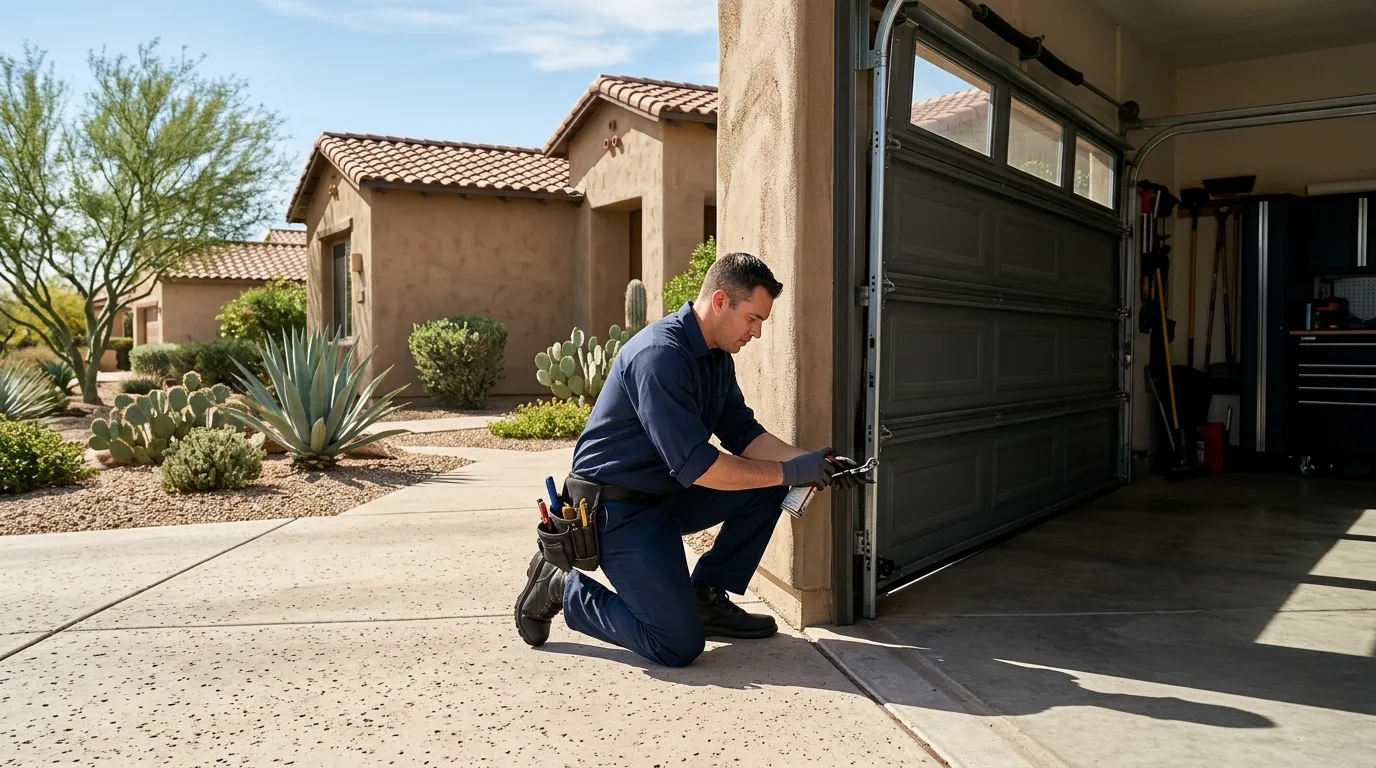
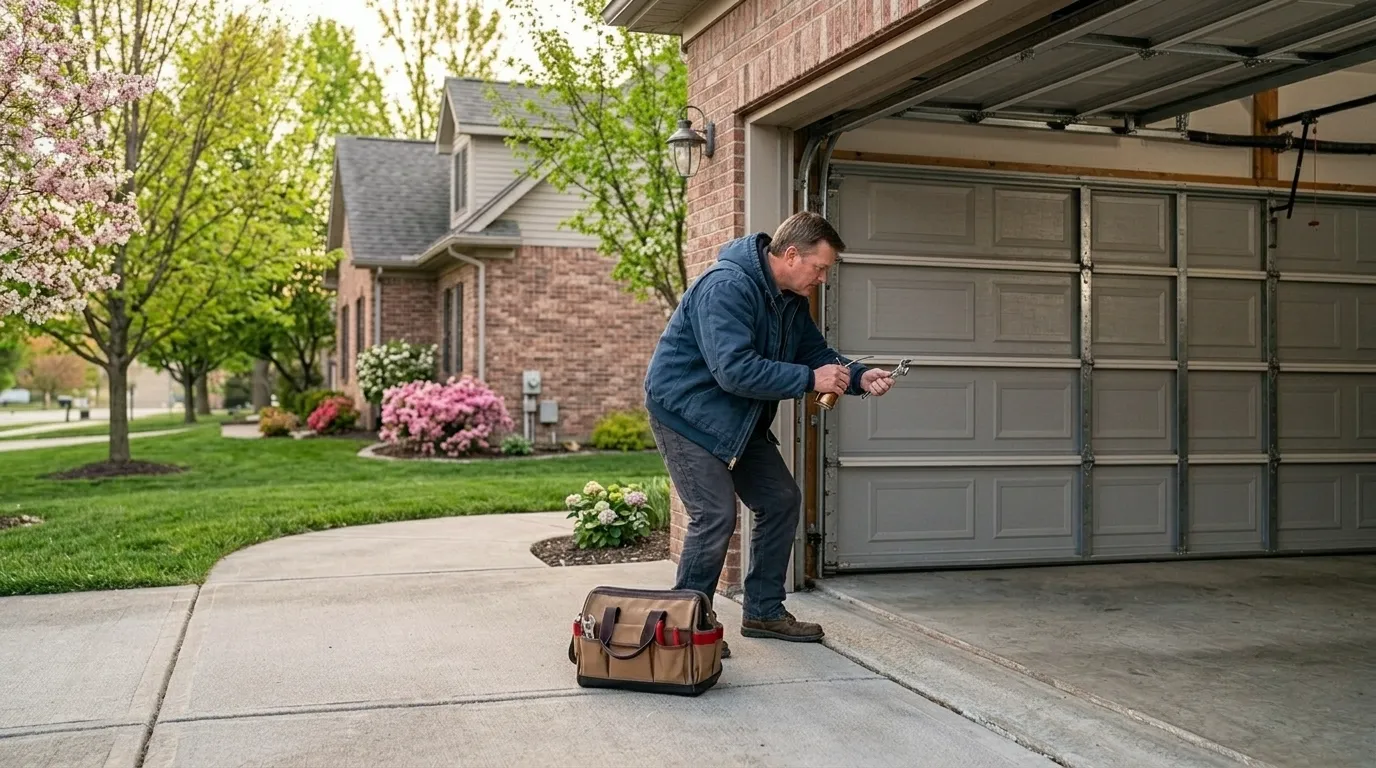
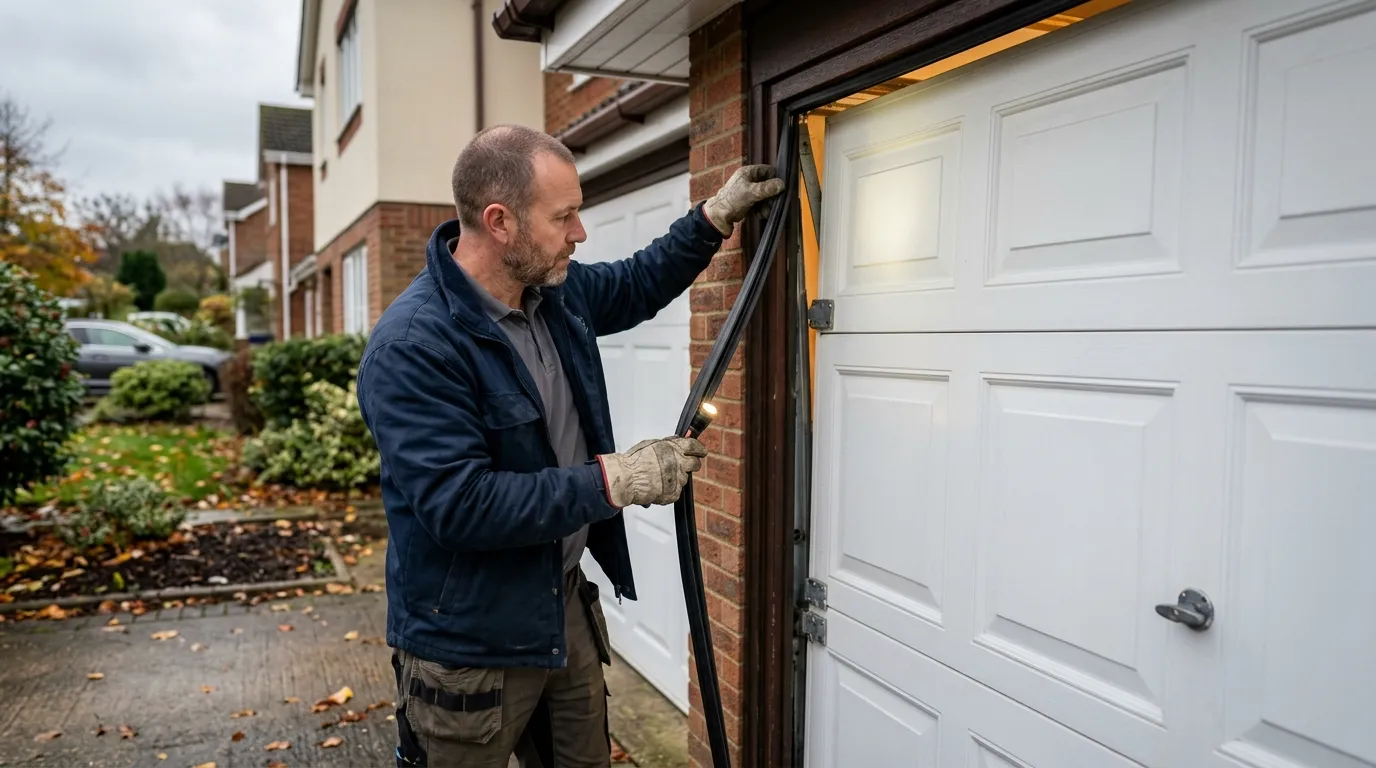
Most garage doors in West Carson went up around 1972, the median build year for this pocket of the service area. That puts the door itself in a specific bracket: steel sectional, usually a 16x7 double or a 9x7 single, hung on the extension-spring-and-pulley hardware that was standard before torsion springs became the norm on new construction. The cables on these doors run from the bottom bracket up through a pulley near the top of the track and back to the spring, and after fifty years that thin galvanized cable is the part most likely to fray first, especially at the drum end or wherever it rubs a pulley that's gone slightly out of true. West Carson sits in the mild temperate band that covers this whole area, so you're not dealing with the freeze-thaw cycling that snaps cables outright in colder climates. What you do get is slow wear: strand by strand fraying, a cable that jumps its pulley groove, or one side stretching more than the other so the door racks and binds in the track. With 8,042 households in West Carson and a median income of $95,385, most of these are owner-occupied places where the door has never been touched since it was installed - which means when a cable finally lets go, it's often the original one.
How Long You Are Without the Door
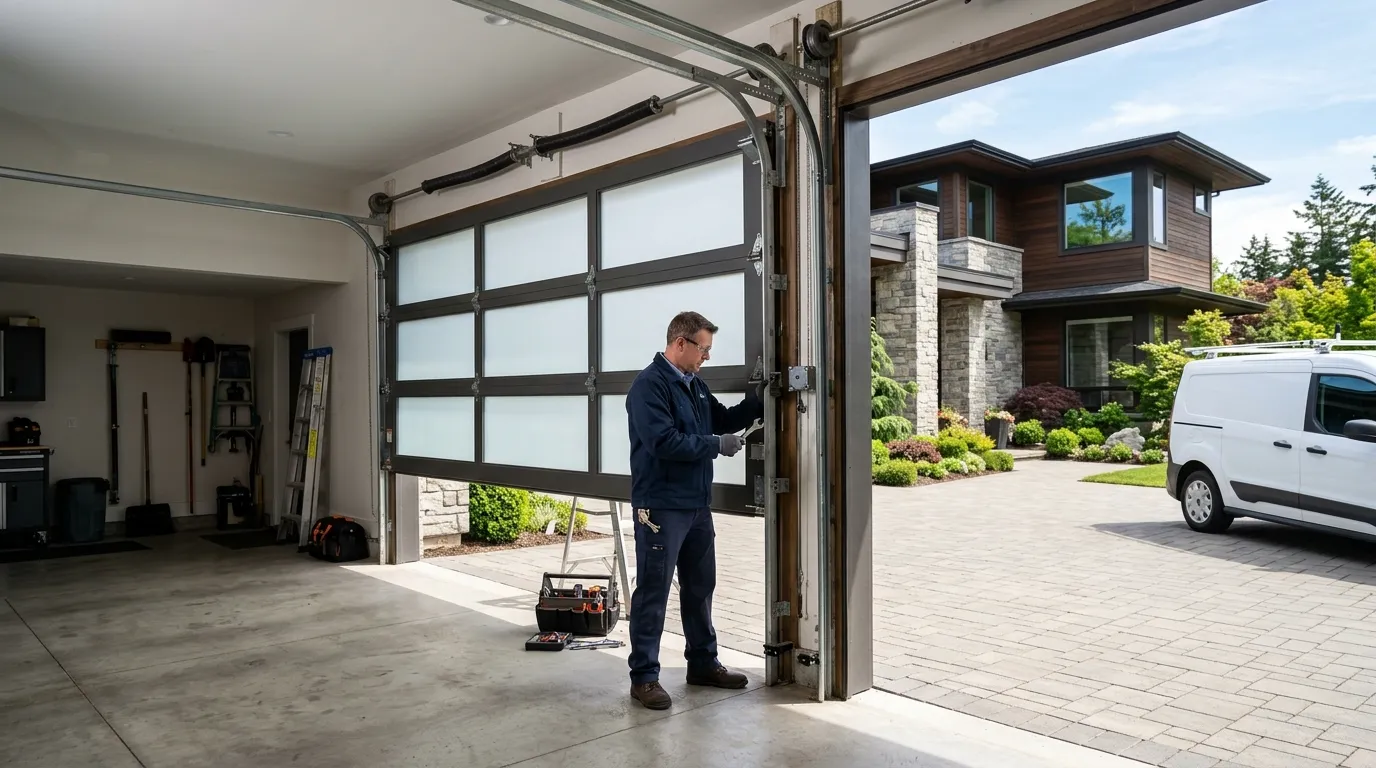
A straight cable swap on one side, done on a door that's otherwise sound, usually doesn't leave you without the door at all - we disable the opener, work one side at a time under manual control, and the door still closes and locks when we're done for the day if the job runs long. Where it gets slower is if the frayed cable has already let the door drop unevenly and bent a track or cracked a bottom panel bracket, which happens more often on doors from the early 1970s that have never had a spring or cable serviced. In that case we're waiting on a bracket or track section, and depending on what's needed that can push the job past a single visit. We'll tell you on-site which situation you're in - we don't like guessing over the phone on a door we haven't put hands on.
What the Fix Involves
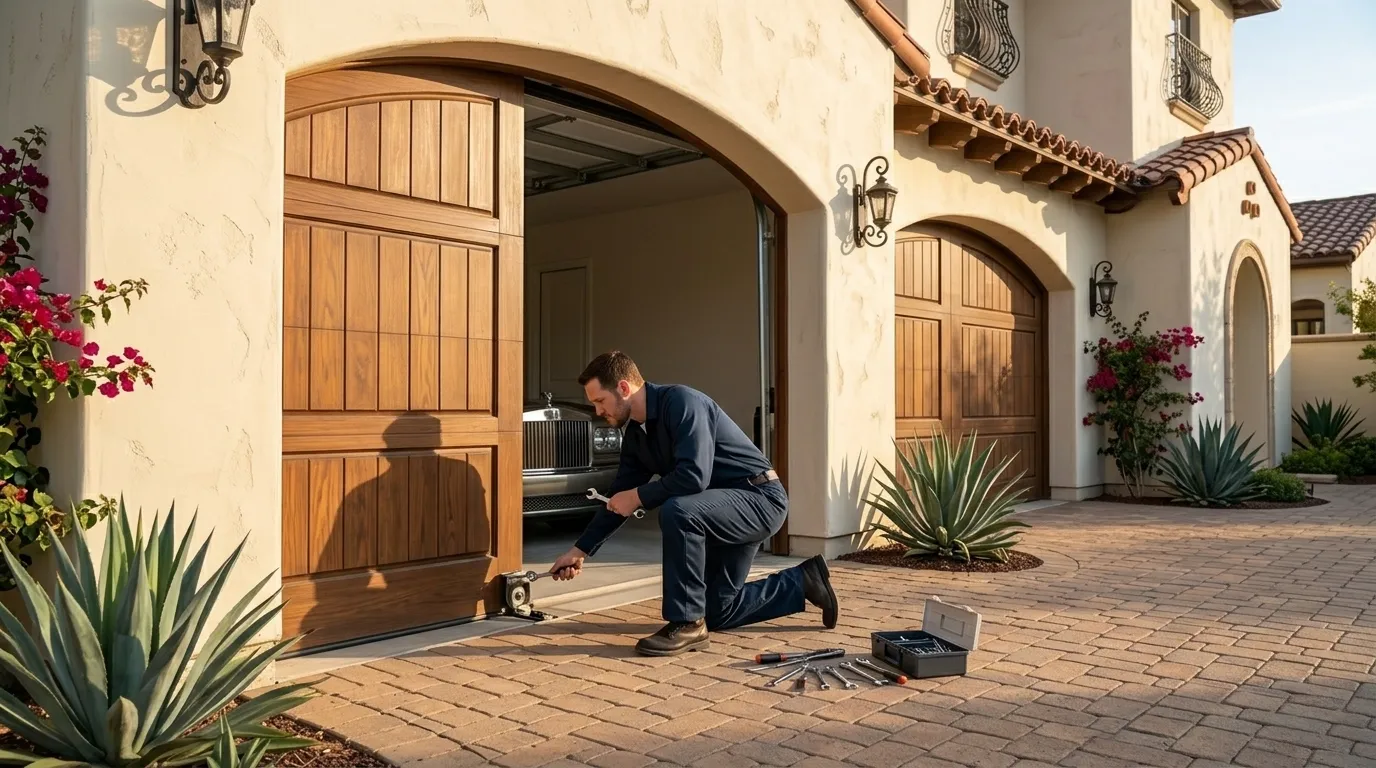
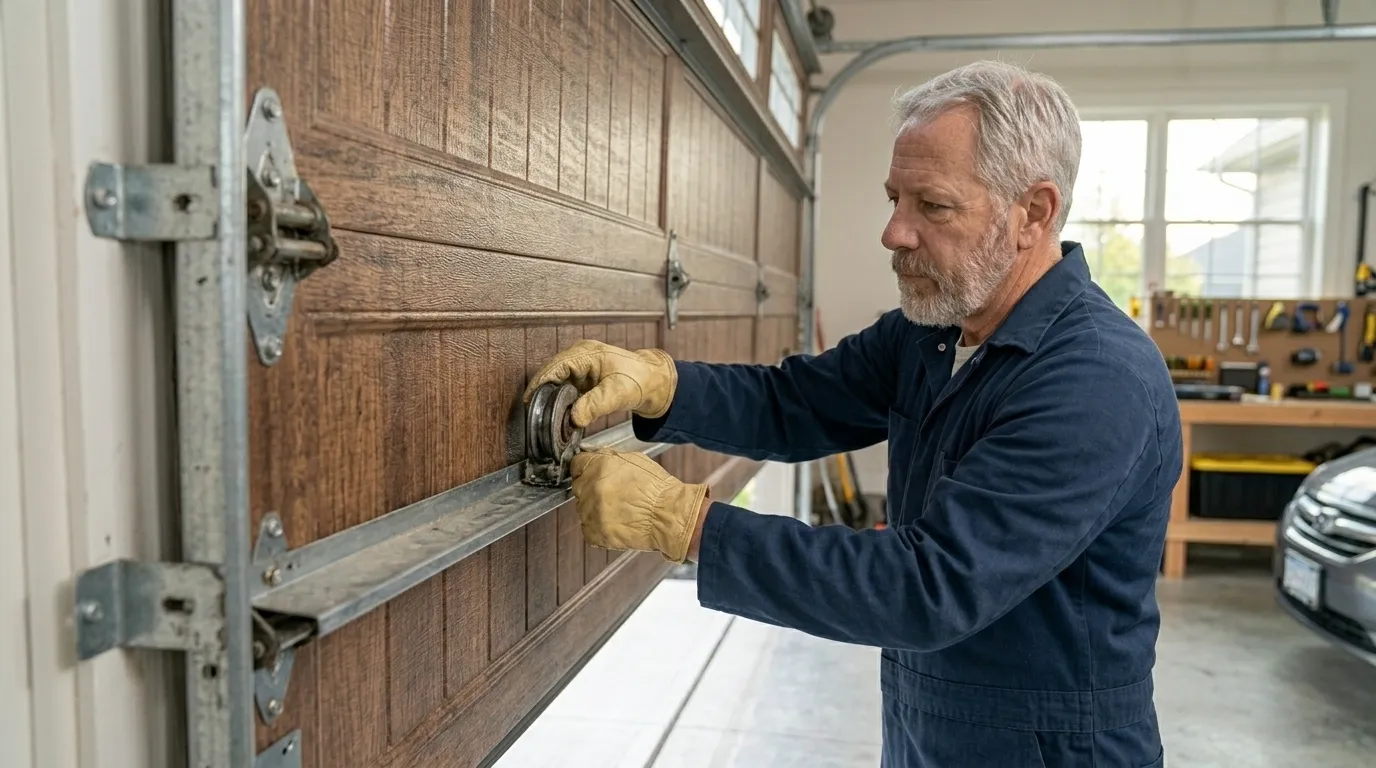
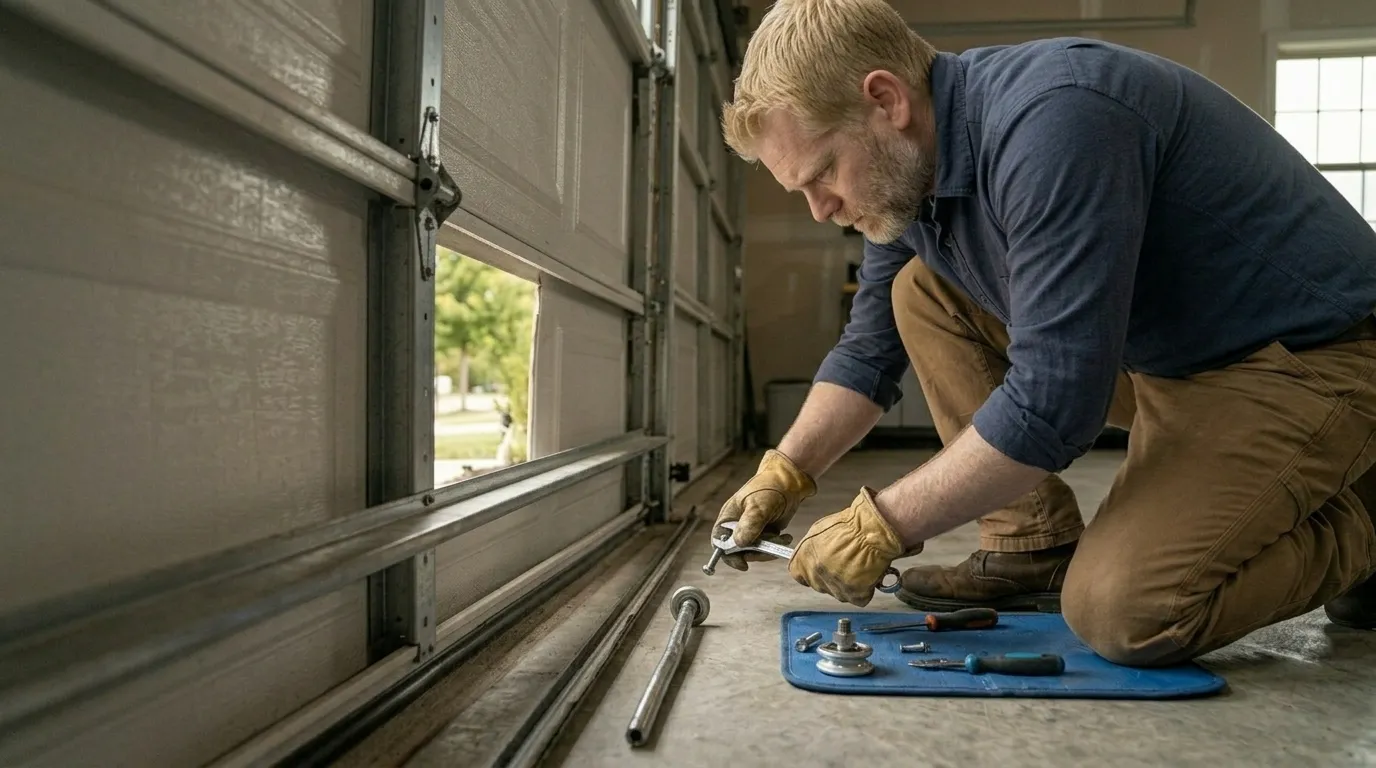
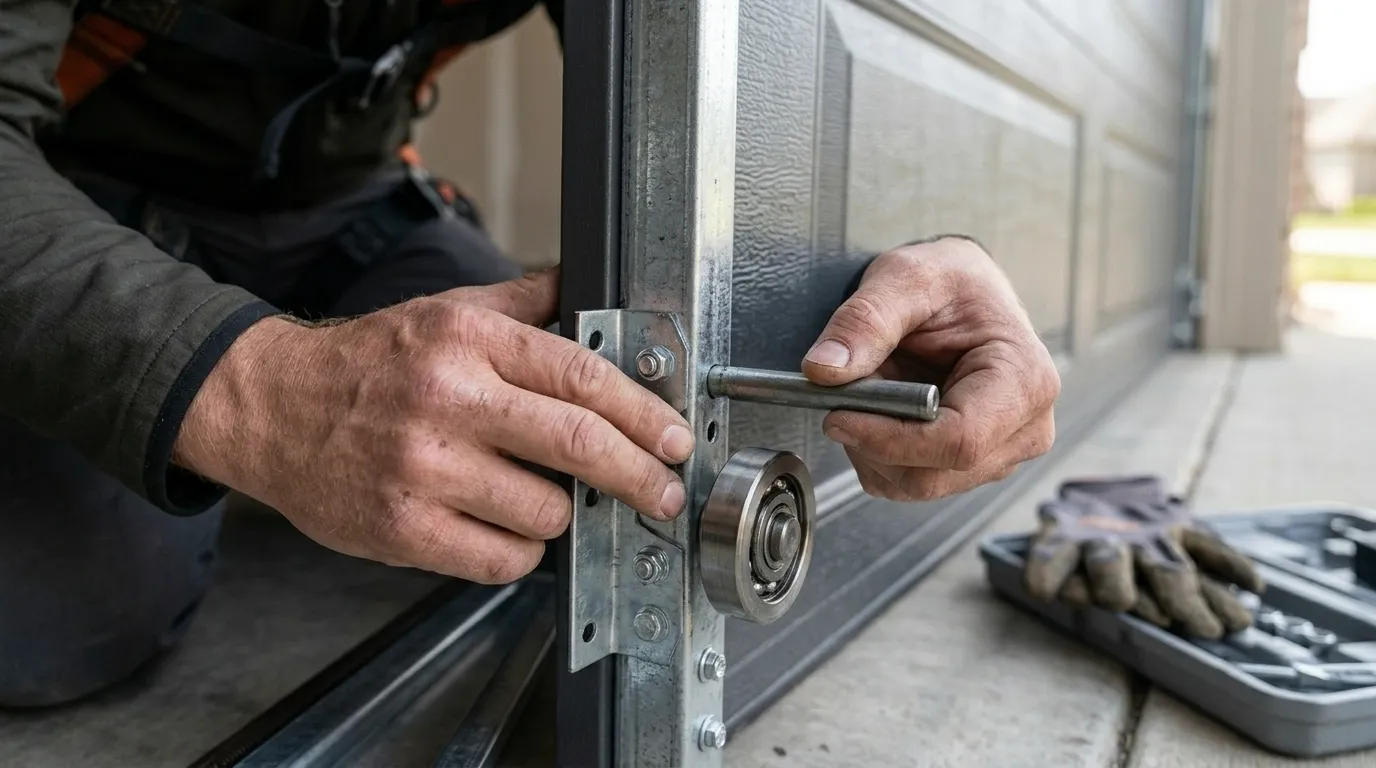
Before touching a cable, we release tension on both springs - on an extension-spring door like most of what's in West Carson, that means securing the spring and unhooking it safely rather than just cutting the old cable under load, which is how people lose fingers. We pull the frayed cable off the drum and pulley, check the pulley itself for a worn groove or a bent axle, and replace it if it's the reason the cable failed in the first place rather than just swapping the cable and having it fray again in a year. New cable gets seated on the drum, run back through the pulleys, and tensioned to match the other side so the door doesn't pull crooked. We replace both cables even if only one has failed, since a cable that's fifty years old and hasn't broken yet is close behind the one that has - it's a judgment call we'll walk you through rather than push on you. If the drum or the track itself needs replacing, that's a different job and a different quote, and we say so instead of rolling it into a cable price that doesn't cover it.