Why It Happens Here
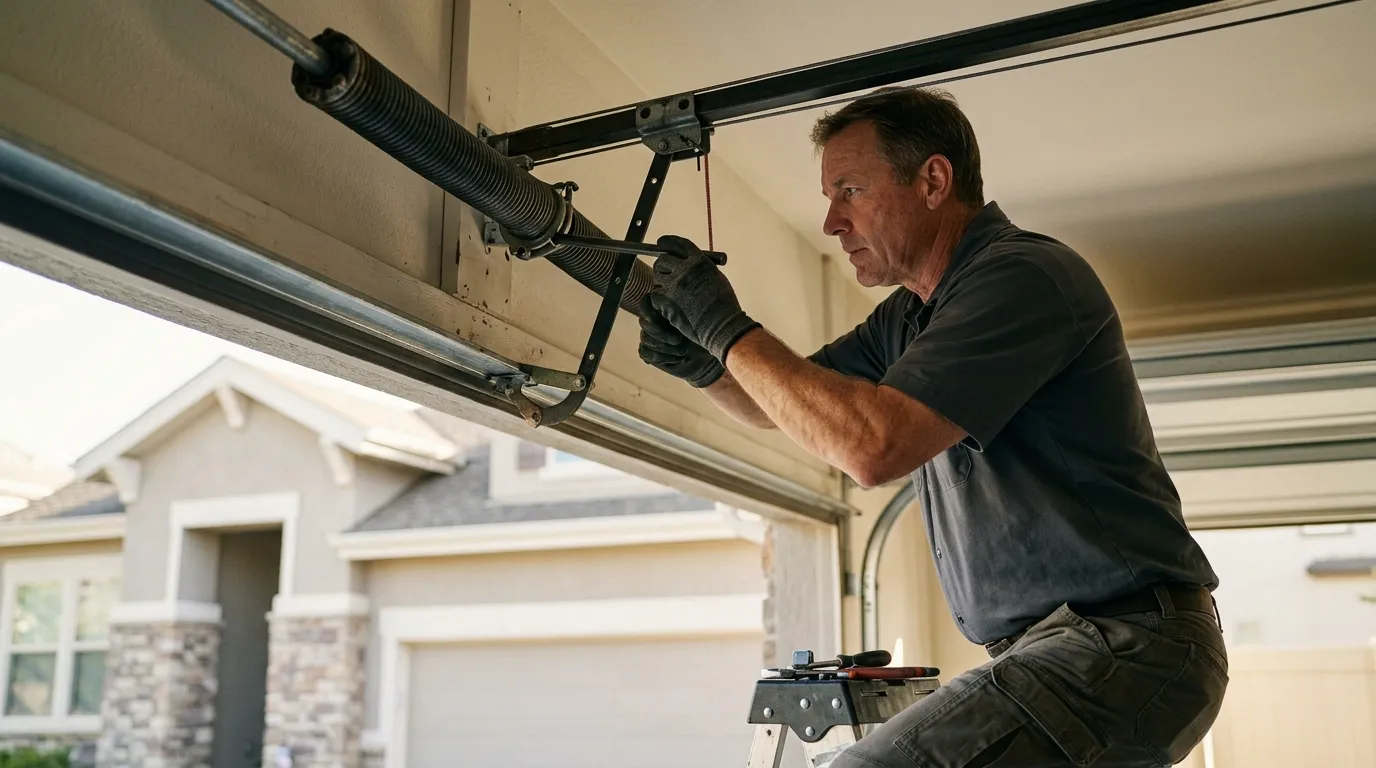
Most of the housing stock in this part of the South Bay went up between 1947 and the early 2010s, with a median build year of 1963, and a lot of that is original 1960s-70s construction. That matters for maintenance because a door installed on a house built in 1965 is running hardware that's been through five, six, sometimes seven decades of use, repainting, and re-drywalling around it. Torsion springs lose tension gradually. Rollers wear grooves into tracks. Cable ends fray where they wrap the drum. None of that announces itself with a bang - it shows up as a door that's slower, louder, or a little crooked going up.
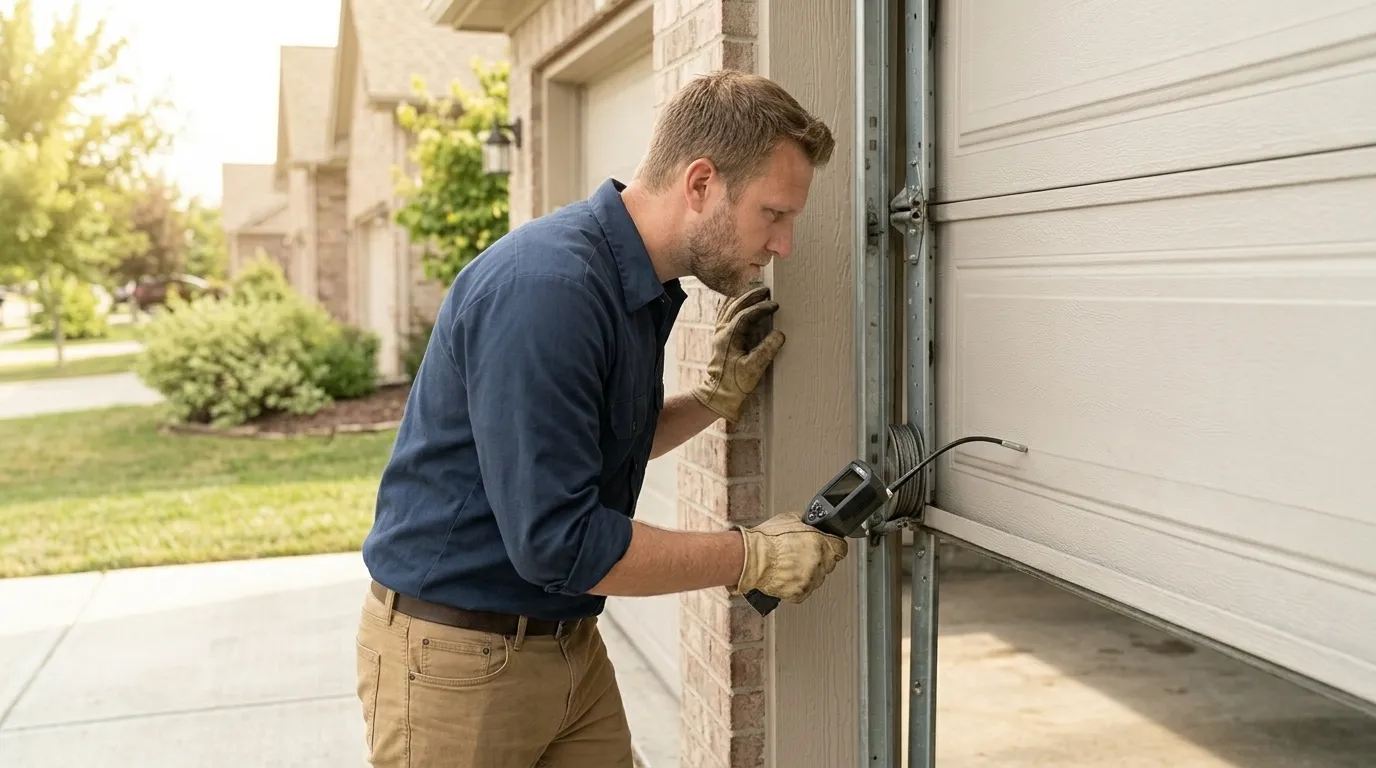
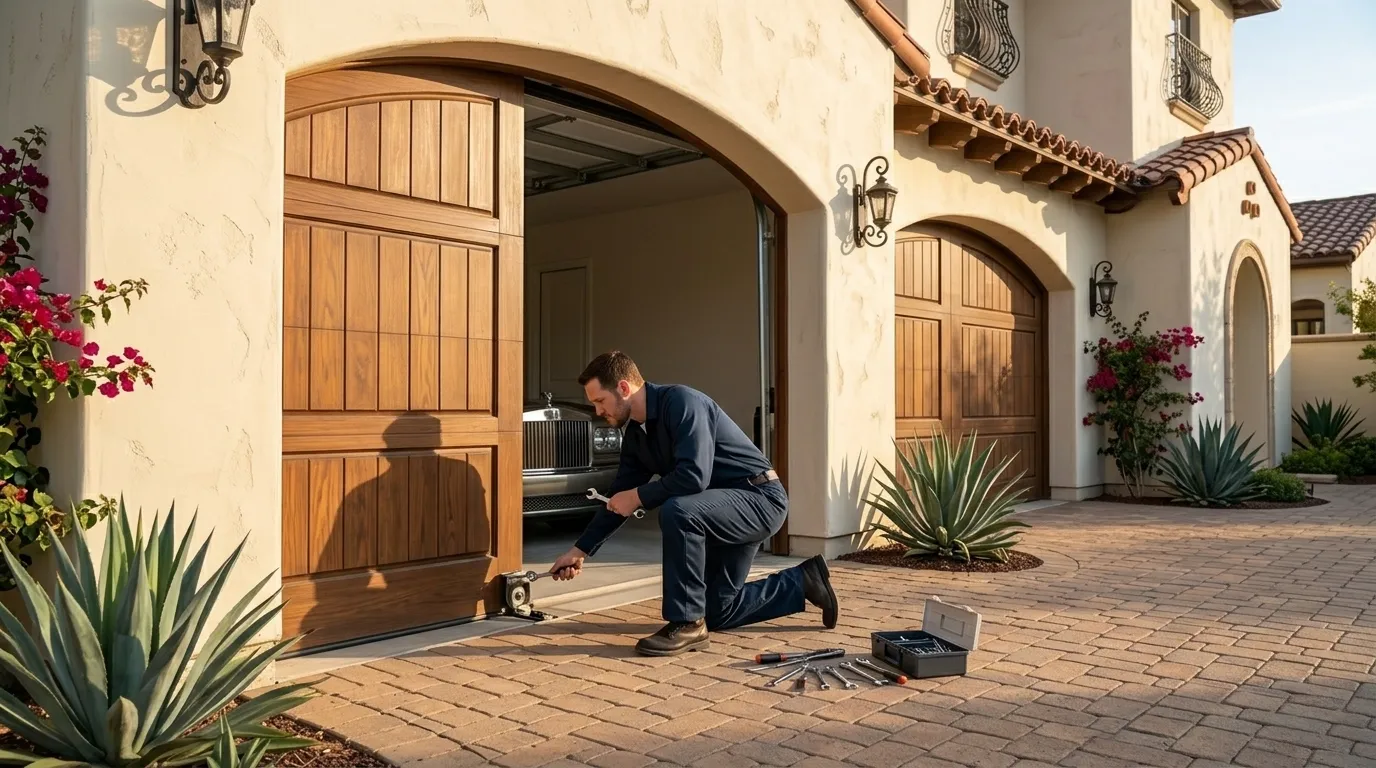
The climate here is mild temperate, which sounds like an easy pass for a garage door, and in some ways it is - no freeze-thaw cracking concrete slabs, no extreme heat warping panels. But mild and coastal isn't the same as dry. Salt-laden marine air corrodes exposed steel fasteners, spring coils, and hinge pins faster than a dry inland climate would, even without dramatic weather. On an original-era door with 60 years of hardware, that slow corrosion is often the actual failure point, not the panel itself. A yearly look at springs, cables, and fasteners catches that before a cable snaps under load.
The DIY Question
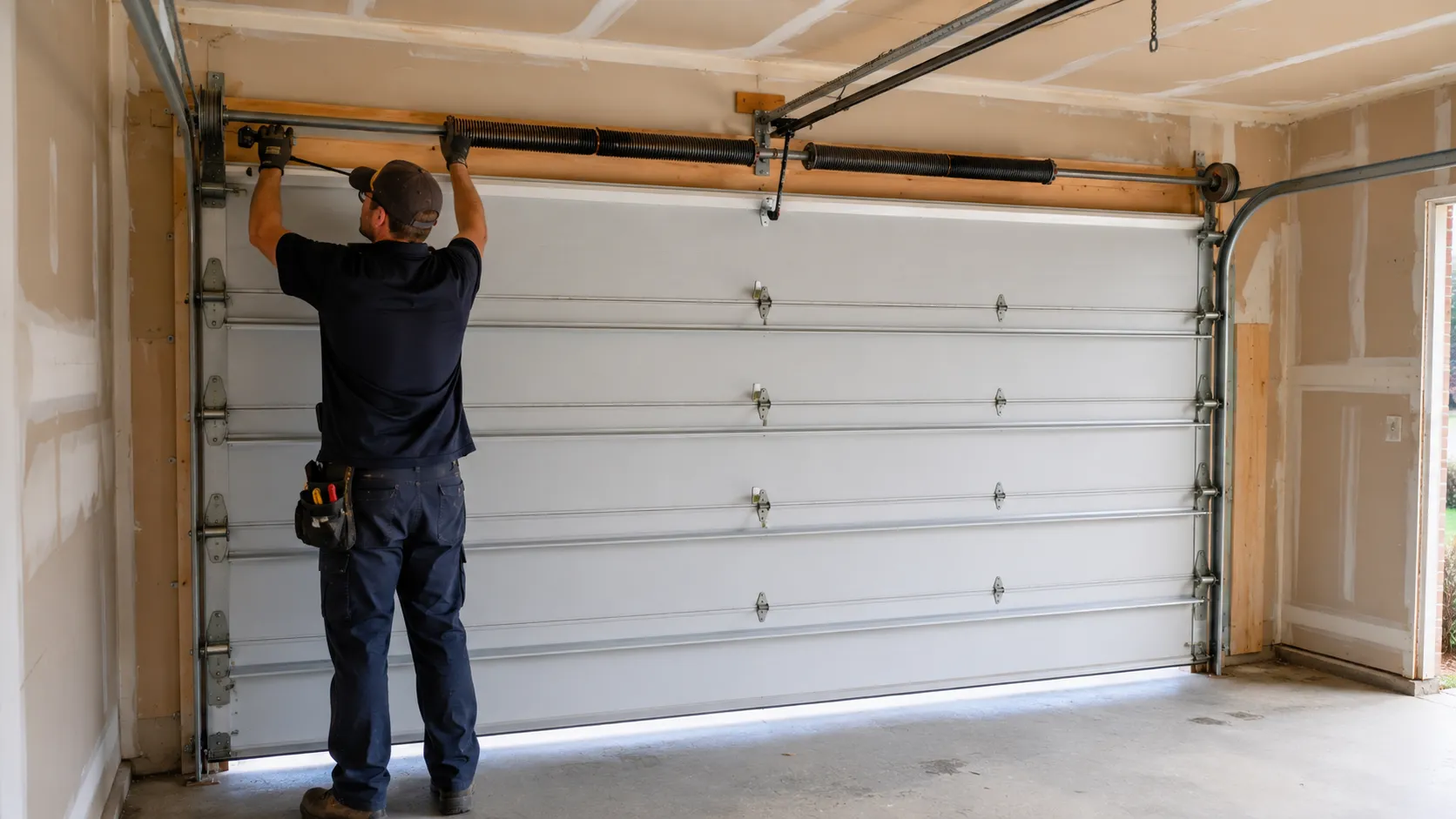
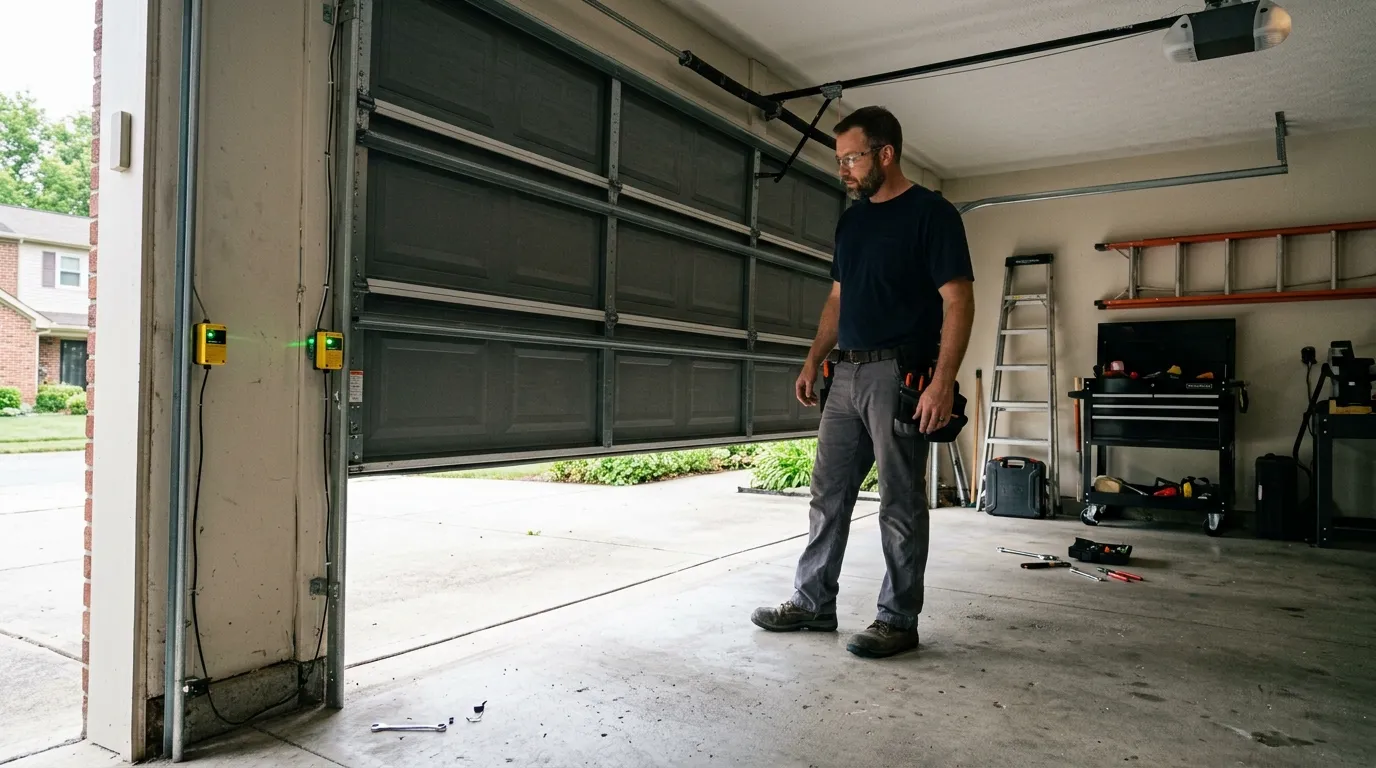
Some of this you can do yourself. Wiping down tracks, checking that the door reverses on the safety sensor, listening for new noises, keeping hinges lubricated with the right product - all reasonable homeowner tasks. Torsion springs are not on that list. A spring under tension that lets go while you're working on it can break bones or worse, and on an older door where the spring may already be past its rated cycle count, that risk goes up, not down.
Here's the honest limitation: we don't do remote phone diagnosis for spring or cable jobs. If it's under tension and it's original 1960s or 70s-era hardware, we want eyes on it in person before anyone touches it, including us. That's not us padding a visit - it's the one part of this job where guessing costs more than a service call.
What You Are Seeing
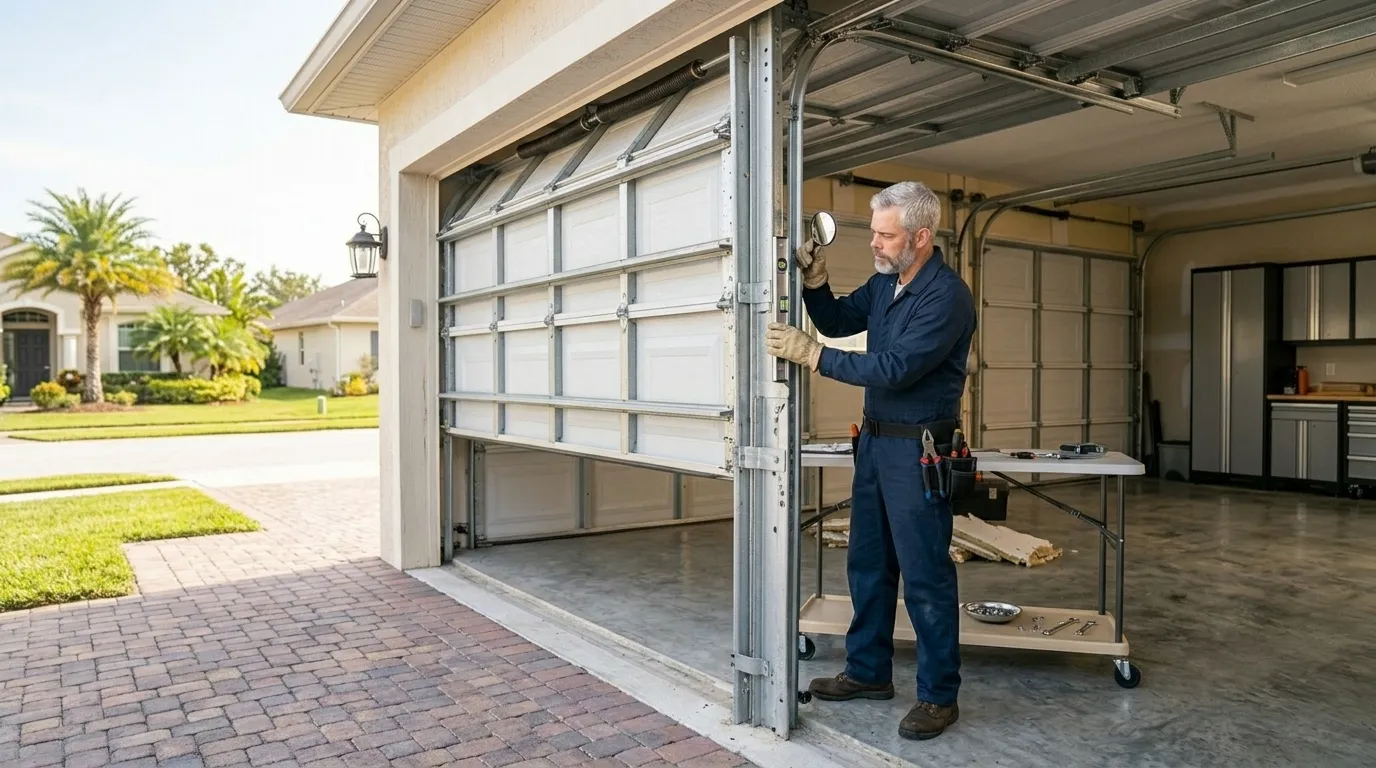
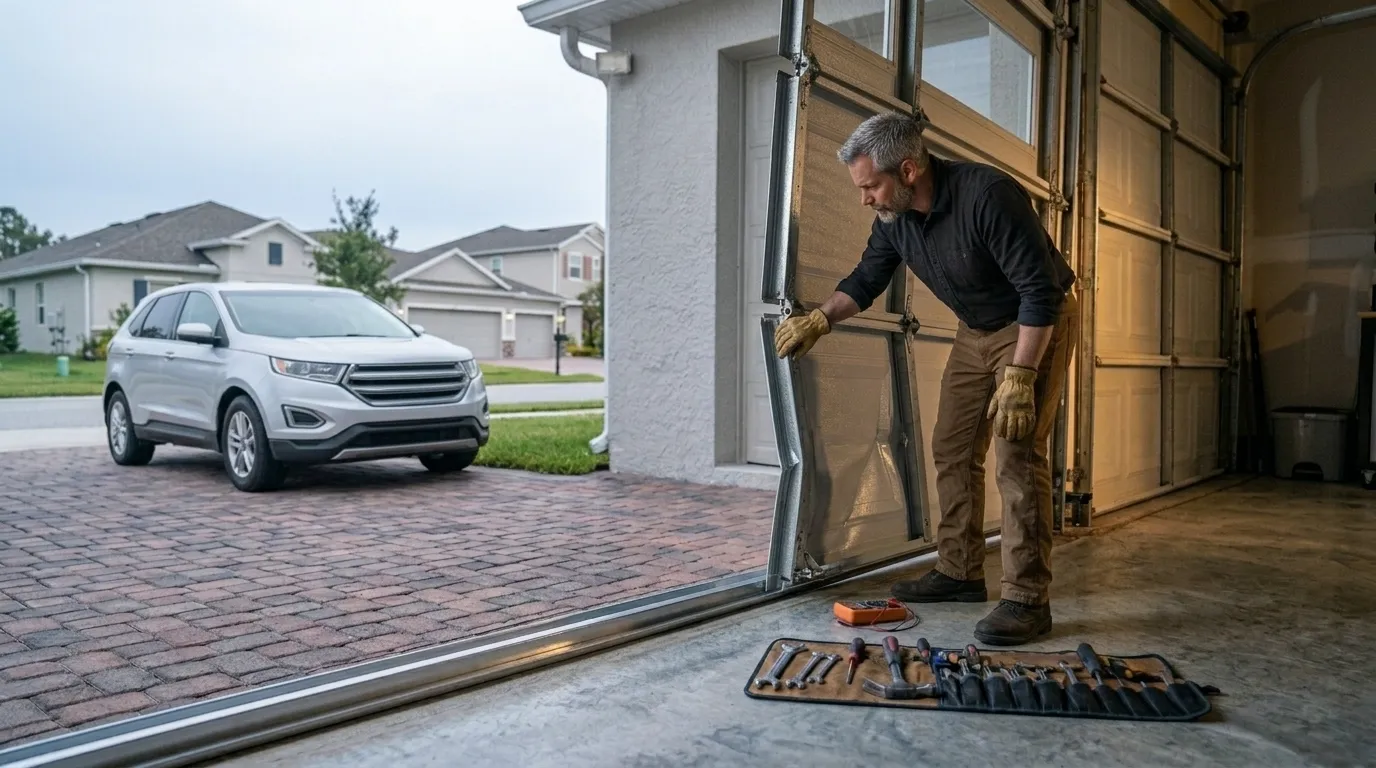
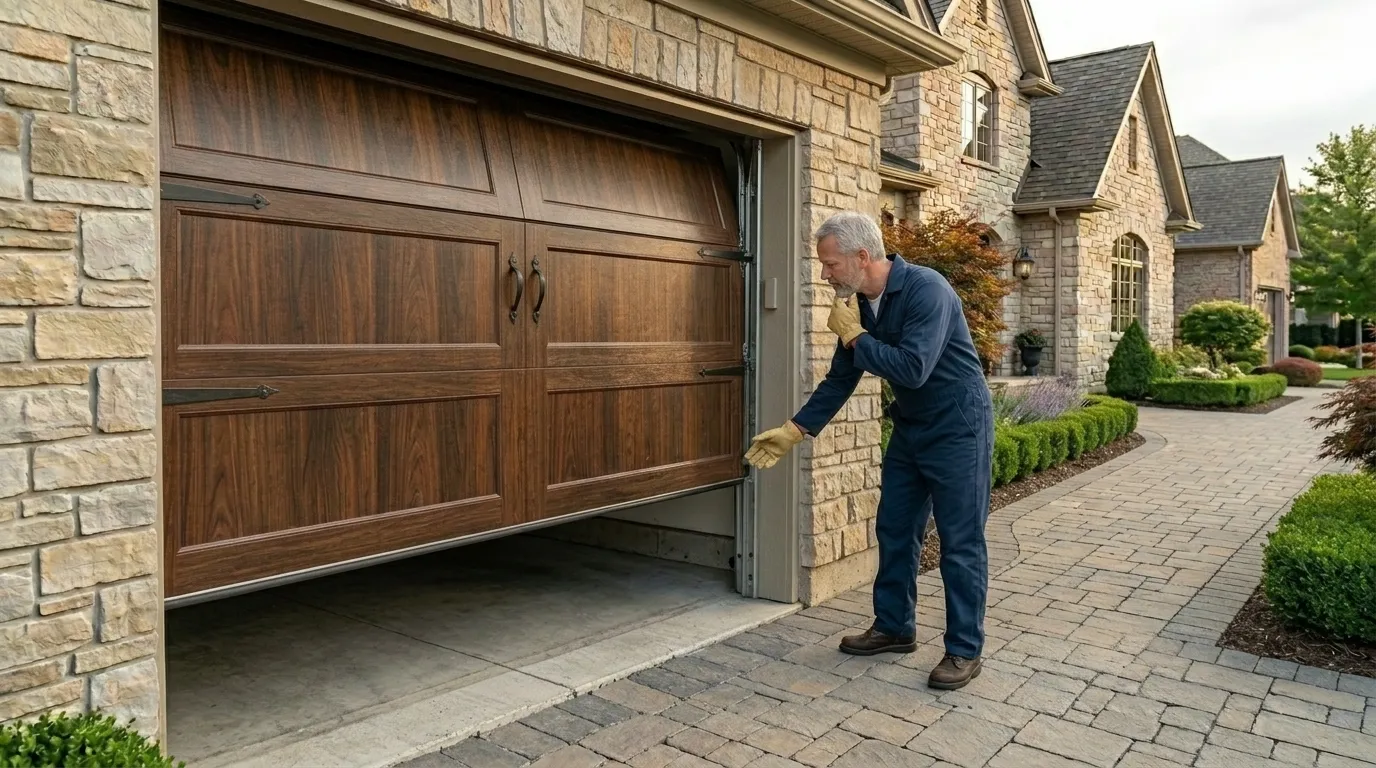
A door that's slow to open, or that opens unevenly with one side lagging, is usually a spring or cable that's lost tension asymmetrically - common once original hardware from the 1960s-70s building wave starts to age out. A grinding or popping sound on the way up often means a roller has worn flat in a track that's seen 50-plus years of the same groove. Rust bloom on spring coils or cable ends, especially on a door facing the coast, points to that marine-air corrosion working faster than it would inland.
If the door reverses randomly or won't close all the way, that's more likely an opener sensor or force-setting issue than a structural one, and it's a quick fix on a maintenance visit rather than a replacement. None of these are emergencies by themselves, but ignored long enough, any of them becomes one.