Why It Happens Here
Housing across this service area was built mostly between 1947 and 2012, with a median build year of 1963, and the bulk of the stock in the 24 named communities we cover dates to the 1960s and 70s. That matters for cables specifically. A lift cable or extension cable on a door from that era has usually been replaced once already, if at all, and a lot of original drums and pulleys are still in service too, working against galvanized (not stainless) steel wire that was standard for the period.
The climate here is mild temperate, so we don't get the freeze-thaw cycling that snaps cables outright in colder regions. What we get instead is slow fatigue: the cable flexes over the drum thousands of times a year, strand by strand, until it's down to a handful of threads holding a 150-pound door up. No sudden event, just years of mileage catching up at once, usually on a door that's been opened and closed the same way since the house was built.
With 39,906 owner-occupied houses in the households we serve, we see this pattern repeat itself constantly. It isn't a defect in any one door. It's what happens when a whole generation of garage doors installed in the same two decades all reach the same age at roughly the same time.
The DIY Question
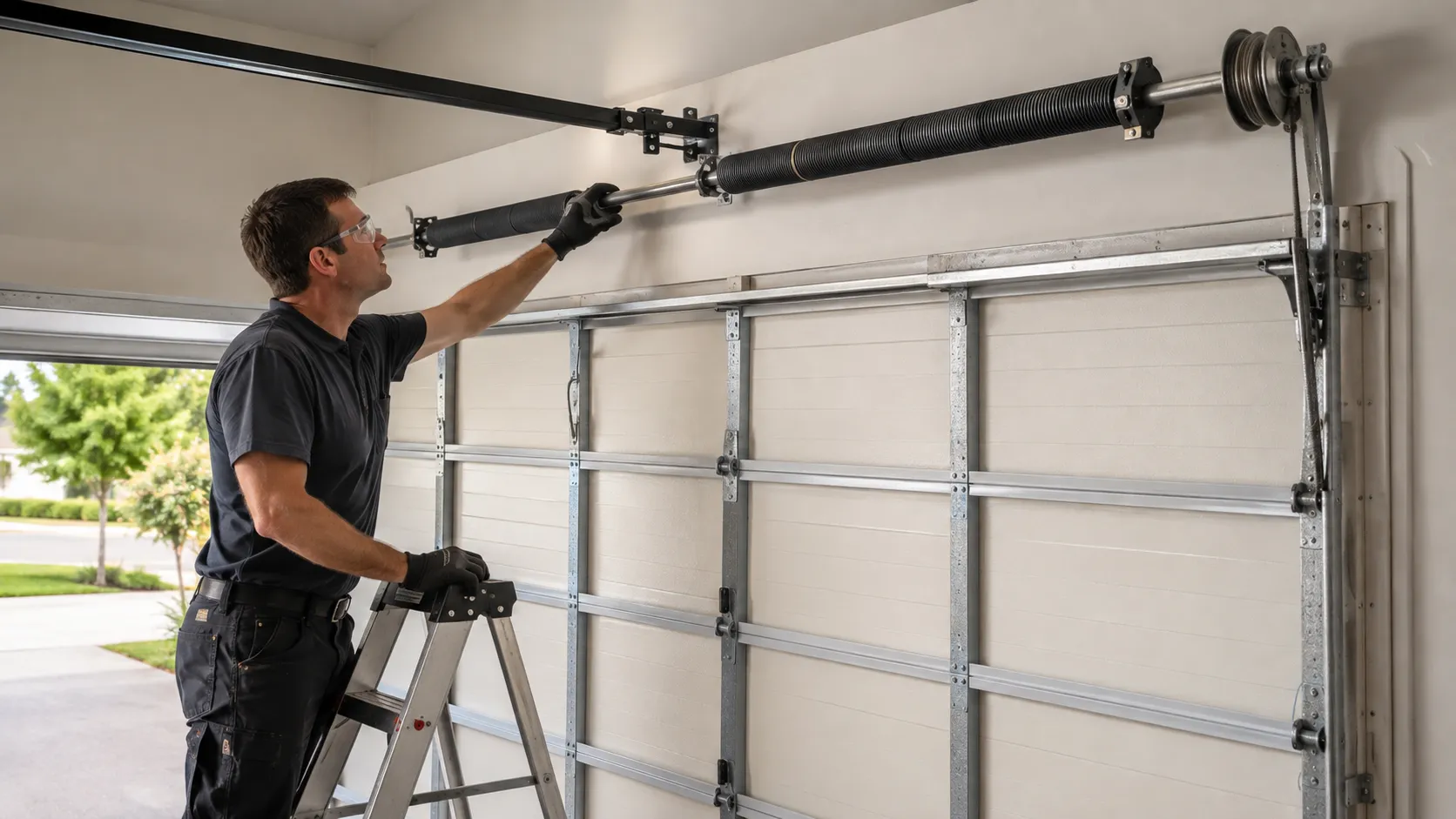
A garage door cable is under real tension even with the door closed, and it's tied into a spring system that can do serious damage if it lets go while you're working near it. This isn't a job we recommend for a homeowner, full stop, regardless of how handy you are with other repairs around the house.
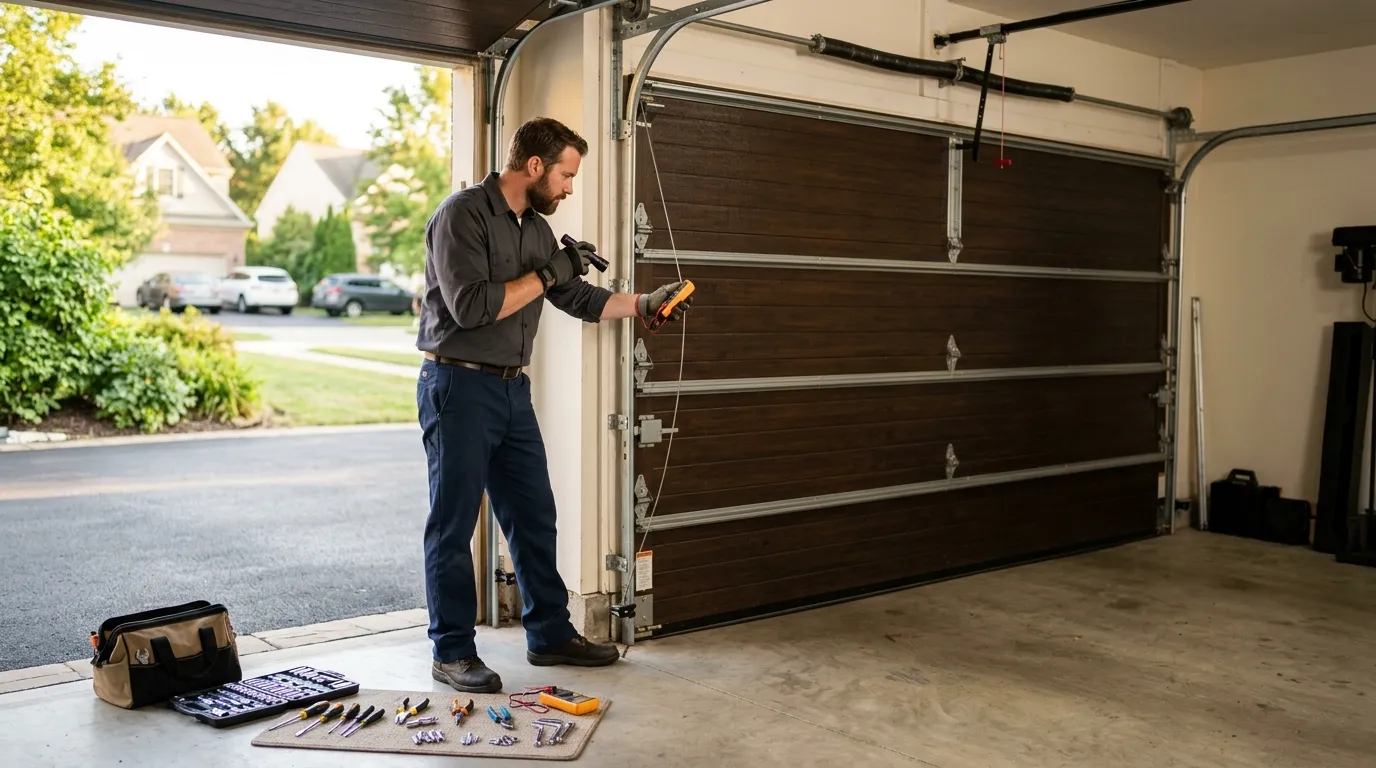
Where you can help yourself: know what you're looking at before you call. If the door is hanging crooked, one cable has likely already failed. If you hear a snap and the door drops or won't move, don't force the opener. Both of those are useful things to tell whoever answers the phone, and they help us bring the right parts the first time.
One honest limitation here: if the drums, tracks, or spring system on an older door are worn enough that a cable repair would just shift the failure point somewhere else within a few months, we'll say so rather than sell you a cable-only fix that doesn't actually solve the problem. Sometimes the right call is replacing more than the cable, and we'd rather tell you that up front than have you call us back in six months.
What You Are Seeing
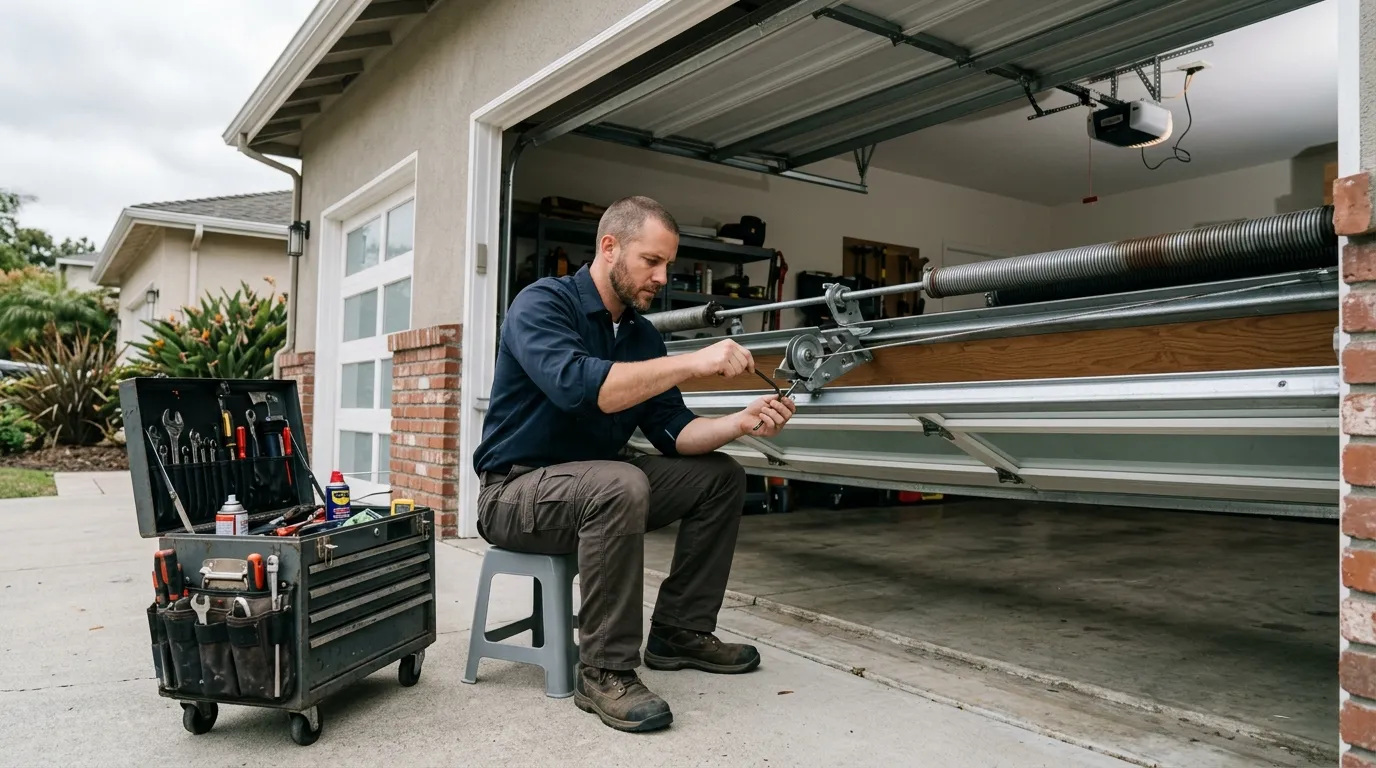
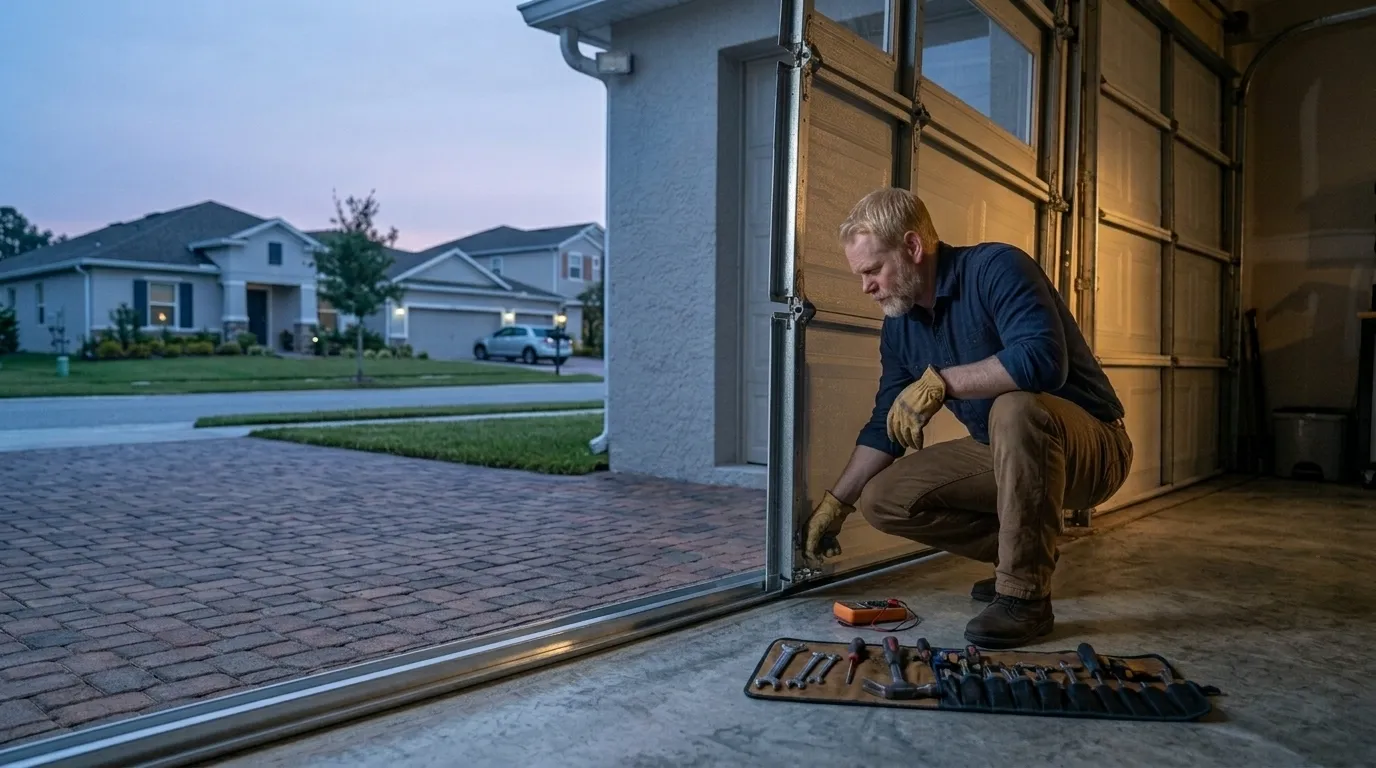
A frayed cable usually shows up as a visible change before it's a full failure: the door sits a little crooked when closed, one side seems to drag or catch a fraction of a second before the other, or you can see strands sticking out where the cable wraps the drum. Catch it at that stage and it's a straightforward swap.
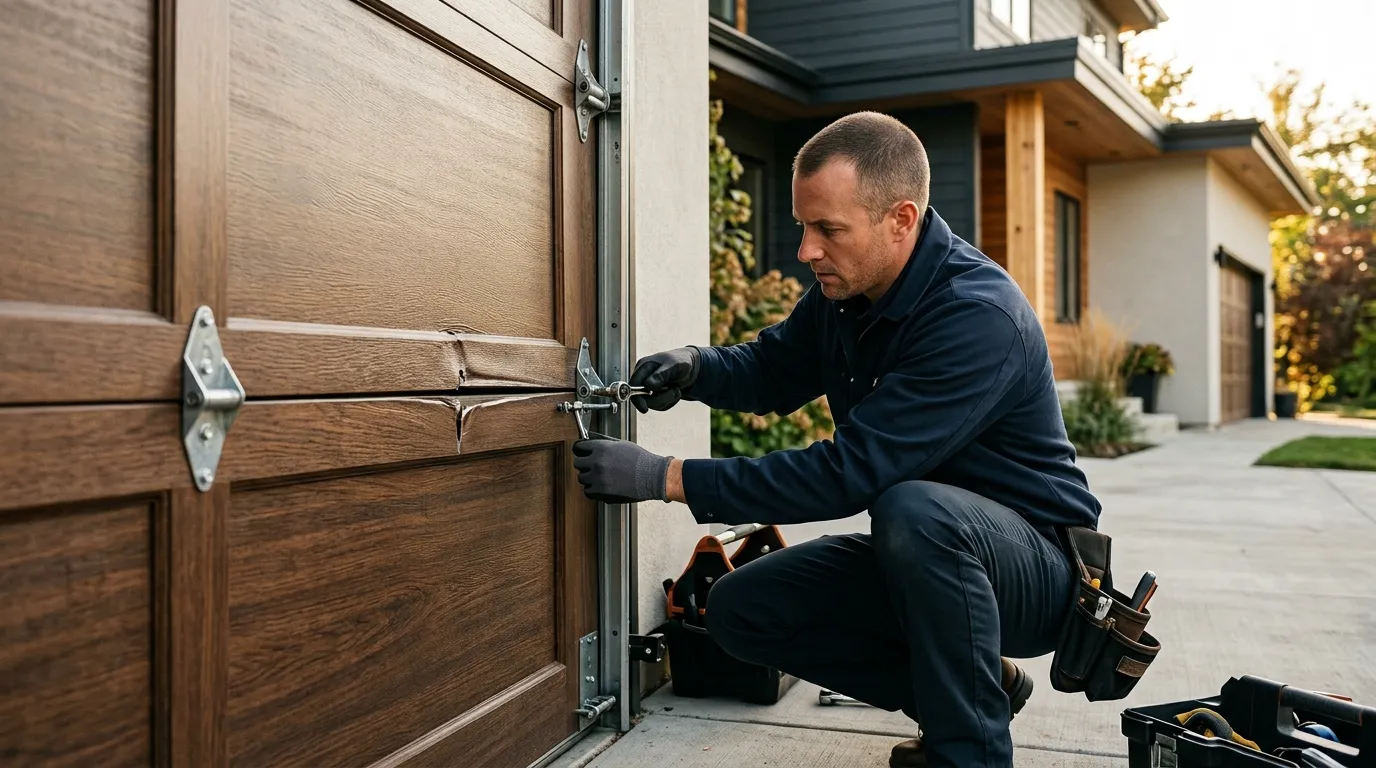
A snapped cable is more obvious. The door drops unevenly, sometimes just an inch or two, sometimes all the way down on one corner, and the opener may still try to run the door on a track it can no longer support evenly. If that happens, leave it alone and call rather than testing the opener again.
Less obvious: a cable that's jumped its drum without breaking. The door may look fine sitting closed but jam or bind the moment it starts moving. This is common on older doors where the drum grooves have worn slightly oval over the decades of use tied to the 1960s and 70s housing stock across this area, and it's easy to mistake for an opener problem rather than a cable one.