Why It Happens Here
Most of the buildings in this part of the South Bay went up during the same wave of construction that produced the area's housing stock - permits running from 1947 through 2012, with a median build year of 1963. A lot of the light-industrial bays, self-storage rows, and back-of-lot commercial units near those blocks came out of that same 1960s-70s push, and they were fitted with whatever door hardware was standard at the time: a single torsion spring sized for a lighter door than the steel section actually hanging on the track today.
That matters because the climate here sits in a mild temperate band - no deep freeze, no summer that cracks a panel from heat. Doors in this area don't usually fail because of weather extremes. They fail because a spring rated decades ago for a wood or hollow-core door is still doing the lifting on a heavier insulated replacement, or because the same track and rollers have been running two, three, four open-close cycles a day since the hardware was new. Add a commercial building's higher cycle count - deliveries, staff, equipment moving in and out - and that original-era hardware runs out of life faster than it would on a house next door. That's the pattern across the service area, not a one-off.
The DIY Question
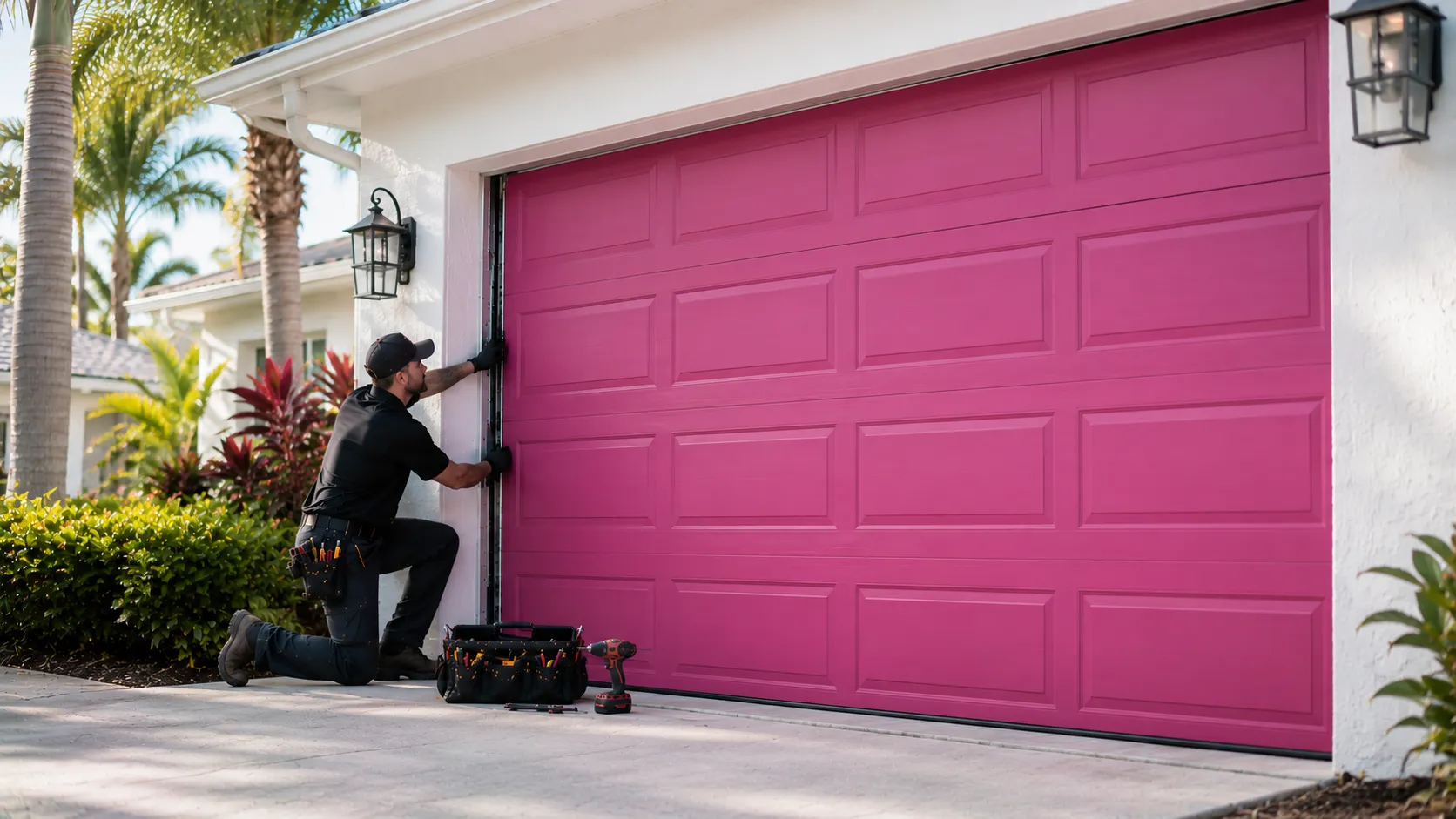
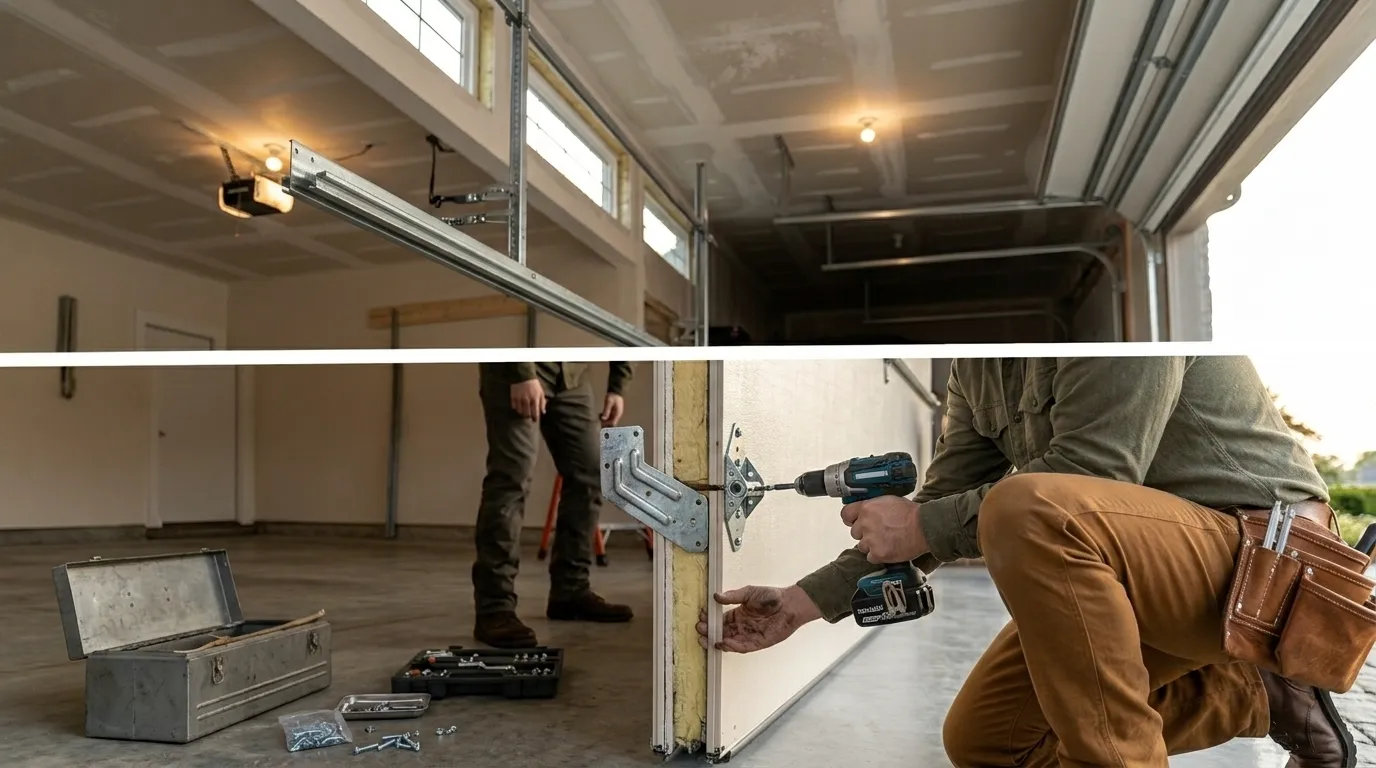
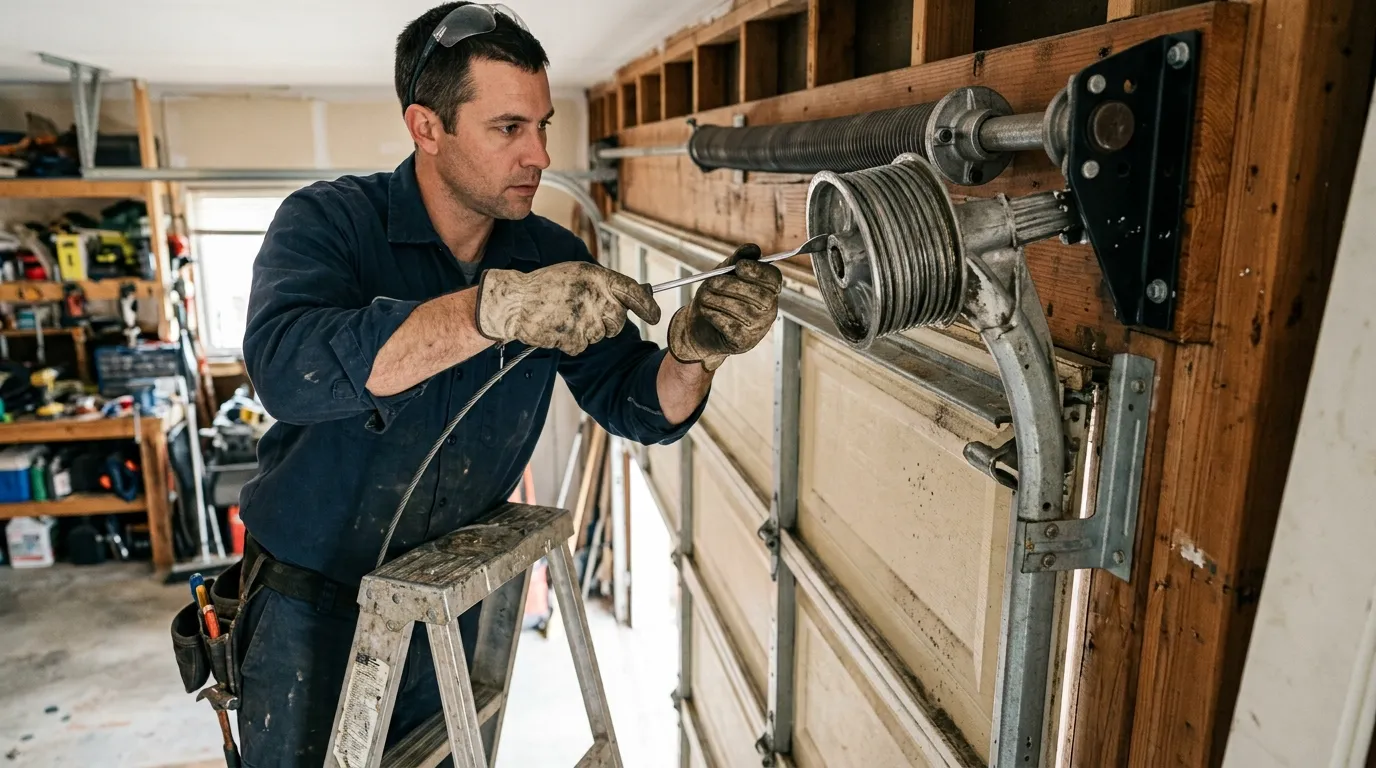
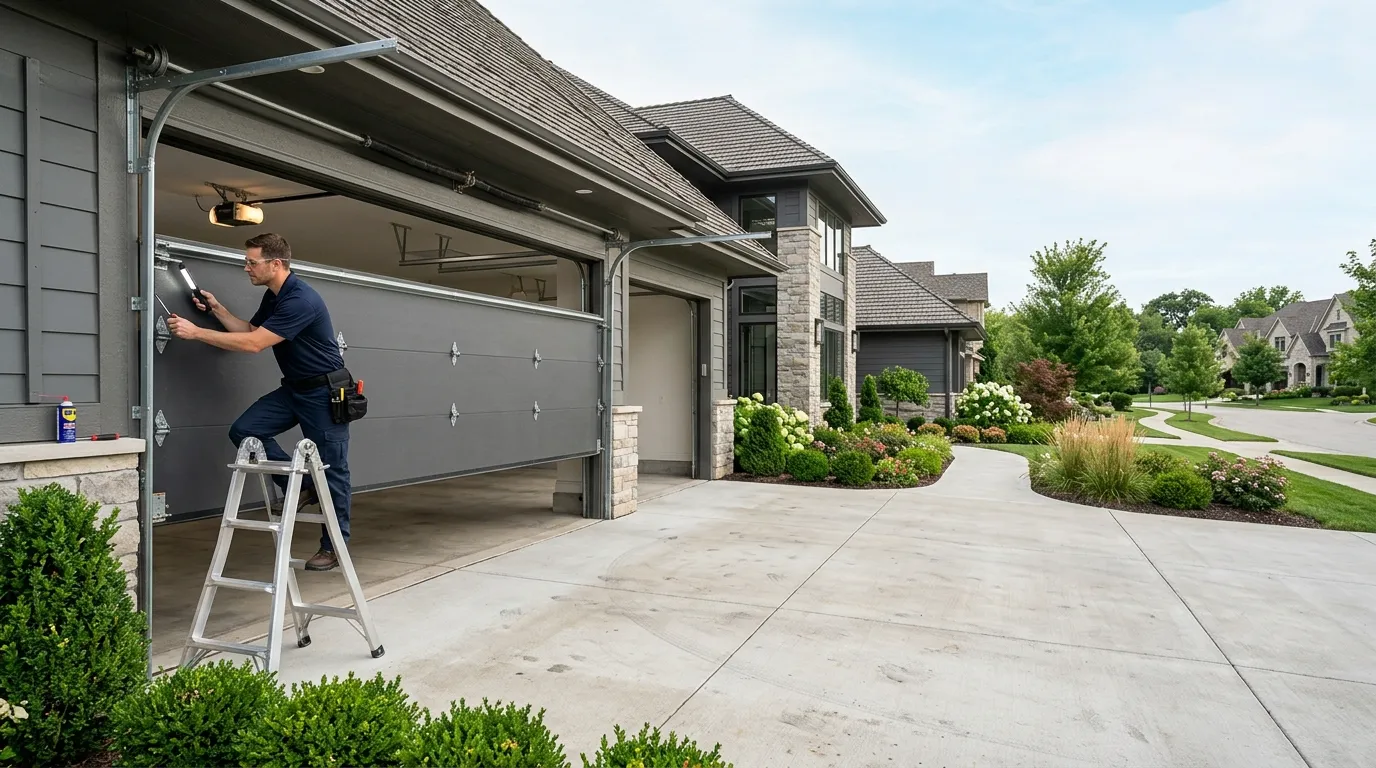
A homeowner can usually get away with replacing a roller or lubricating a track. A commercial door is a different animal. Sectional doors on a business bay are heavier, the springs carry more tension, and a torsion spring under load lets go with enough force to break a bone or worse if you don't have the right winding bars and know how the wind count works.
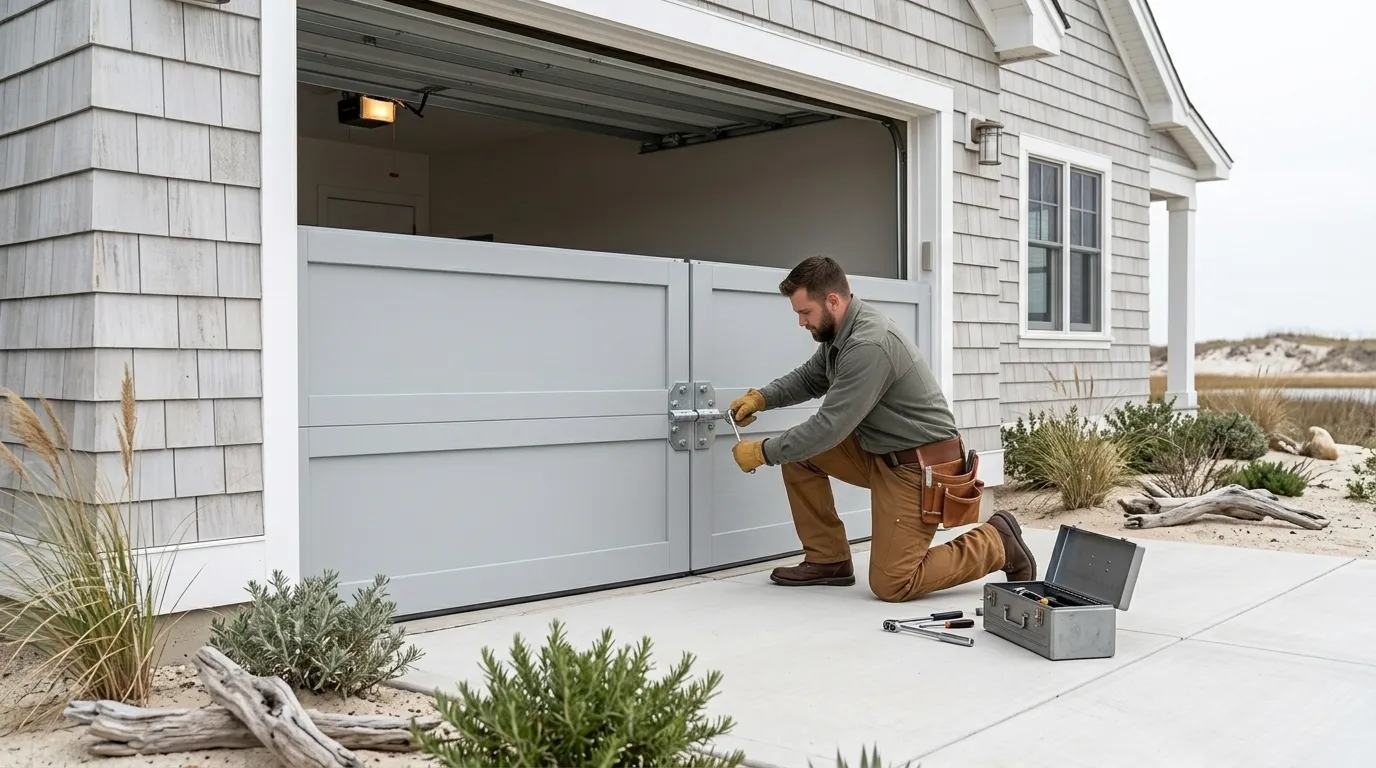
We won't talk anyone through a spring swap over the phone, and we'd rather lose a job to caution than not lose a customer's finger. Cable and roller checks, watching for a track that's pulled away from the wall, listening for a grinding gear in the opener - those are fine to notice and report. Actually opening the spring housing, disconnecting the spring, or working near a door under tension is where DIY stops being a reasonable idea and starts being a hospital visit.
What You Are Seeing
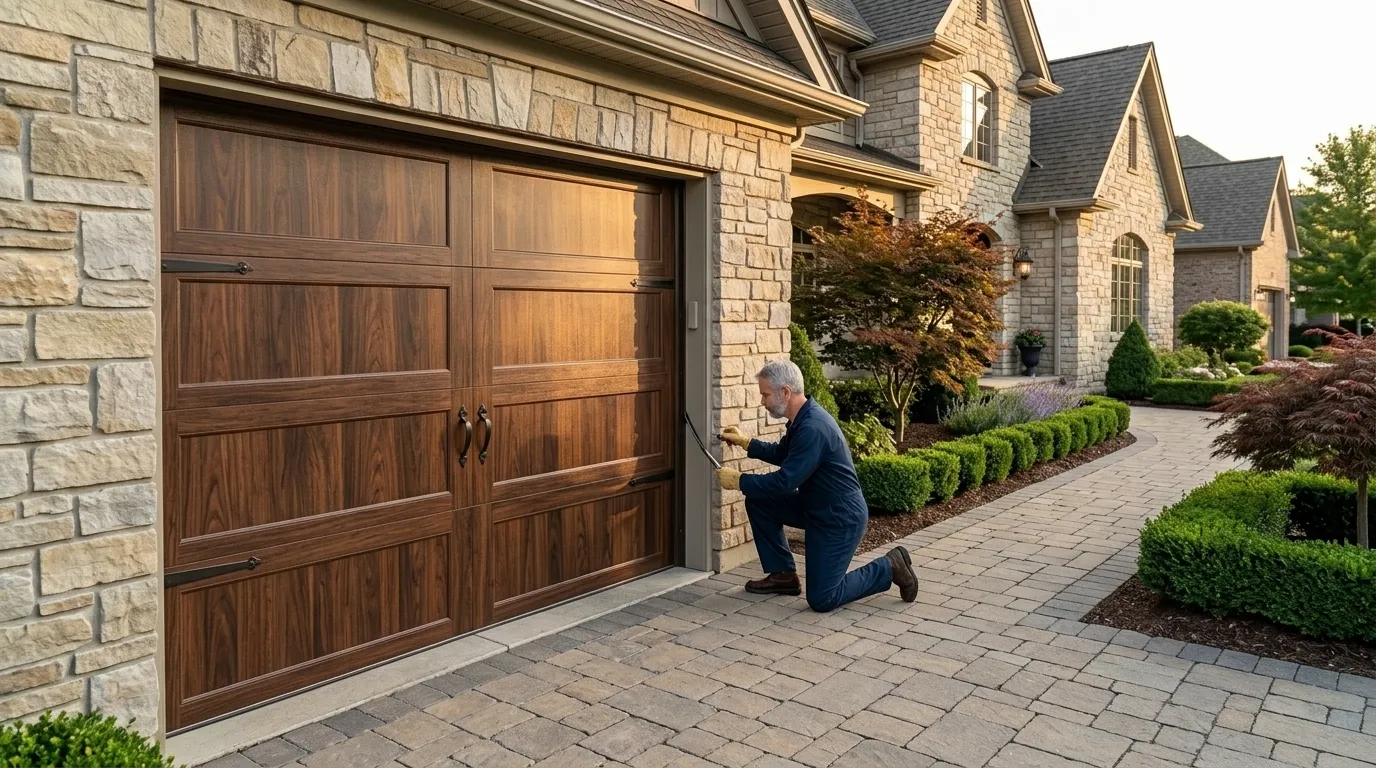
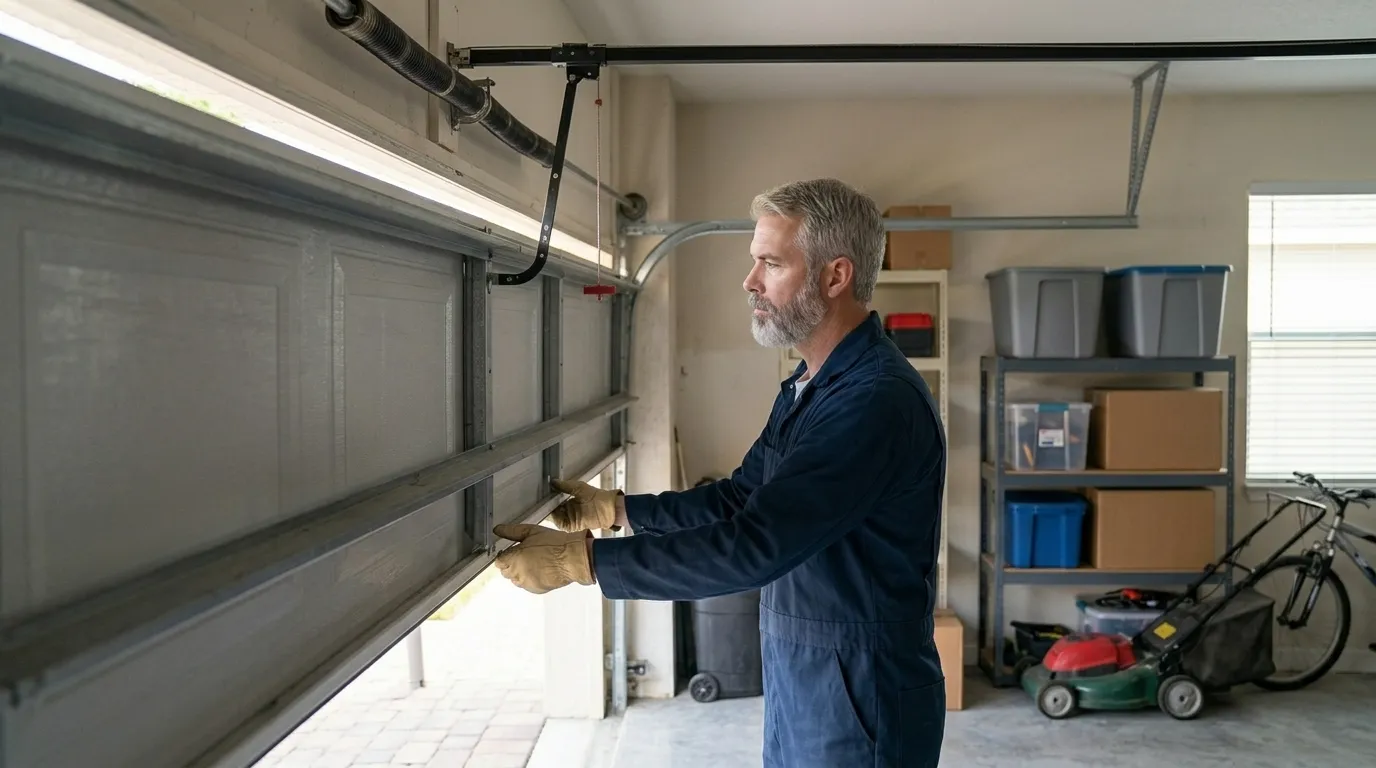
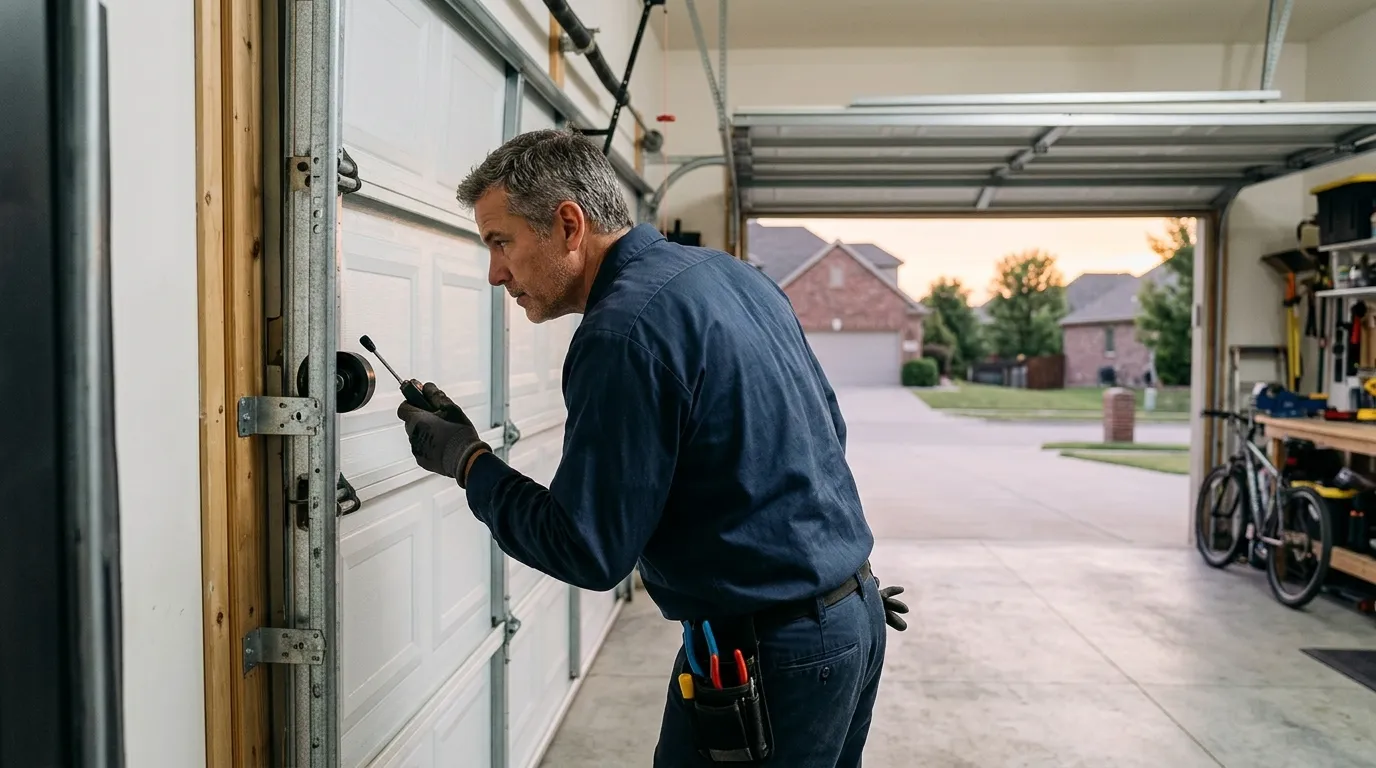
A door that's slow to close, or reverses partway and won't finish, is often a spring losing its rating rather than an opener problem - the opener's motor is trying to lift a load it wasn't sized for anymore. A door that sits crooked in the frame, or one cable looks slack while the other's taut, means one side of the original torsion setup has stretched or frayed; that's common on doors that have been running on hardware from the area's 1960s-70s building wave for this many cycles.
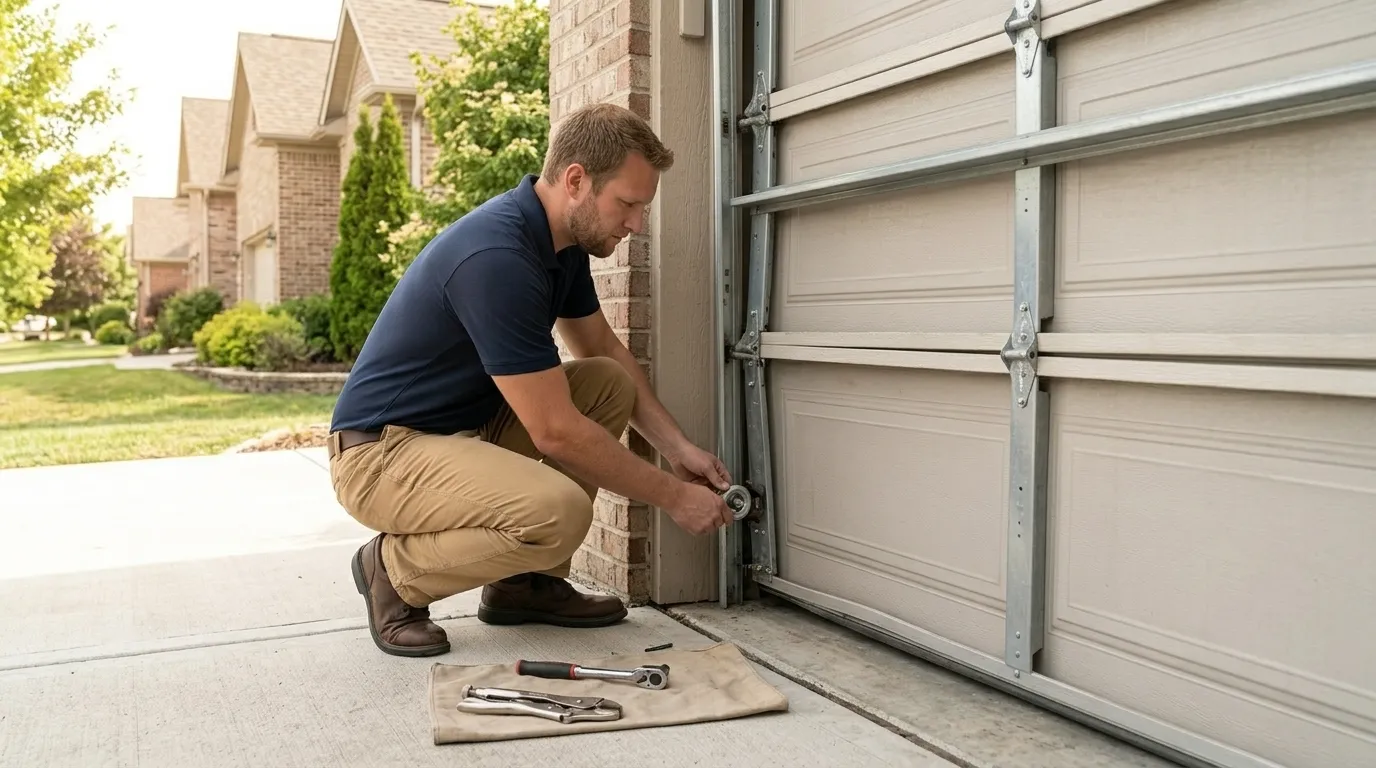
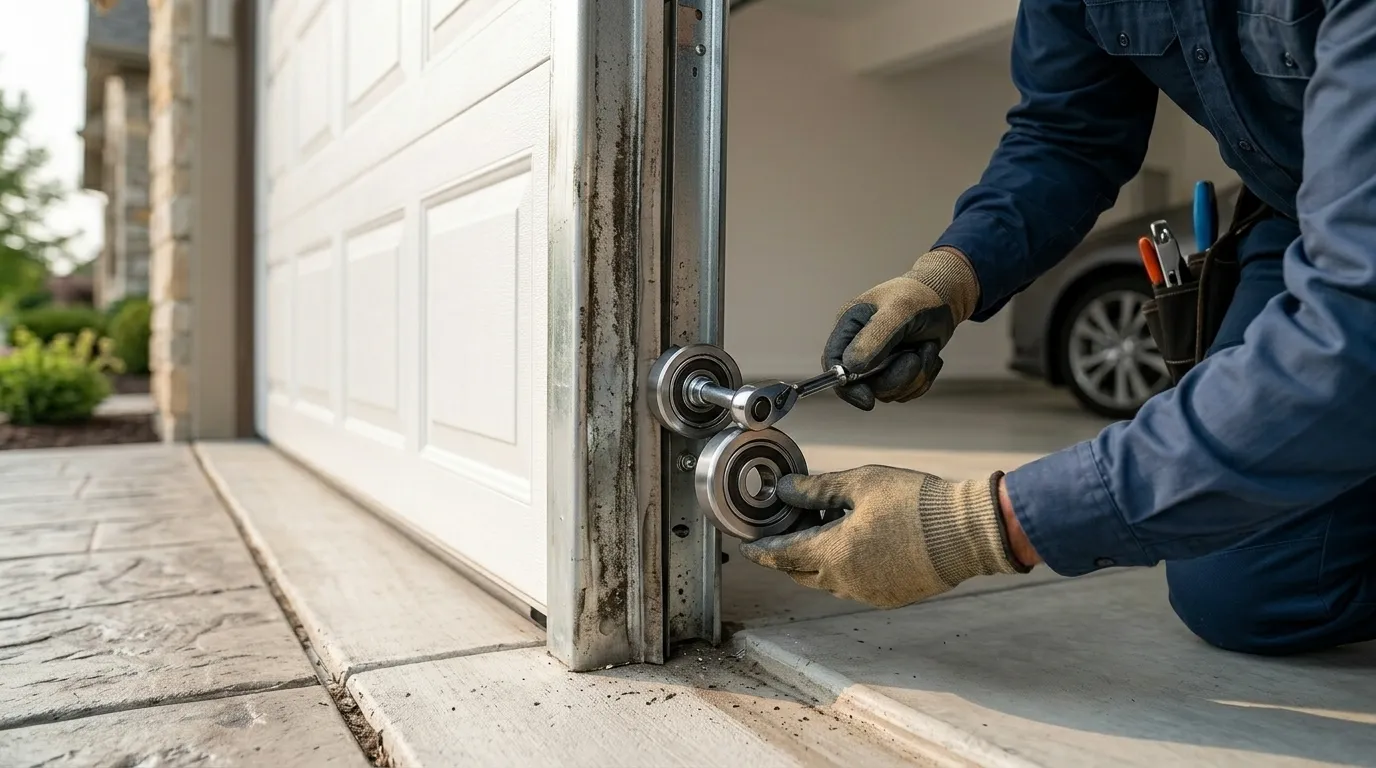
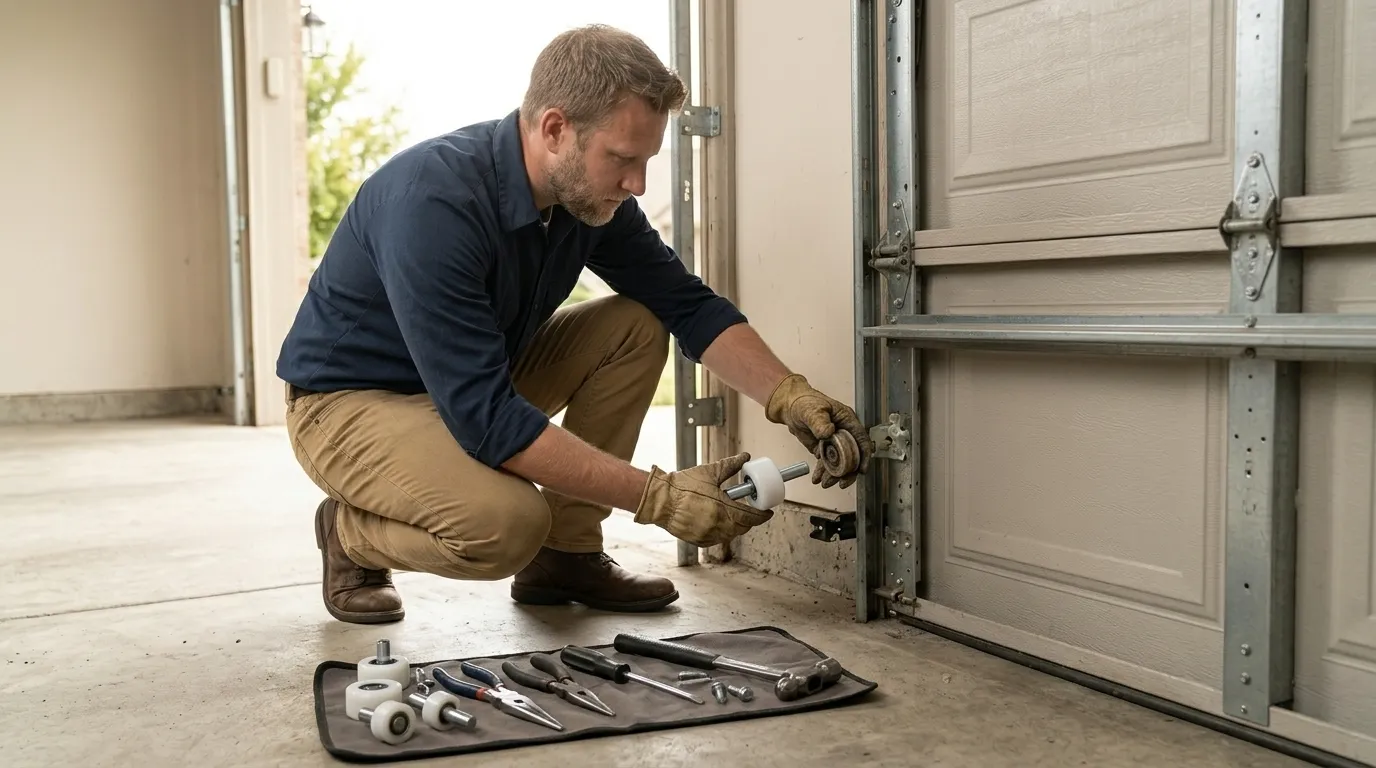
Rollers that grind or a track that's visibly pulled from its bracket usually point to wear from repeated use rather than any single event - the kind of thing that shows up gradually on a bay door opening ten or twenty times a day.
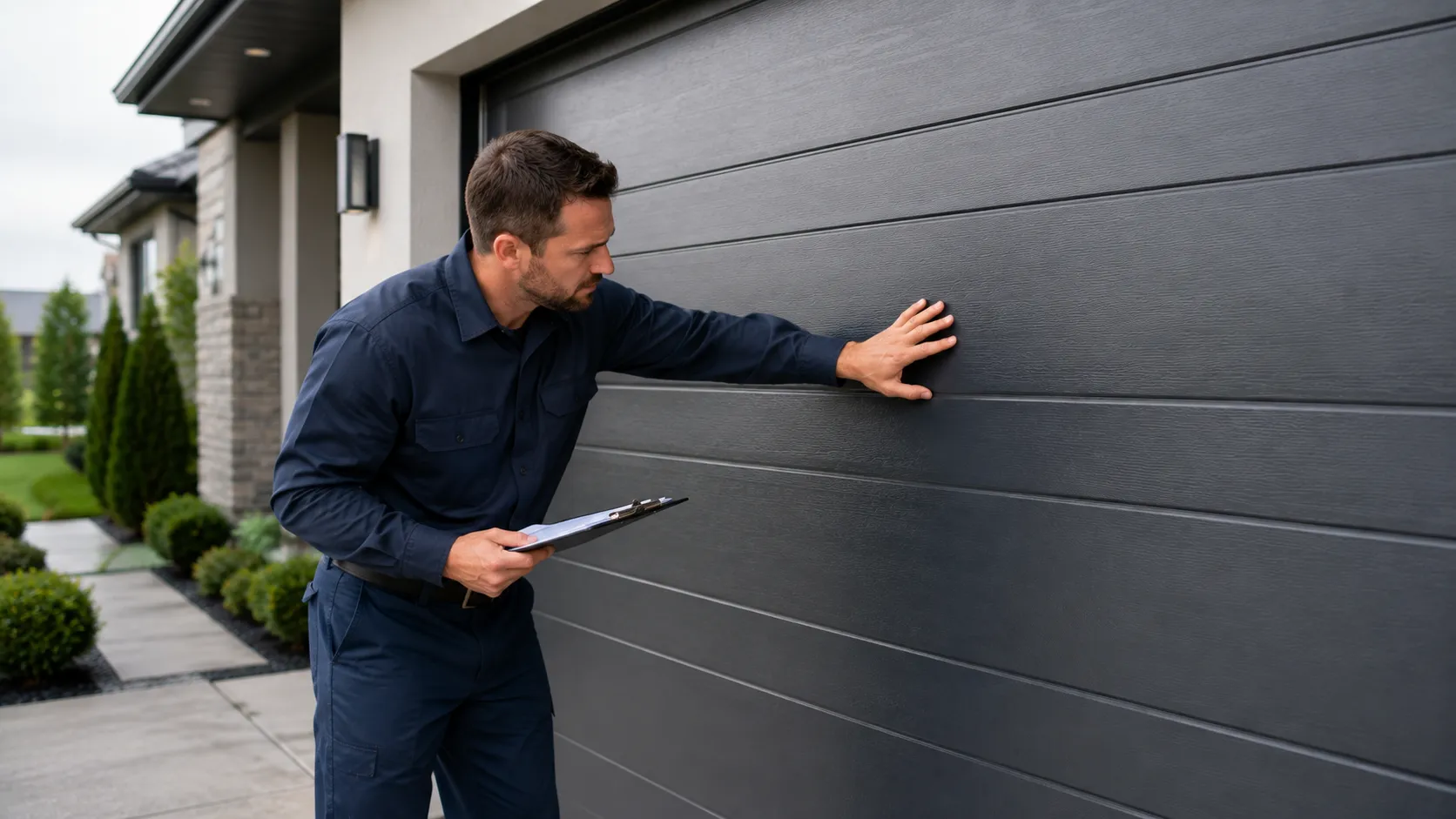
Rust at the bottom panel or a door that feels heavier than it used to isn't a climate problem here - the mild temperate band means panels aren't fighting frost heave or heat expansion the way they would somewhere with real winters. If a door's gotten heavier or noisier, it's mechanical wear, not weather, doing the damage.