The Complications
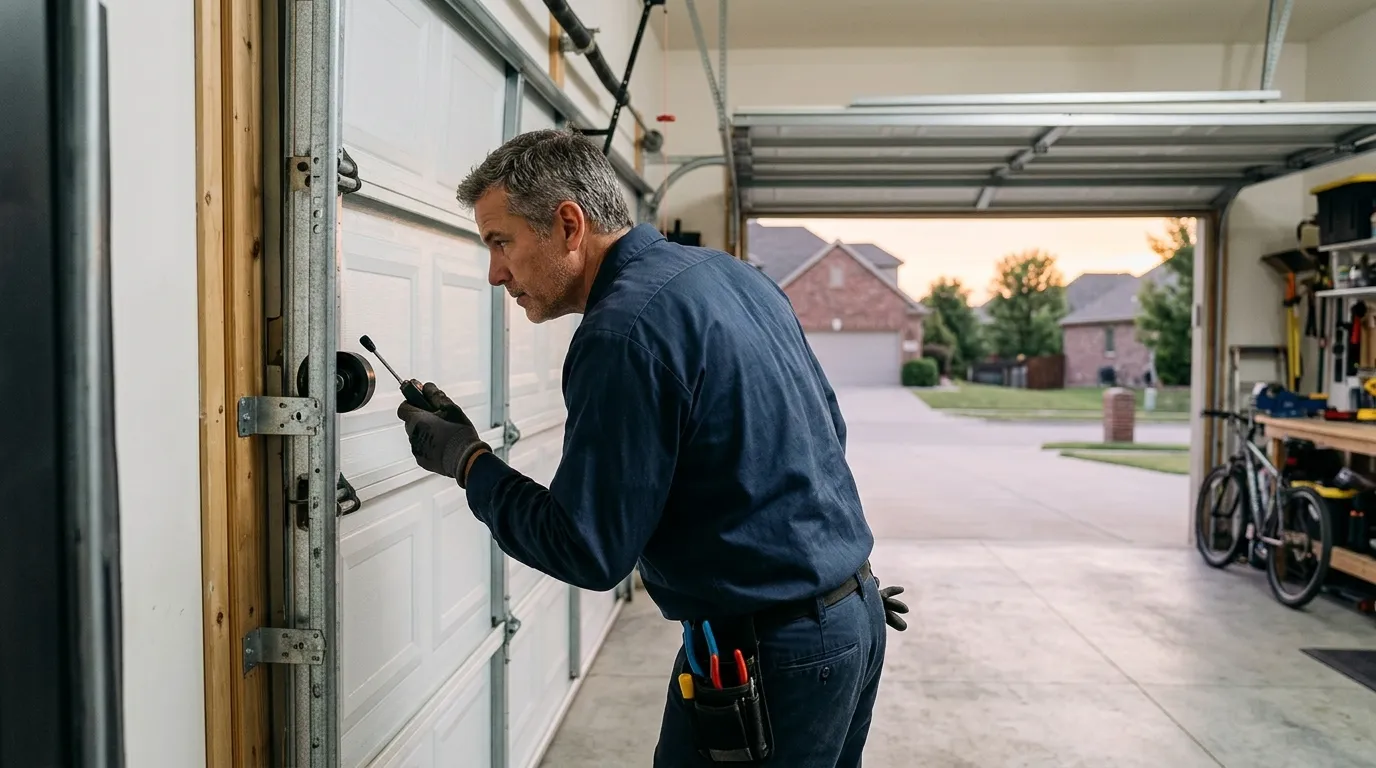
Most of the commercial stock we see out this way went up around 1972, and that number matters more than it looks. A door installed on a building from that stretch is usually a heavier-gauge steel sectional running on an older chain-hoist opener, not the lighter aluminum-and-photo-eye setups you find on anything built after the 90s. That means torsion springs sized for a door that's had thirty-plus years of cycling, worn track brackets bolted straight to block walls that have shifted a little since, and hoist chains that were never meant to run this many open-close cycles a day.
West Carson sits inside the broader stretch of housing and light commercial stock that went up mostly in the 1960s and 70s, so the fix here is rarely a plug-and-play part swap. We're matching hardware to a building shell that predates most of what gets stocked new. The other complication is scale: at roughly 8,042 households, West Carson is a smaller commercial pocket than some of the areas we cover, which means fewer duplicate setups and more one-off matching when a part fails.
How Long You Are Without the Door
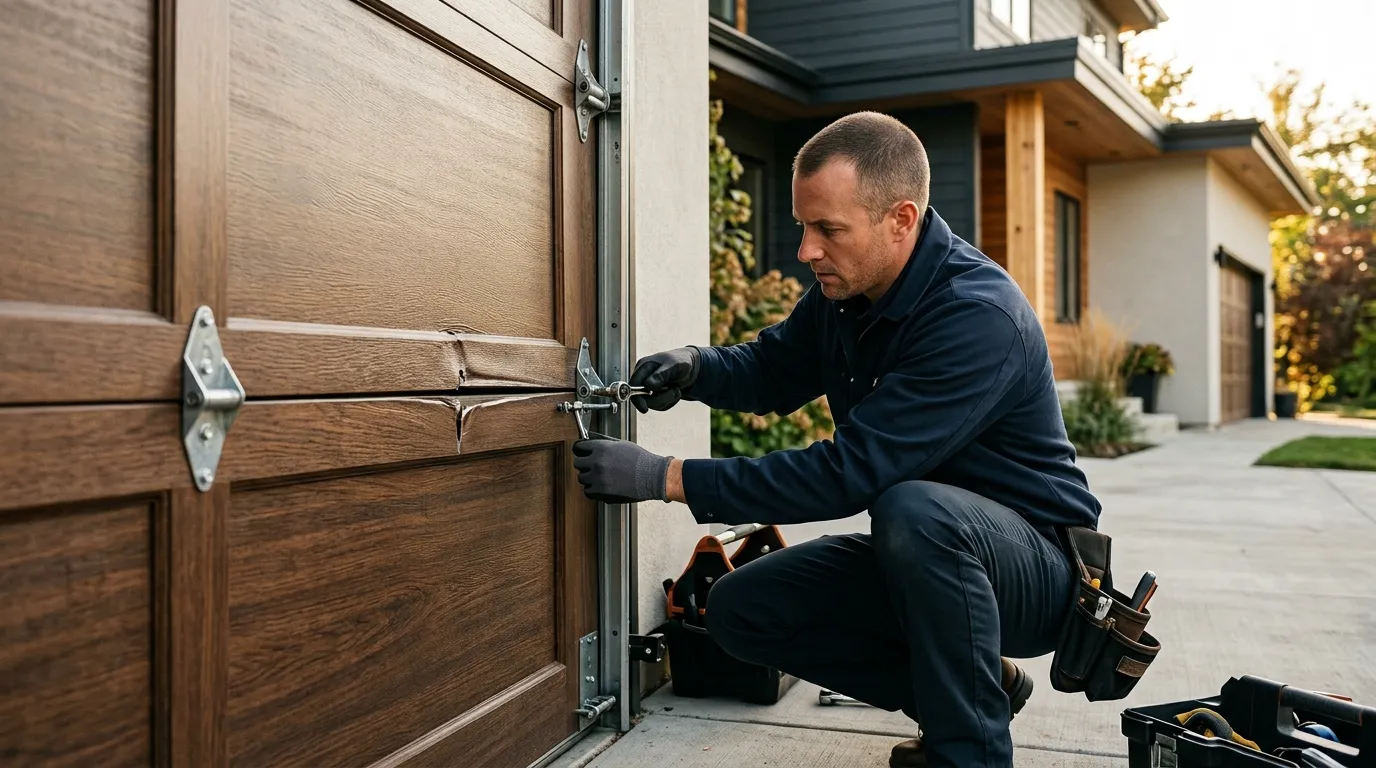
A snapped cable or a broken torsion spring on a commercial door is usually a same-visit fix once we're on site - the parts are common enough that we carry them. Where it stretches out is the opener side: a chain-hoist unit old enough to match the building's 1972-era wiring sometimes needs a part that isn't sitting on a shelf, and we won't pretend otherwise. If that happens, we tell you straight, order it, and get the door secured and safe to leave shut in the meantime rather than half-fixed.
The mild coastal climate out this way works in your favor here - we're not fighting frozen track hardware or ice-jammed rollers the way colder inland service areas do, so weather rarely adds delay. What eats time is parts lead time on the older hoist gear, not the weather and not the drive.
What the Fix Involves
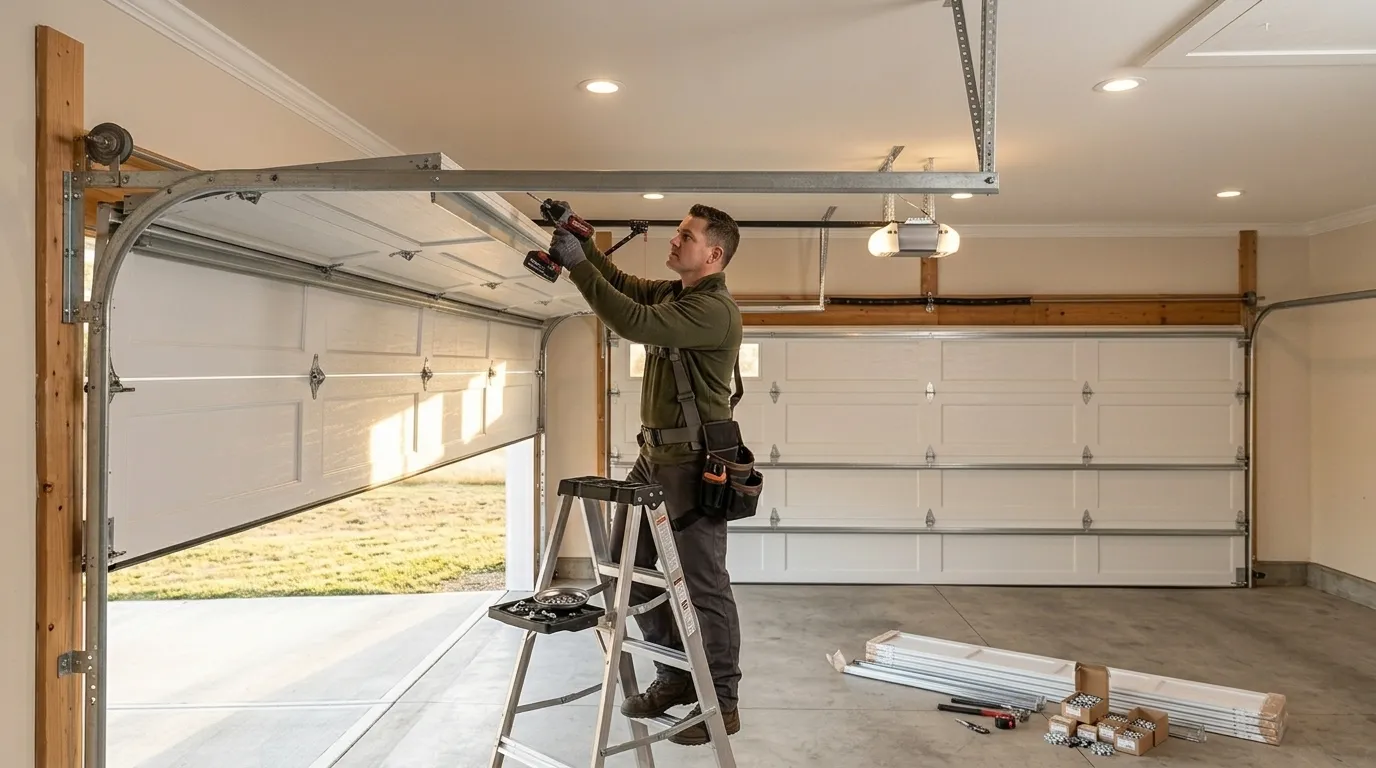
For a commercial door on a building from this era, the job usually starts with the track and hinges before it ever gets to the opener - thirty-plus years of daily cycling loosens bracket bolts and wears roller channels long before the spring gives out. We check balance first: a heavy steel sectional that's out of balance puts extra load on the hoist chain and burns it out faster, which is a common failure pattern on doors this old.
We replace what's actually worn, not the whole assembly, unless the door's reached the point where patching costs more over a year than a new setup would. That's a call we make with you standing there looking at the door, not over the phone. One honest limit: we don't stock every obsolete hoist-chain part for gear this old on the truck, so a legacy opener occasionally means a short wait on a special order rather than a same-day close.