
How Long You Are Without the Door
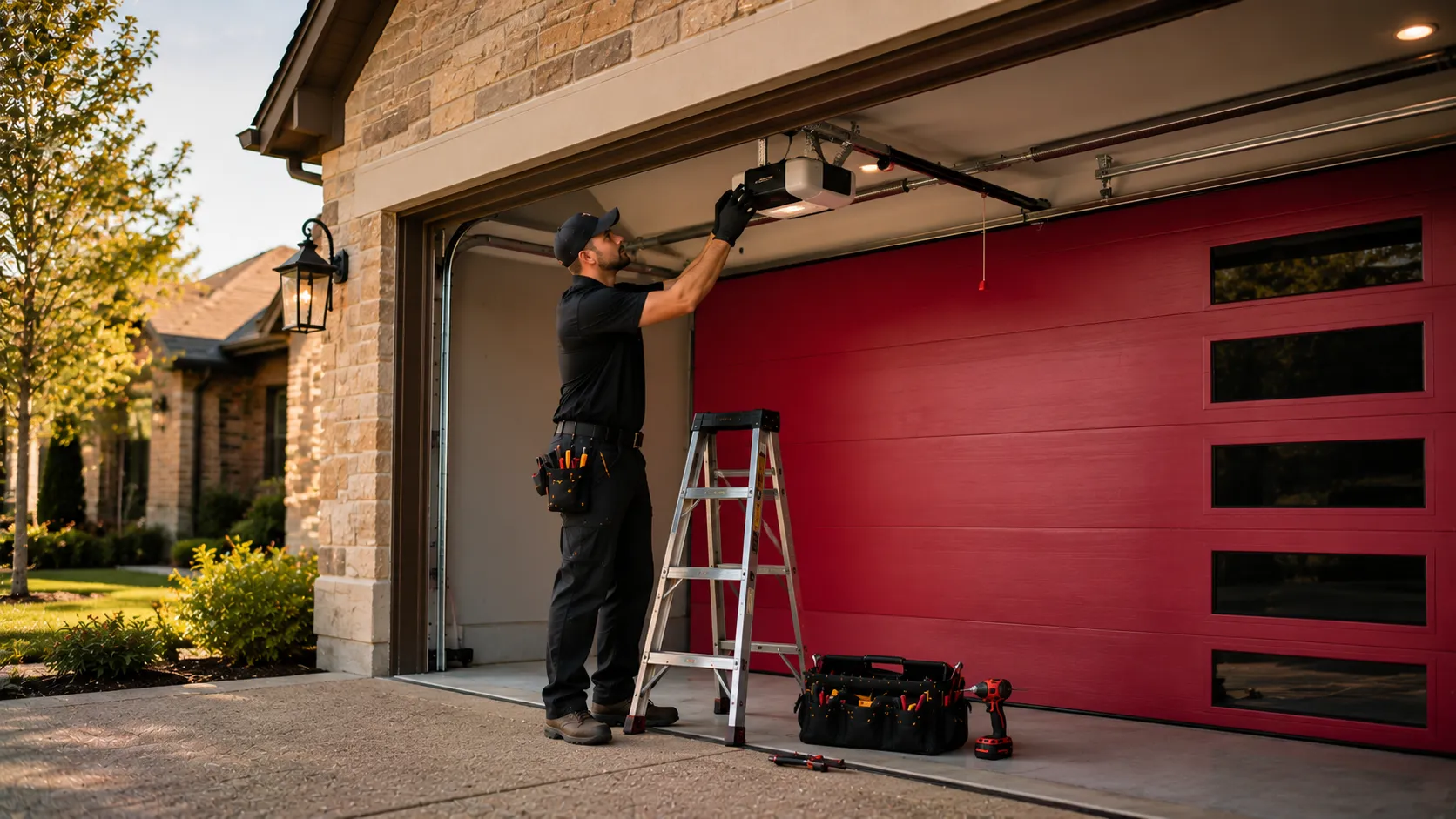
We run this job out of Manhattan Beach, and Topanga sits about 17 miles out, so the first thing to be straight about is that we're not a local depot with a truck sitting five minutes away. We schedule the drive, we bring the parts we expect to need based on what you tell us on the phone, and we do the job in one visit when we can. If your door is a 1971-era single-layer steel or wood panel door and the spring has gone, that's usually a same-visit fix once we're on site - it's the diagnosis and the parts match that take the planning, not the wrench work. What we won't do is promise a response window we can't back up from this distance. If the door won't close and it's a security issue, say so when you call, and we'll tell you honestly where we are in the day's route.
Parts We Carry
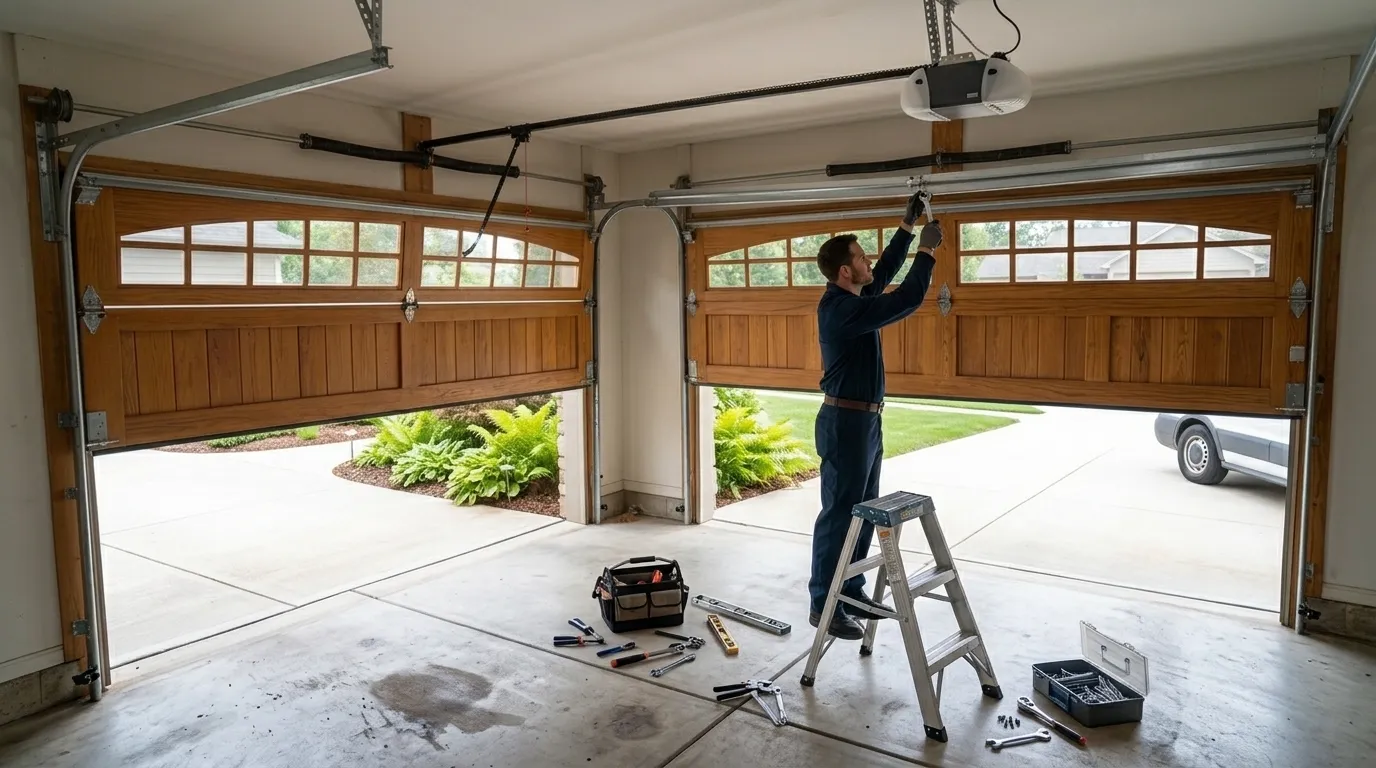
For a door built in the early 1970s, the failure points are predictable: torsion and extension springs sized for a heavier single-layer door, steel rollers that have gone out of round, lift cables fraying at the drum, and the odd original hinge that's stretched at the pivot hole. We stock common spring sizes and standard roller and cable stock on the truck because those are the parts that fail across this whole housing era, not just in Topanga. What we don't always carry is an exact-match panel for a door this old - if a section is cracked or dented, we may need to order it, and lead time on a discontinued panel from a 50-year-old door can run longer than you'd like. We'll tell you that up front rather than promise a part we don't have in hand.
The DIY Question
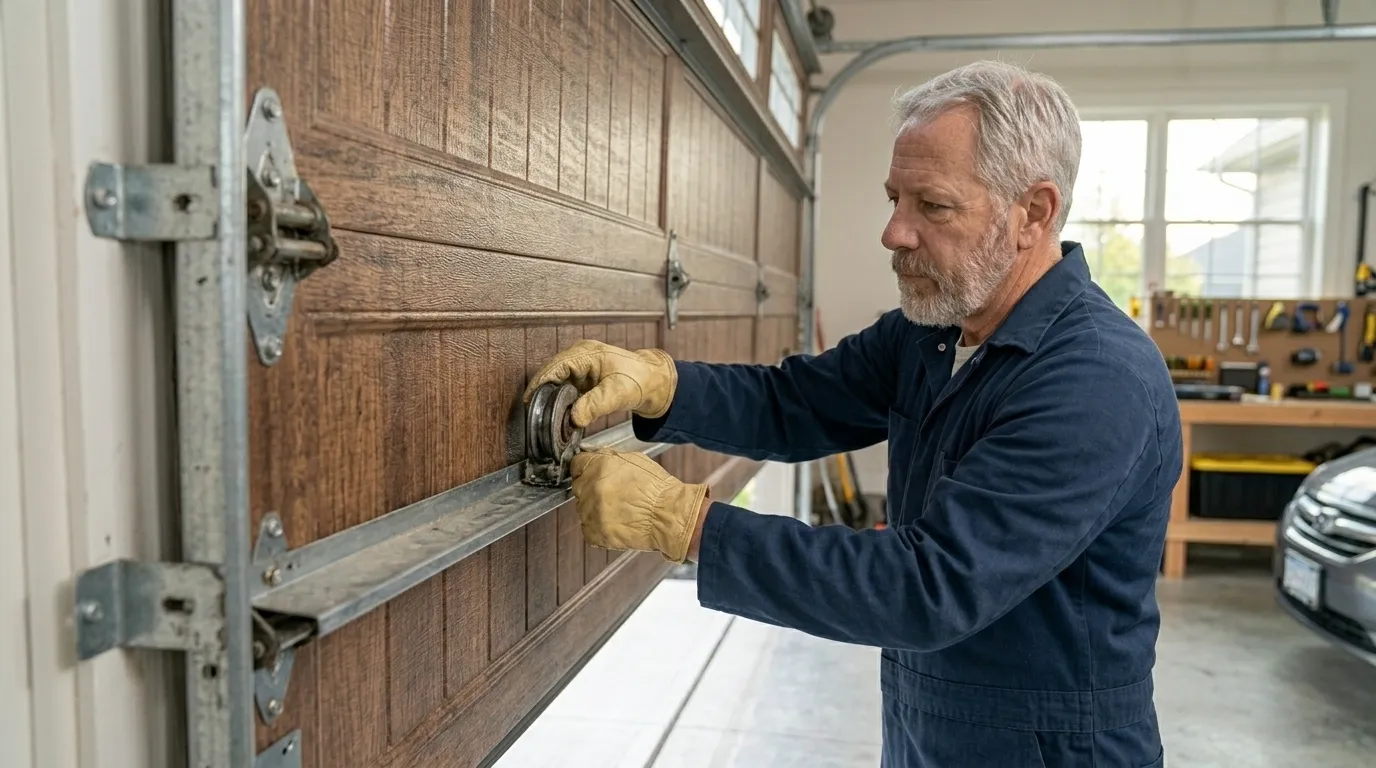
A torsion spring under load can take a finger or worse, and on a door this age the hardware has usually never been serviced, which means rust or wear you can't judge just by looking at it. Swapping a roller or tightening a loose hinge bolt is reasonable if you're comfortable with a ladder and a socket wrench. Springs, cables, and anything holding the door up under tension is not a weekend project - we say that regardless of which door you own, but it matters more here because a door built around 1971 has had 50-plus years to develop hairline fatigue you won't see until it lets go. If you're not sure which category your fix falls into, describe it on the phone before you start.
The Complications
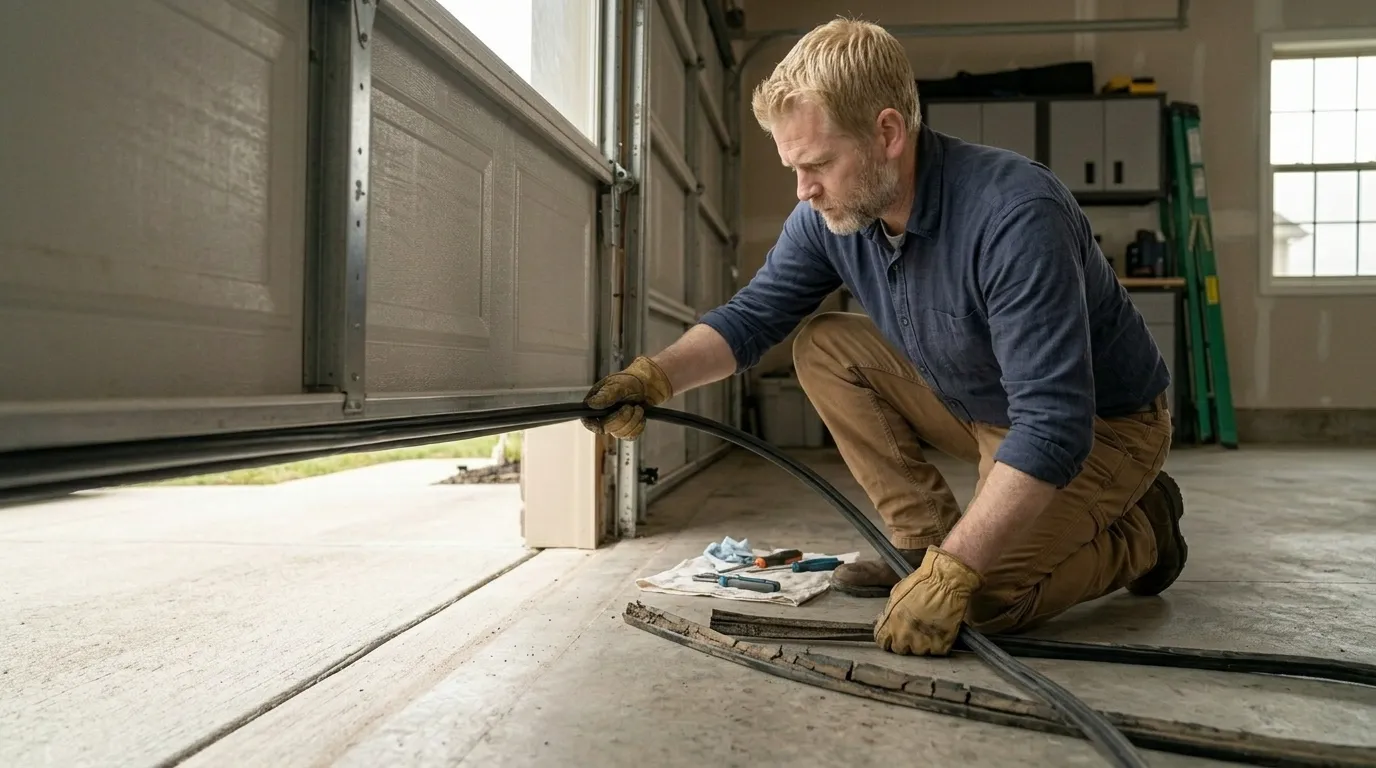
The complication specific to a 1971-era door is mismatched hardware from past patch jobs - a roller from one decade, a spring from another, a hinge that's not the size the door originally shipped with. That kind of stacked repair history means we sometimes find the actual fault only after we're inside the track assembly, not before. With around 3,098 households in this part of the service area, we're not running a high volume of repeat calls here the way we would somewhere denser and closer to Manhattan Beach, so we go in expecting to diagnose from scratch rather than assuming we know the house. The other complication is simply the drive: if a part turns out to be non-standard, that's a second trip, not a quick run back to the truck.