The Complications
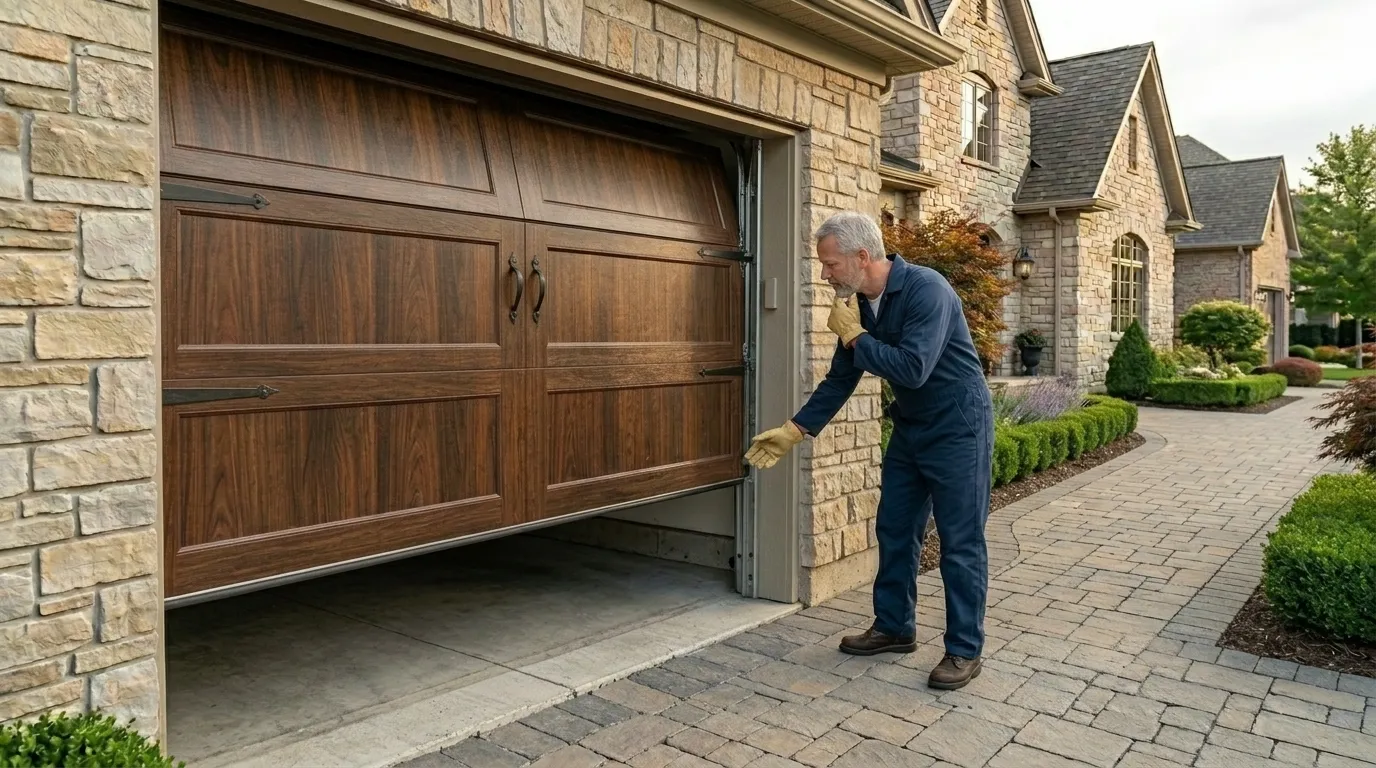
Most garage doors in El Segundo went up around 1963, and a lot of them are still the doors that came with the house. That means steel sectional panels on narrower single-car bays, or the wider double door that was standard for the era's slightly larger lots near the newer tracts. The panels are flat or lightly ribbed steel, sometimes with a wood-look clad face if the door was swapped once in the 80s or 90s. When one panel dents, cracks at a hinge stile, or delaminates at the seams, you're not always dealing with a part you can order off a shelf. A door built to a 1963 spec doesn't share dimensions with the doors big box stores stock today, so the fix starts with figuring out what size and profile you're actually matching, not just what's damaged.
The complication isn't usually the impact that caused it - a car bumper, a errant basketball, a wind-loaded gust catching an open door. It's that a single-panel swap on an older door means finding a panel that lines up with the existing track, hinges, and the rest of the section run without forcing a full-door replacement just to fix one damaged piece.
Getting It Booked In
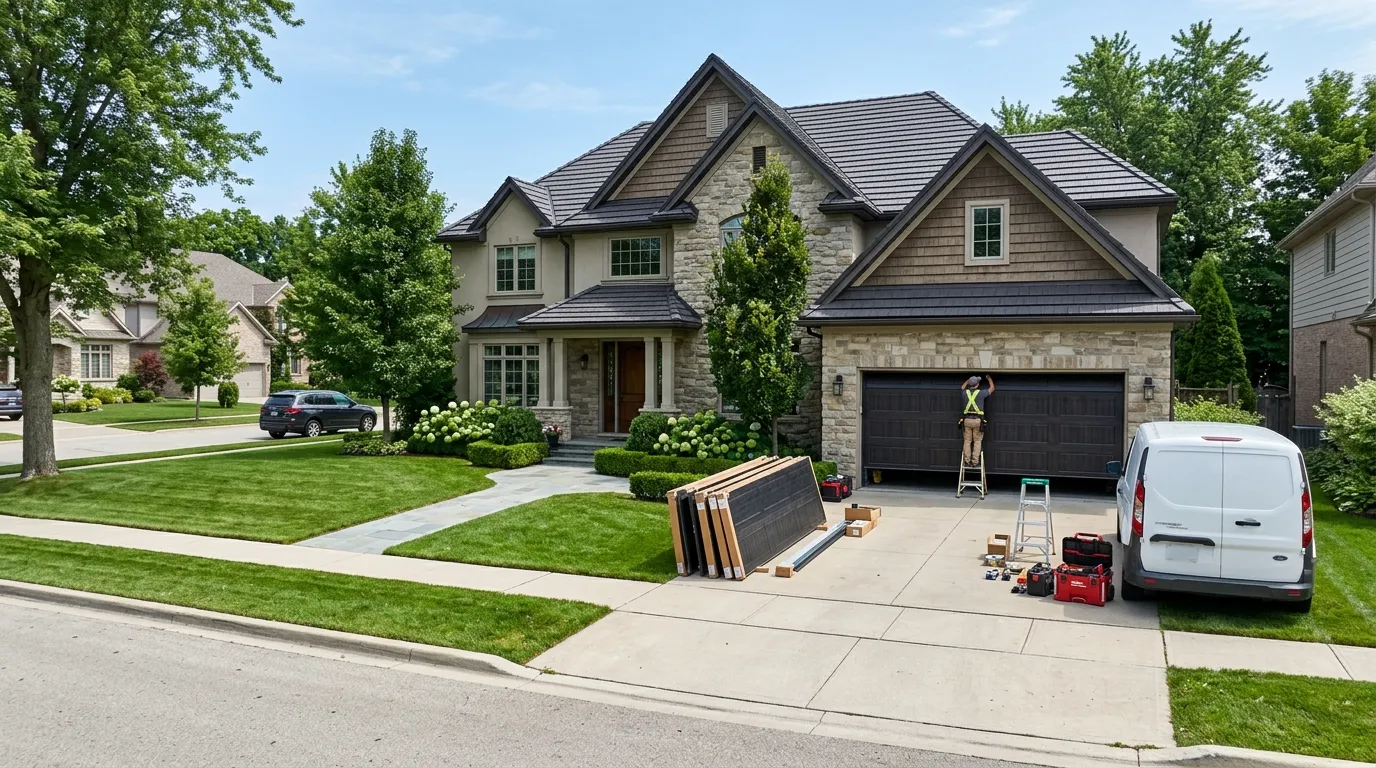
We work El Segundo from our Manhattan Beach base, about a mile up the coast, so getting a truck to your door doesn't mean a long haul or a big travel charge tacked onto the job. Booking a panel replacement starts with a look at what's actually damaged versus what's just cosmetic - a dent you can live with is different from a cracked stile that's about to bind the track. We'll want the door's approximate age and, if you have it, any model plate or sticker still on the inside of the door, since that tells us more about matching panel stock than guessing off a photo.
If the damage is isolated to one or two sections and the rest of the door is sound, that's usually a straightforward job. If the track's bent, the hinges are stripped out, or the panel run is discontinued and unmatchable, that changes the conversation, and we'll say so before any work starts rather than after.
Parts We Carry
For doors matching El Segundo's common era and sizing, we carry steel sectional panels in the standard single and double widths that fit this town's housing stock, along with the hinges, end caps, and fasteners that go with a panel swap. What we don't carry on the truck is a match for every discontinued wood-look or clad panel style from a specific manufacturer run - some of those need a special order, and lead time on a matched panel isn't something we control.
That's the honest limitation: if your door is an unusual style or a one-off from a builder that's long out of business, we may need to order the part before we can finish the job, and we'll tell you that up front rather than promise a same-visit fix we can't back up.
What the Fix Involves
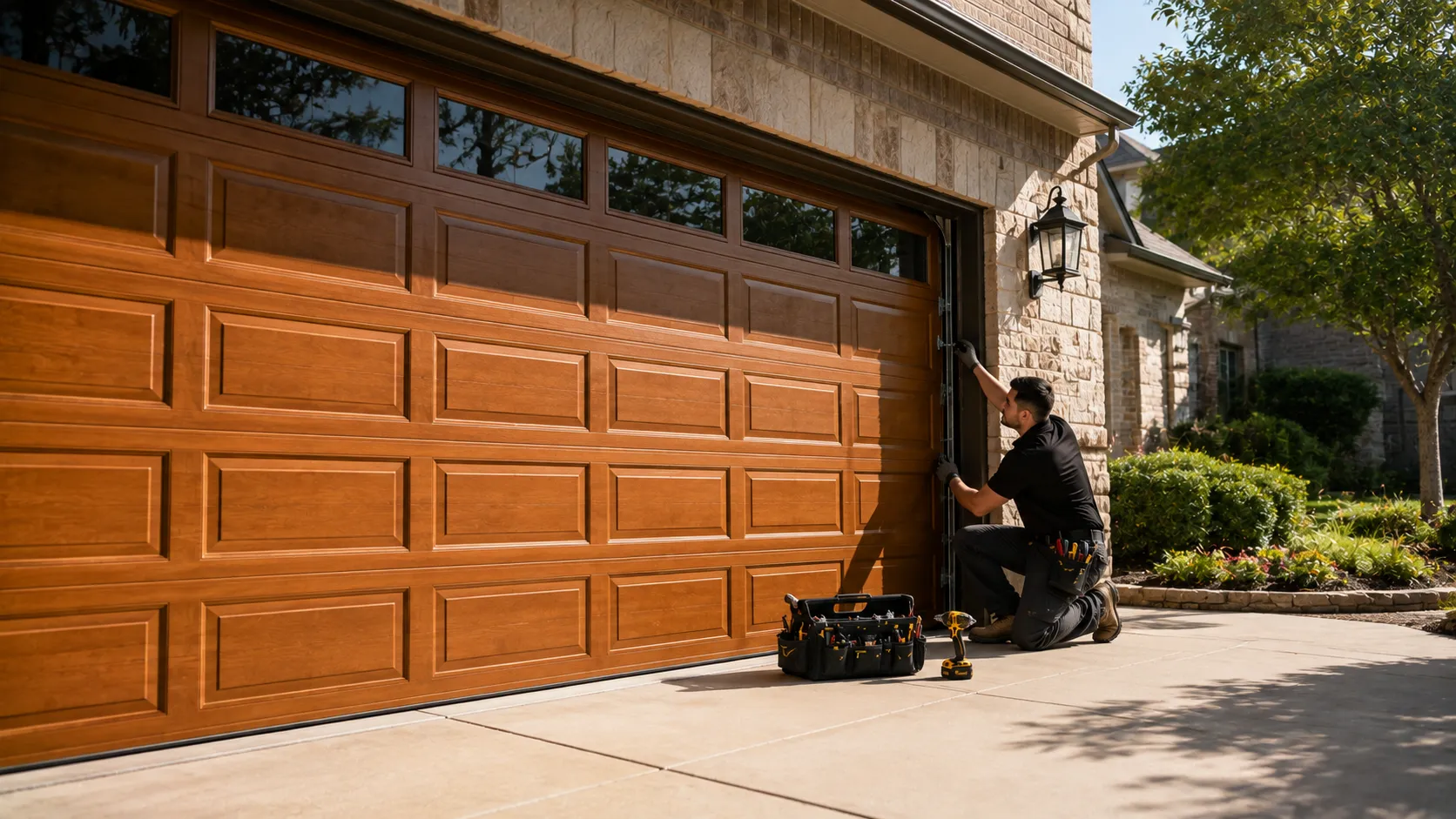
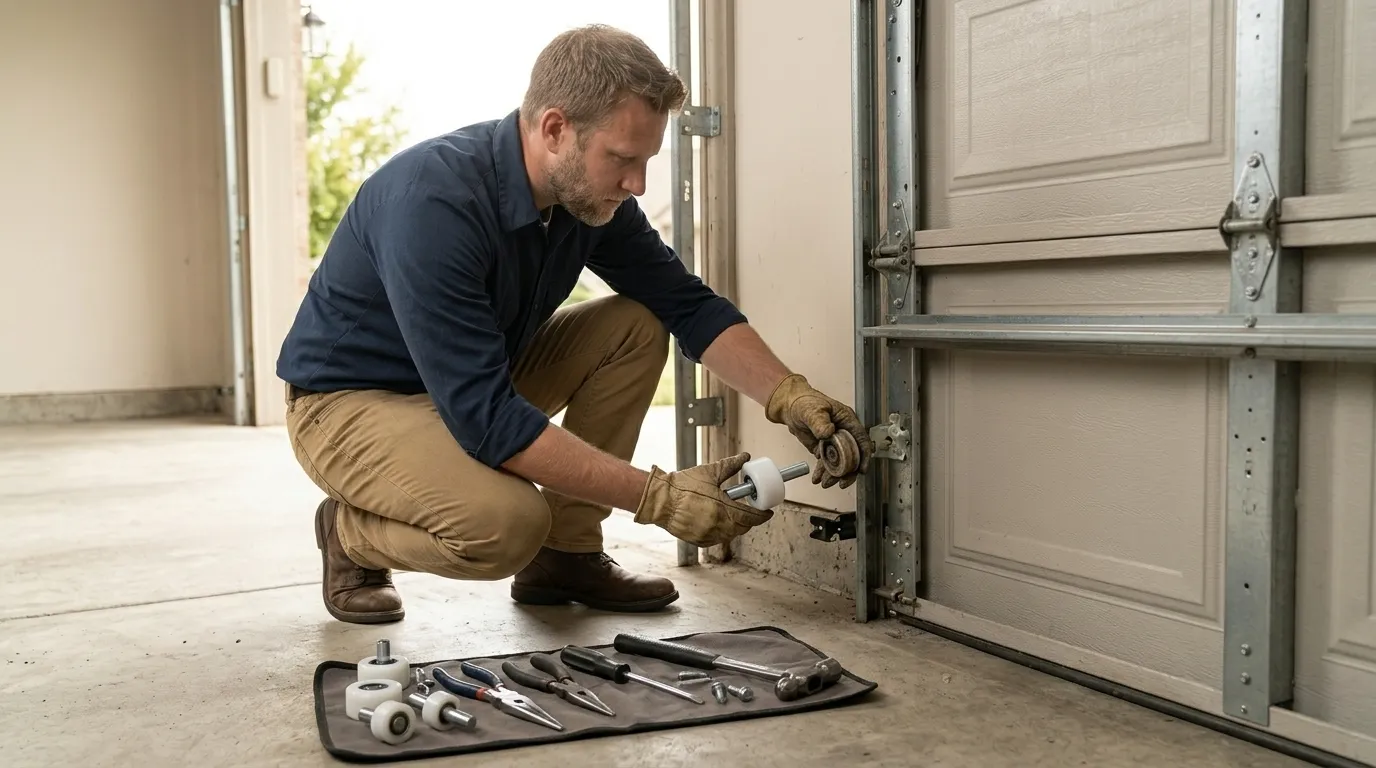
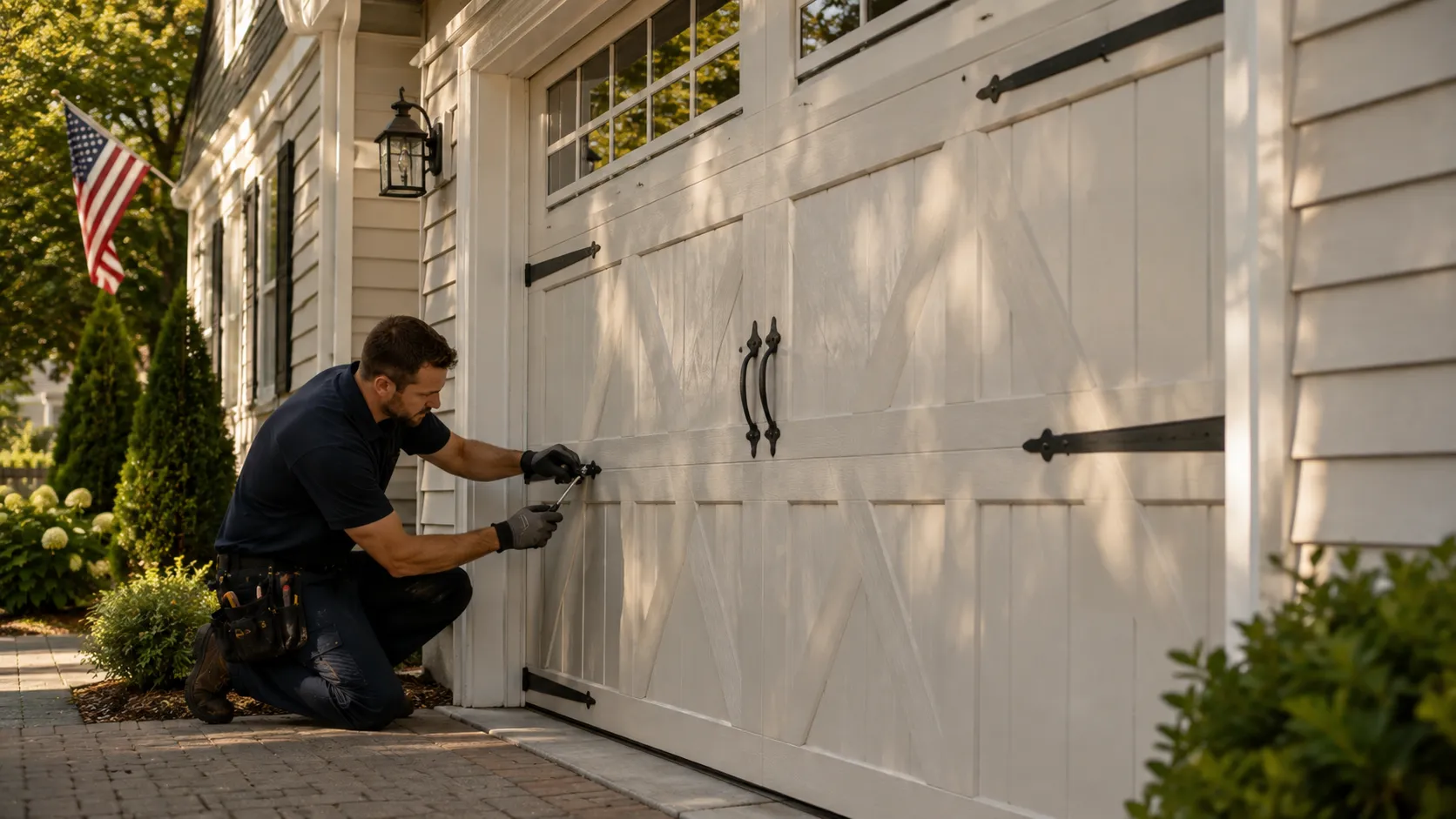
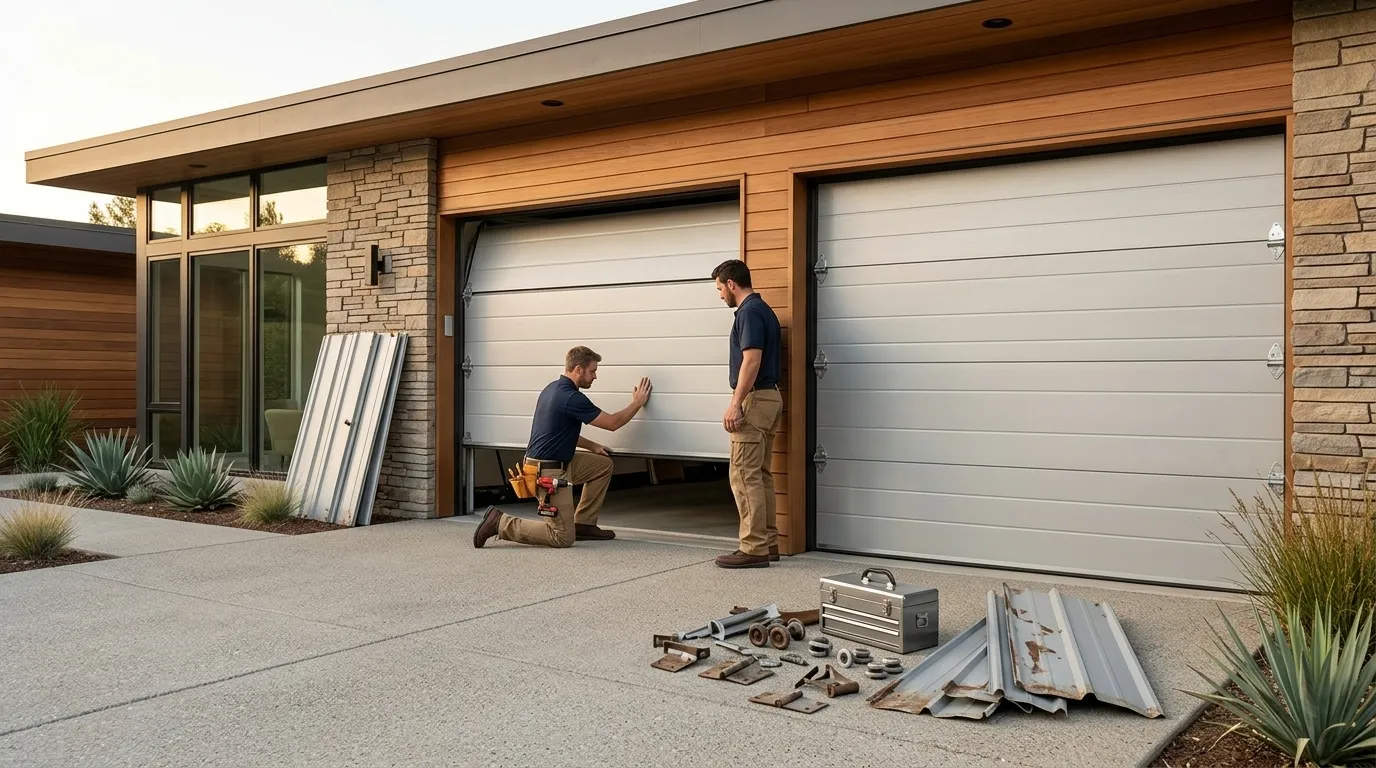
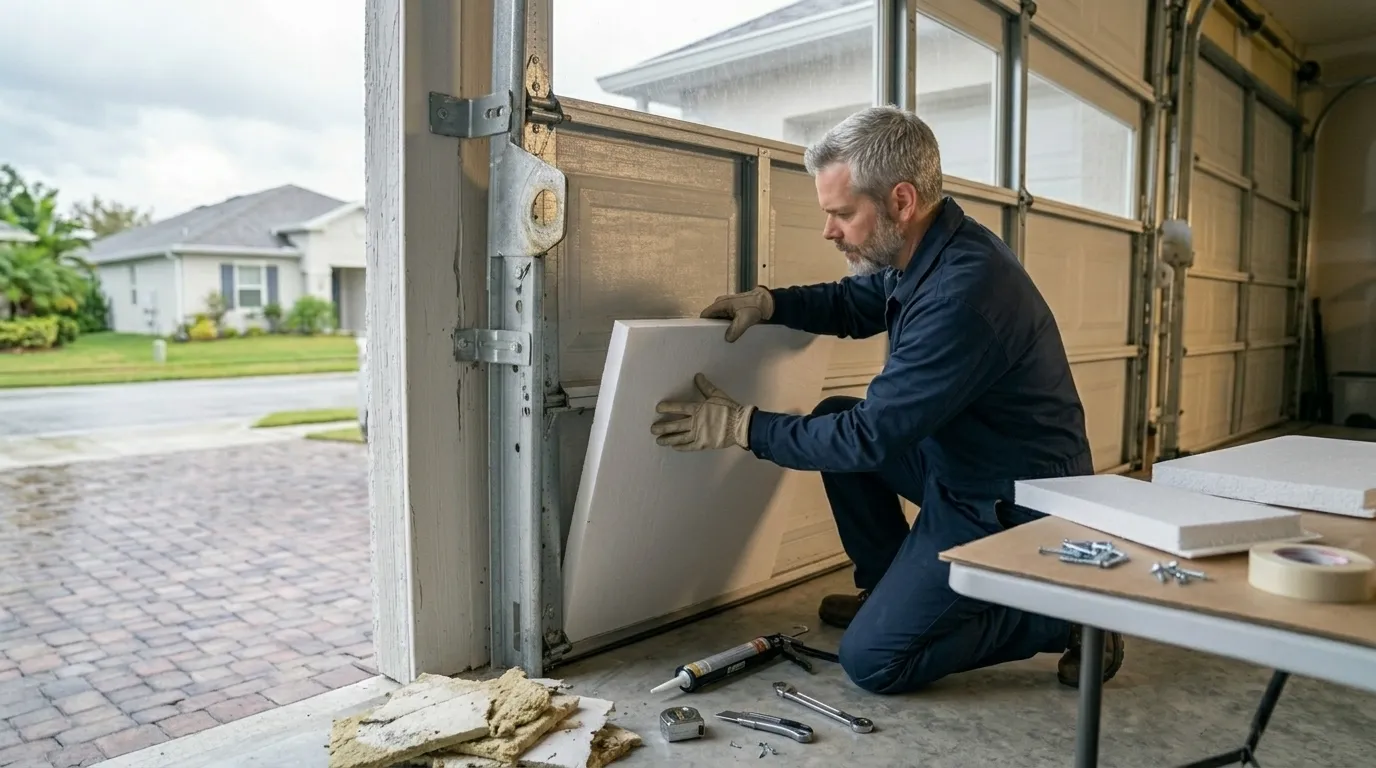
A proper panel replacement starts with releasing tension safely, unbolting the damaged section from its neighbors, and checking the hinges and rollers on that section before the new panel goes in - a panel bolted onto a bent hinge just fails again. We match the panel profile and gauge to what's already on the door where we can, since mixing a thin modern panel with a heavier original-era section shows immediately and can throw the door's balance off.
Once the new section is set, we recheck the whole door's travel and balance, not just the one panel. A door that's run unevenly for years - which is common on houses this age - sometimes reveals a second issue once the panel's fixed and the door moves freely again. We'll flag that rather than close the ticket and let you find out the hard way.