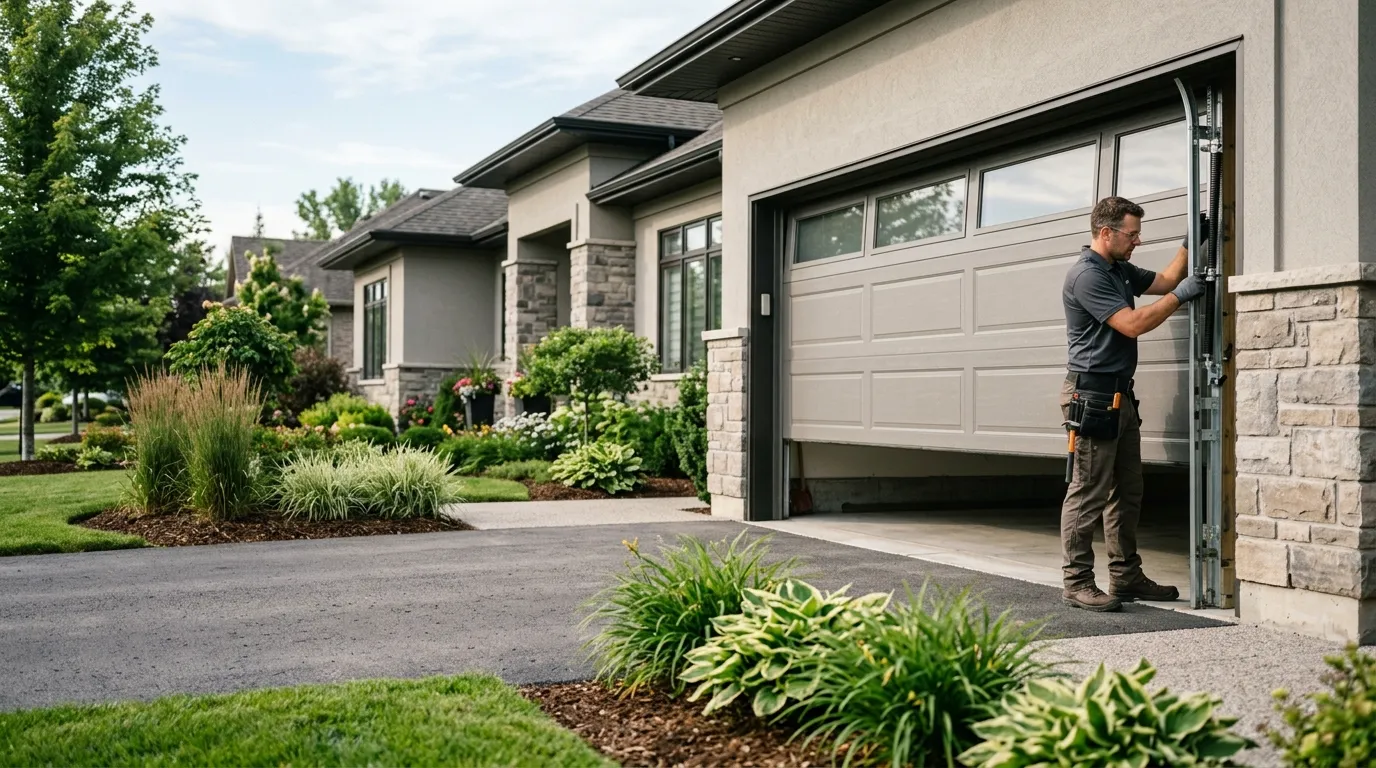
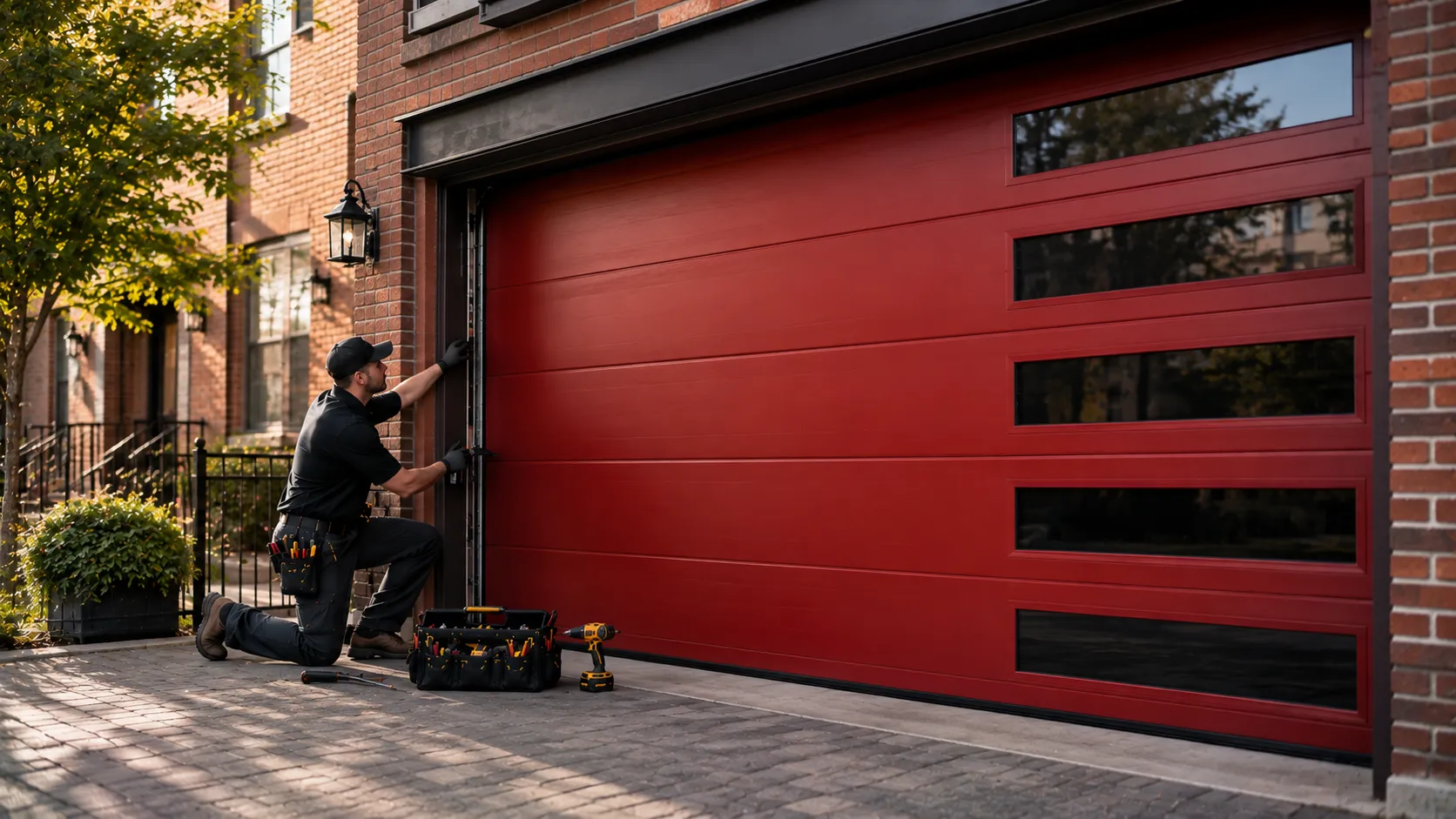
What You Are Seeing
The median house on this stretch was built around 1963, which puts most openings here in the same generation as the broader 1947-2012 build range we see across the area. That matters more than people think. A door installed in the early 60s was almost always a one-piece, side-hinged unit on a heavy steel track, or an early sectional door with hardware sized to inch-and-a-quarter tolerances that don't match anything sold today. If your door has never been replaced, you're not looking at a worn-out version of a modern door. You're looking at a different design entirely, one that was standard for its decade and has been quietly aging out of parts support since.
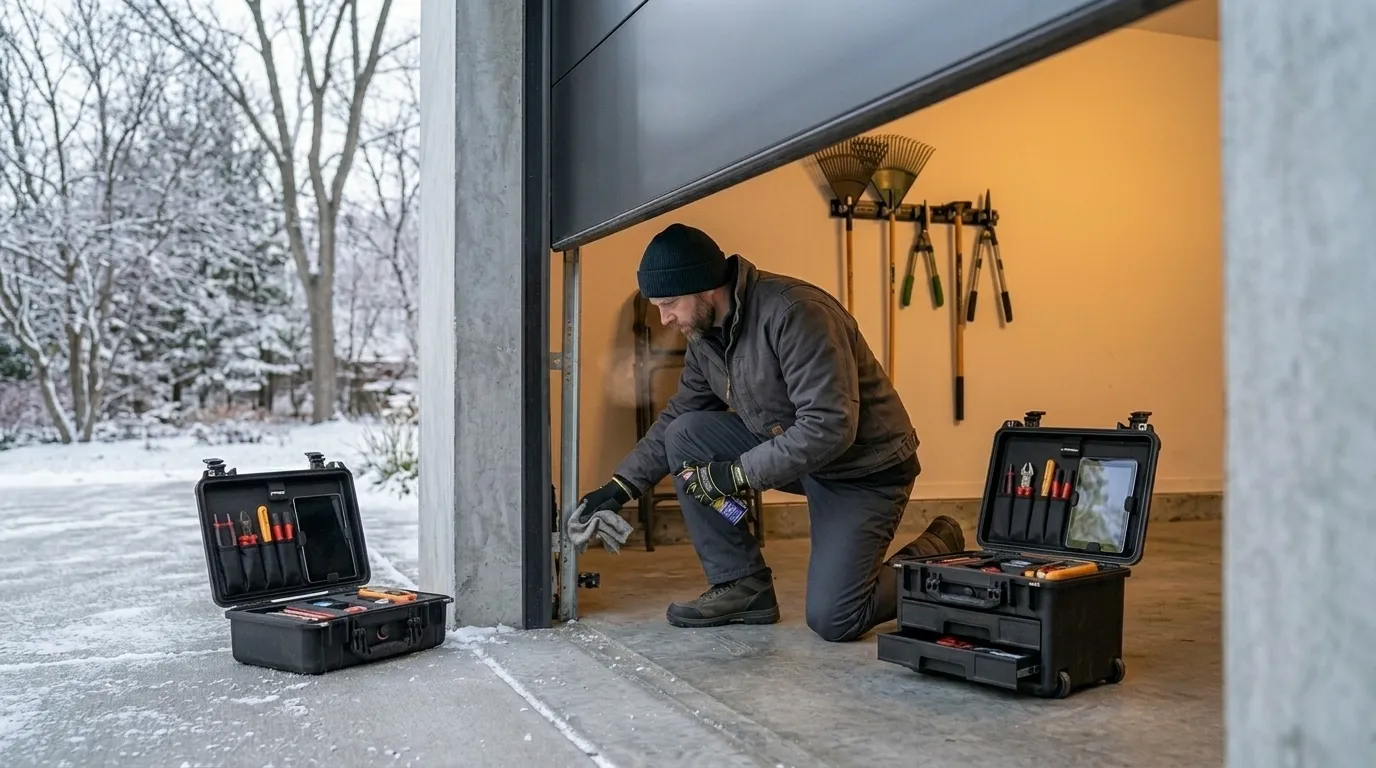
At $247,500, median household income here runs well above what typically drives a straight low-cost swap job, and it shows in what we get asked to install: insulated steel doors, wood-composite faces, and full-view glass sections more often than the bare minimum. The other factor worth naming plainly is climate. This is mild coastal air, not desert heat and not hard freeze, so we're not fighting warping or ice-locked tracks. Salt air off the coast is still real, and it works on unprotected fasteners and springs over years, even without extreme temperature swings.
Parts We Carry
We're coming from Manhattan Beach, nine miles out, so every install here is planned as one trip: the door, the track, the springs sized to the door's actual weight, and the opener all go on the truck together rather than getting ordered piecemeal after we're on site. That planning matters more here than in a newer subdivision, because a house from the early 60s often needs a track width or spring size that isn't the current default.
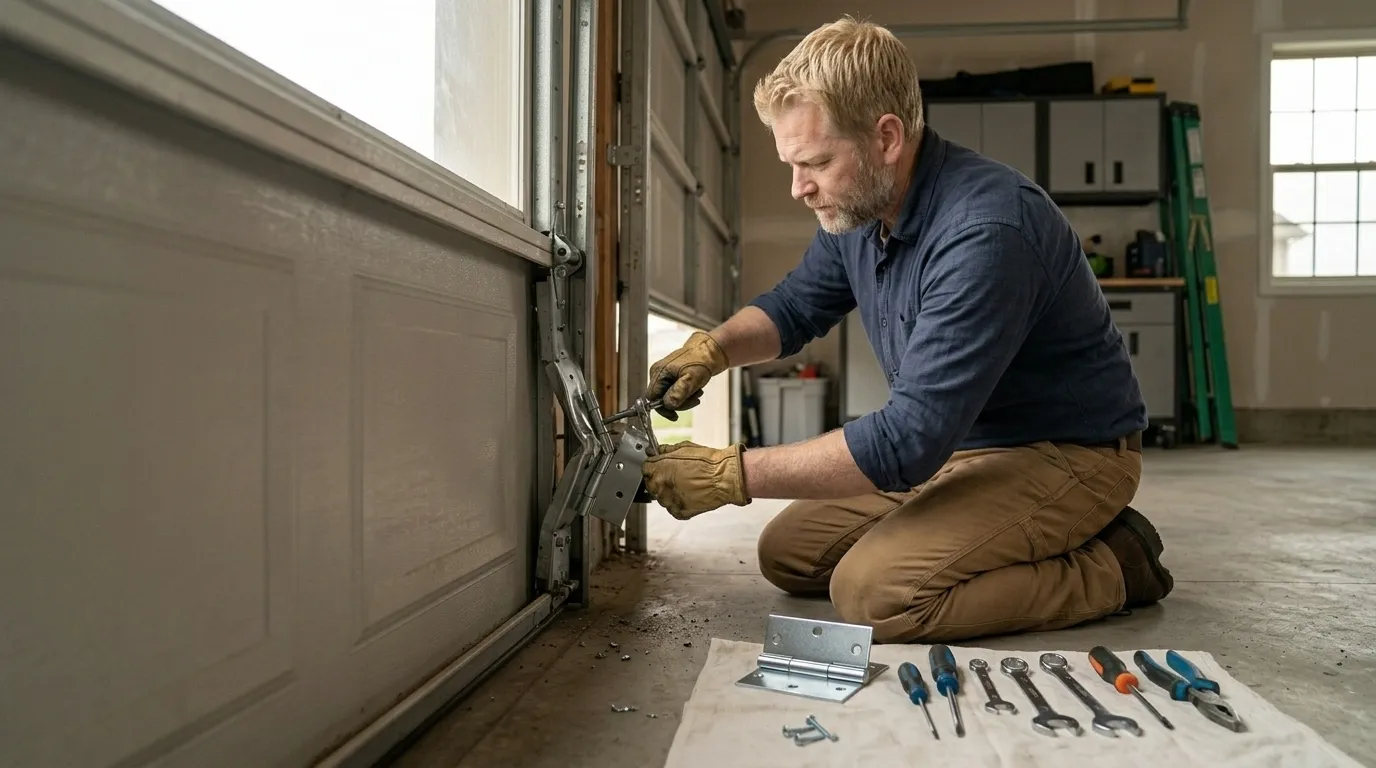
We stock standard steel and insulated sectional doors in the widths and heights that fit most of this era's openings, along with torsion springs rated for a range of door weights. What we don't carry on the truck is custom millwork, oversized specialty glass, or made-to-order wood doors - those are special order, and if that's what you want, plan on a lead time rather than a same-visit install.
What the Fix Involves
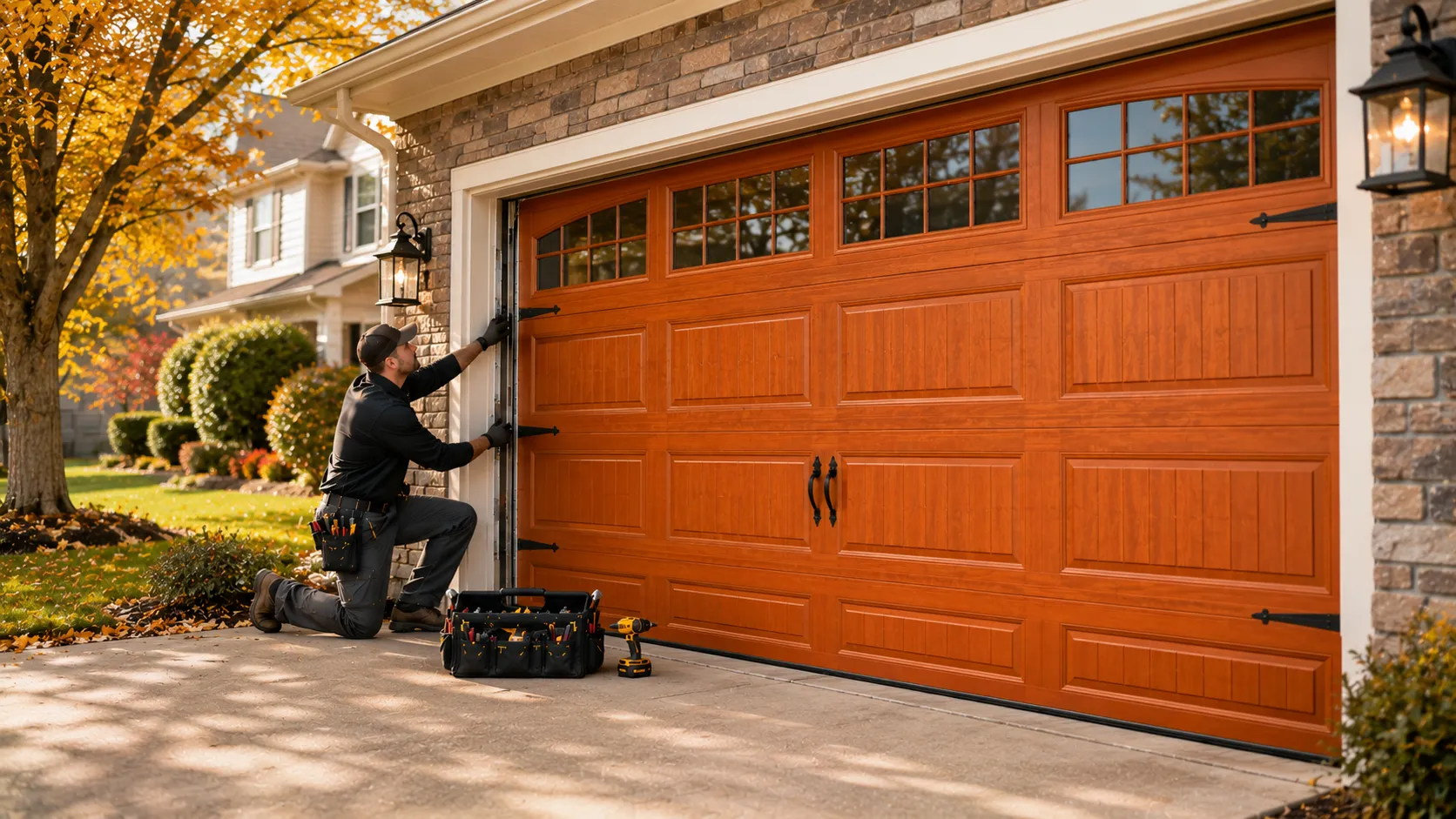
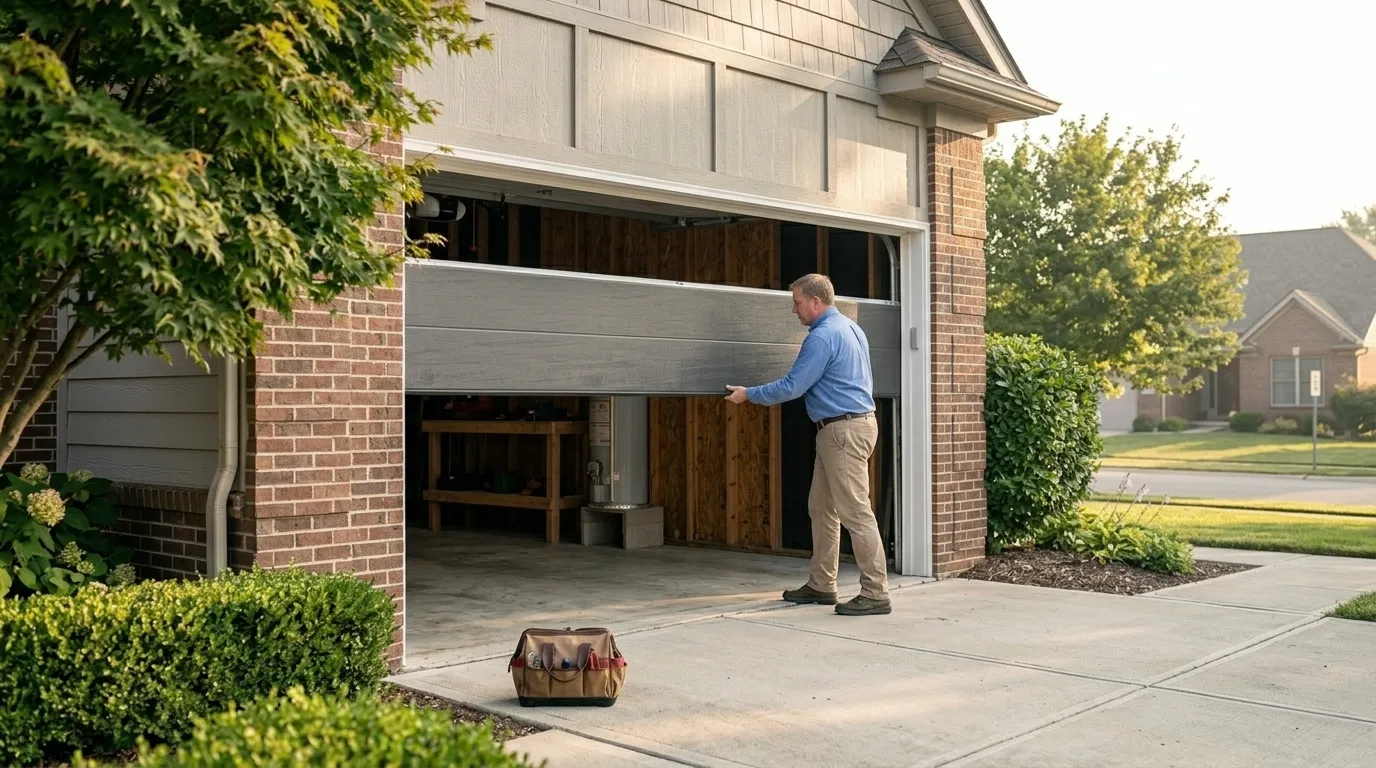
A new install starts with measuring the actual opening, not the door that's currently in it, because original-era frames sometimes settled or were never perfectly square to begin with. We pull the old door and track, check the header and jambs for rot or movement, and set new track plumb before anything else happens.
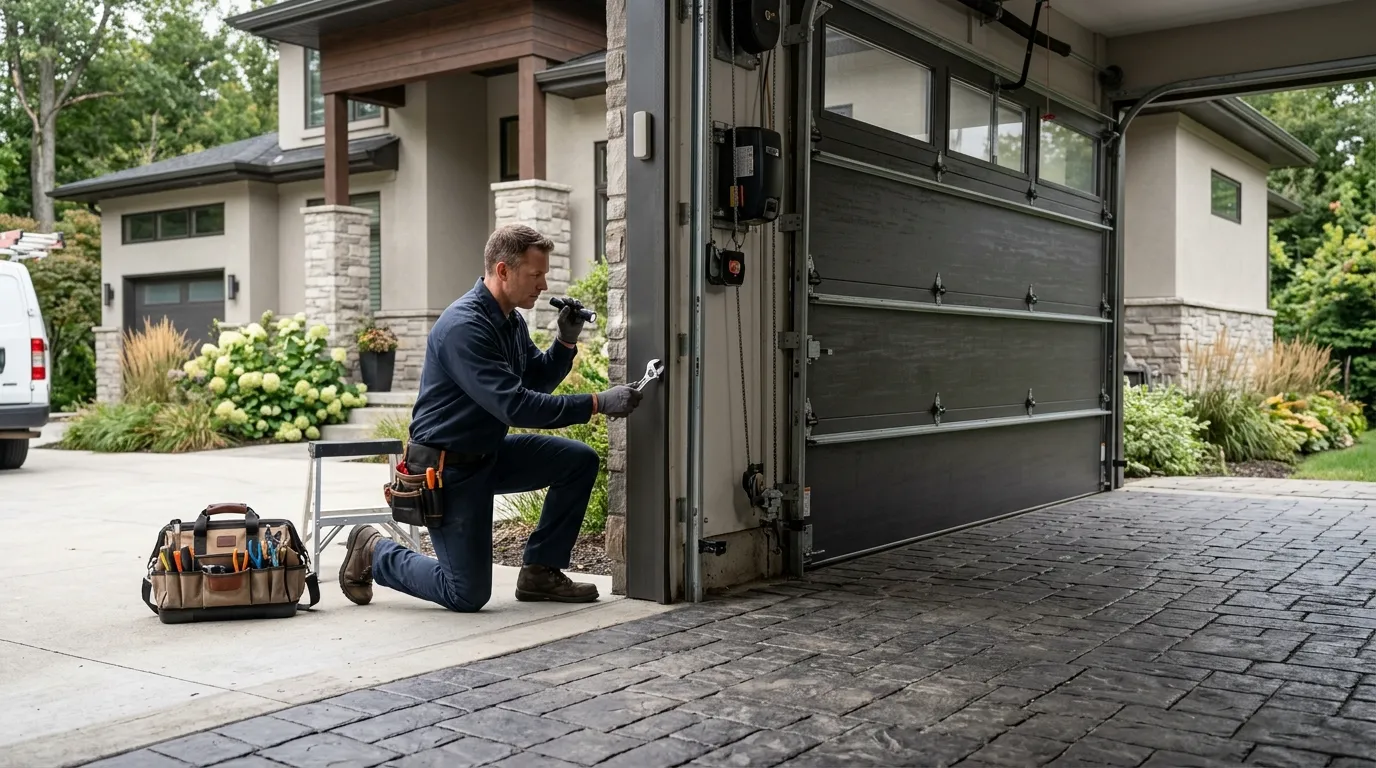
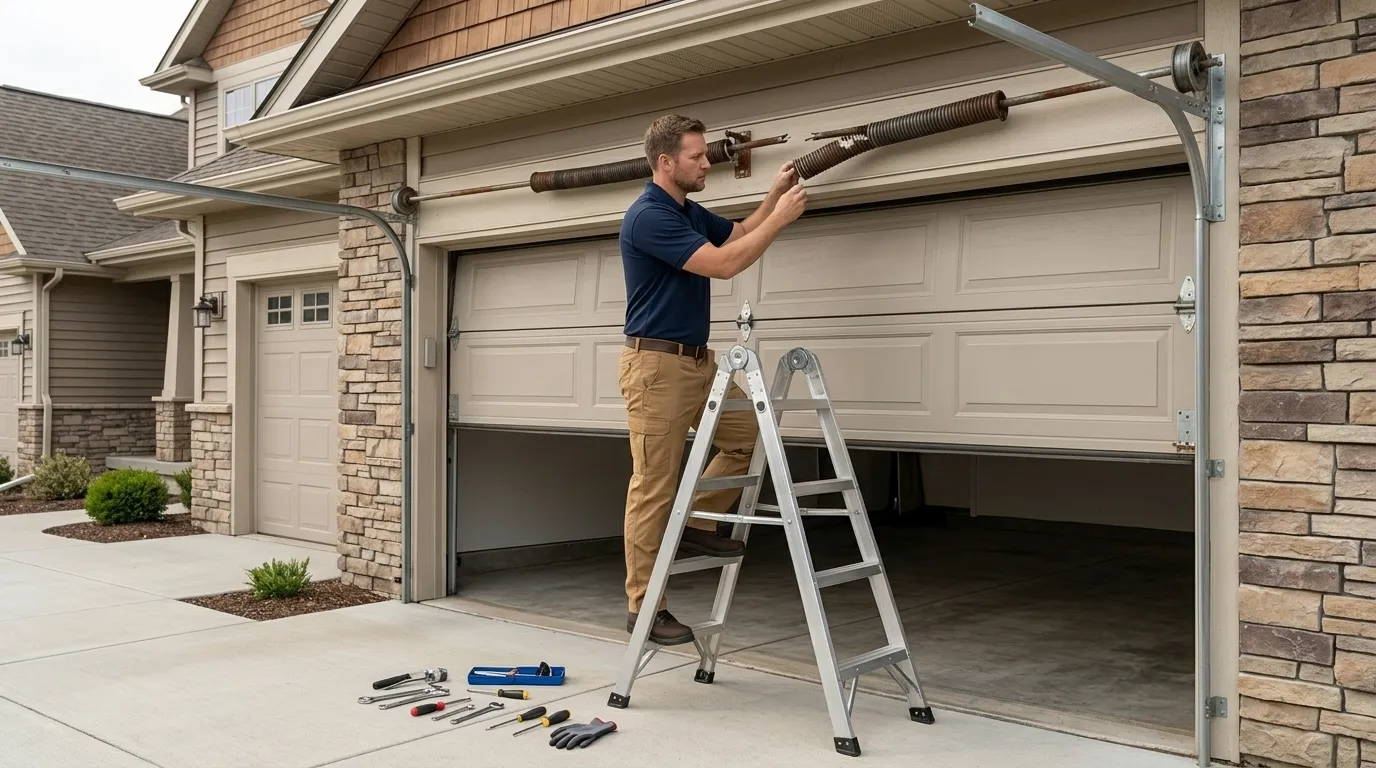
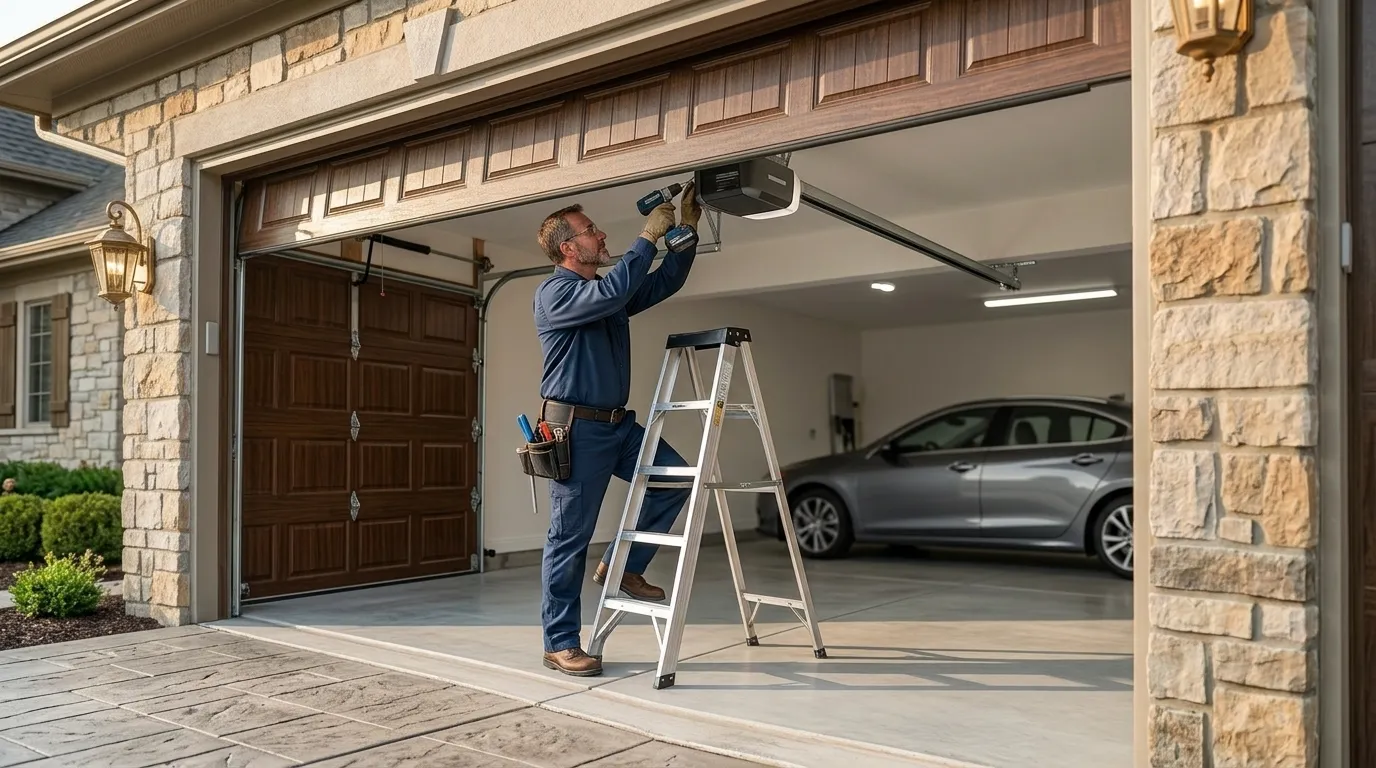
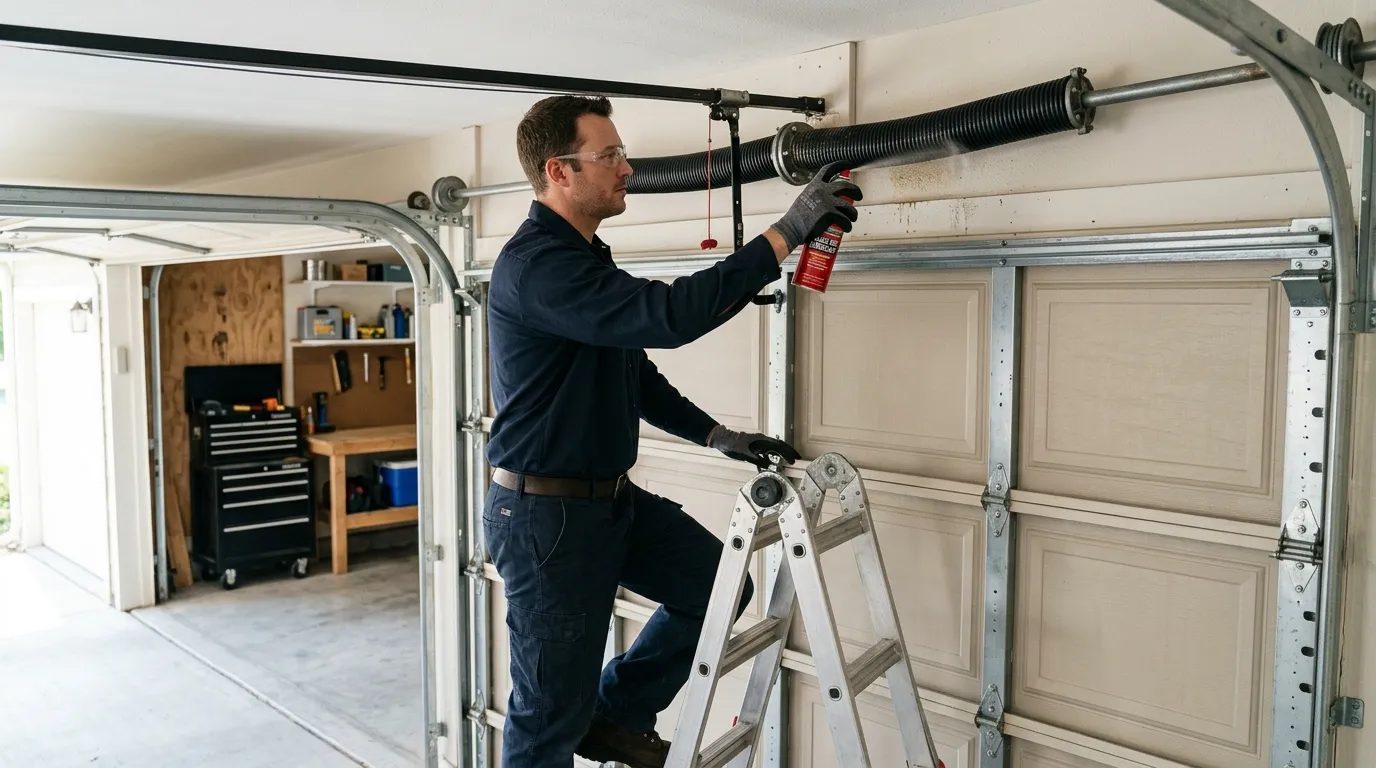
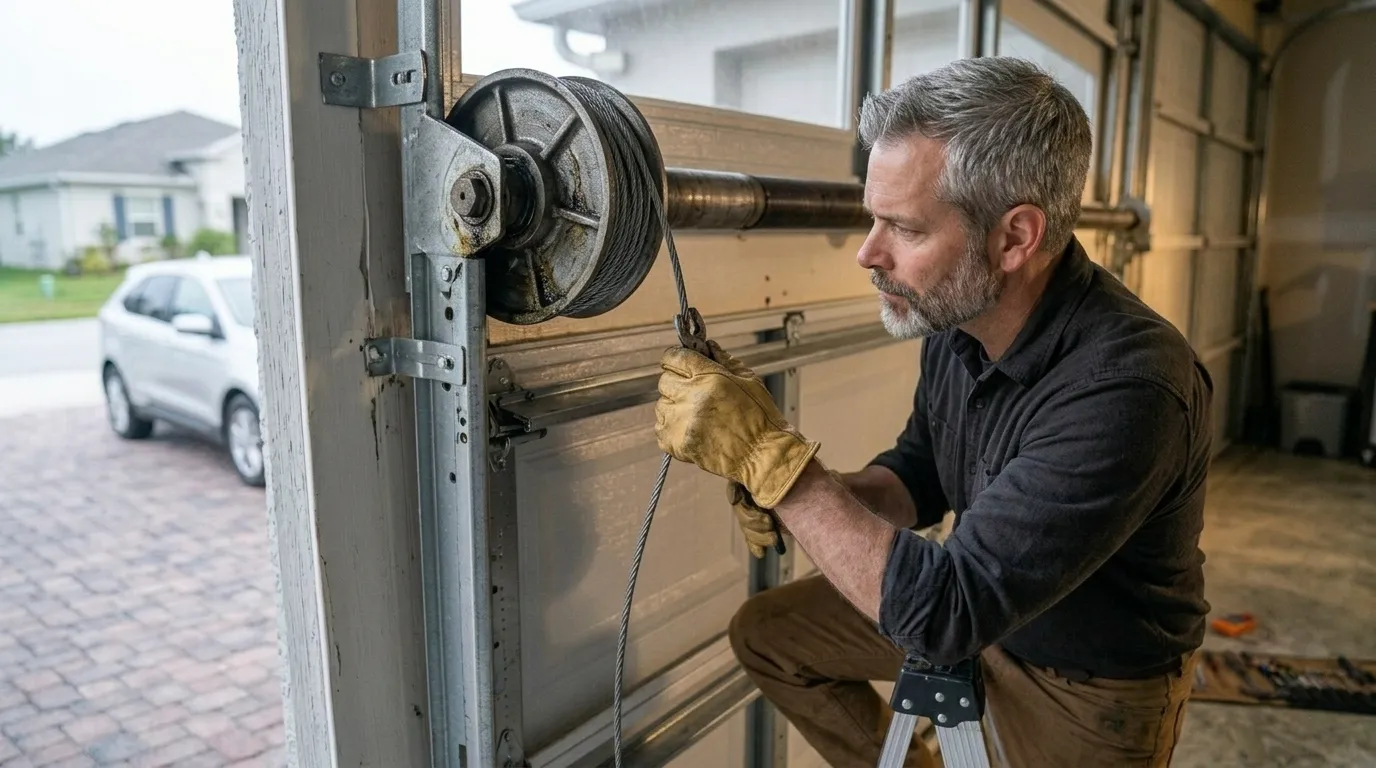
Spring sizing comes next, matched to the new door's actual weight rather than reused from the old setup, since a door built decades ago and a modern insulated door rarely weigh the same. Then the opener goes in, tied into the new track geometry rather than forced onto the old one. Given the mild coastal air here, we don't add anything for extreme heat or cold, but we do use corrosion-resistant fasteners and hardware given the salt exposure. Most installs finish in a day; anything needing a special-order door will run on that part's own timeline, not ours.