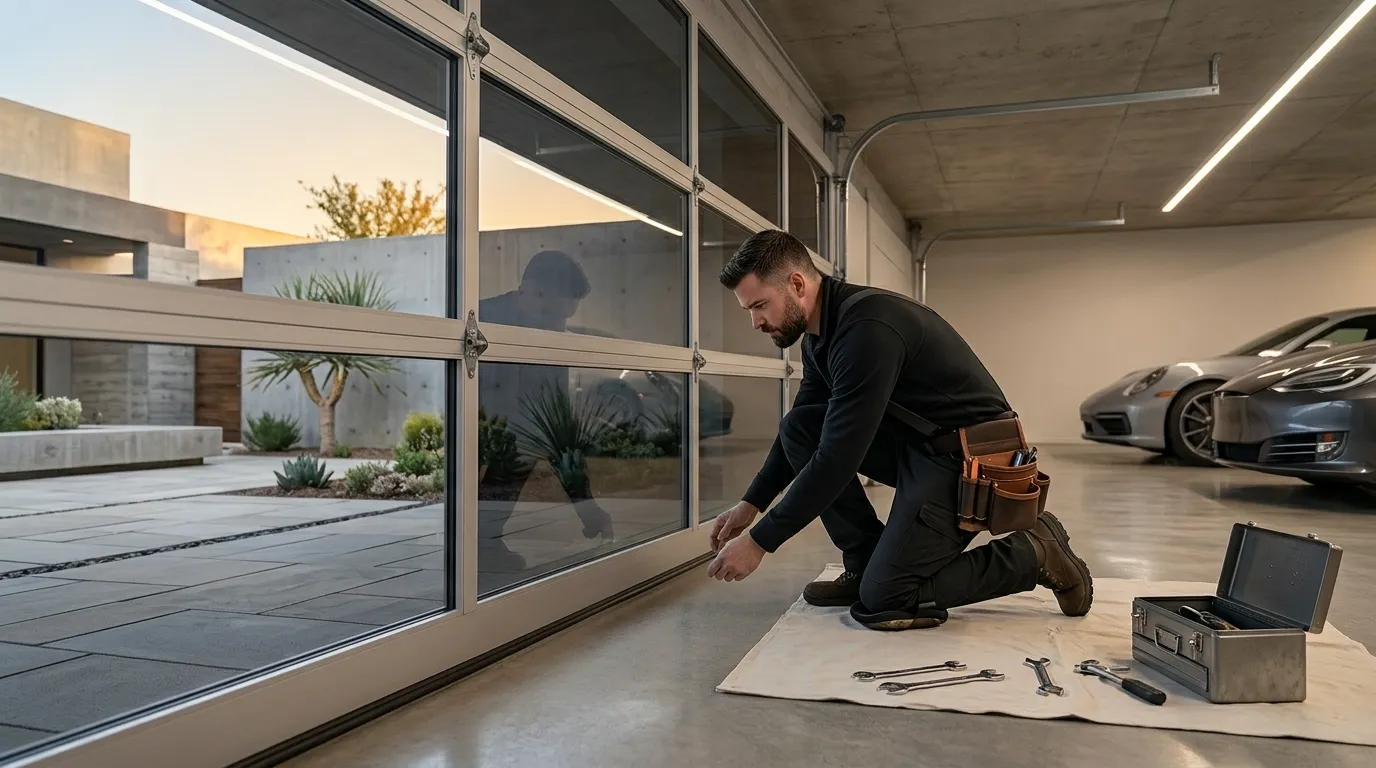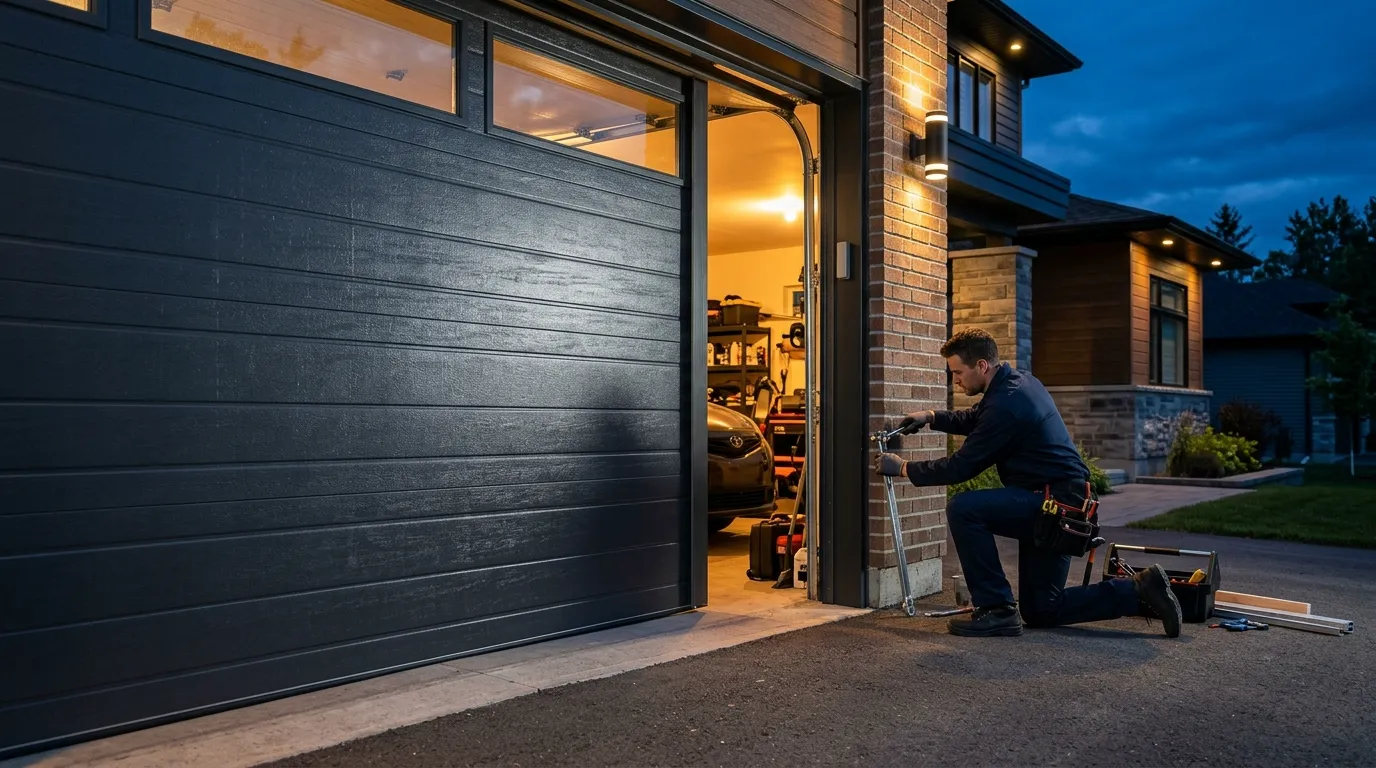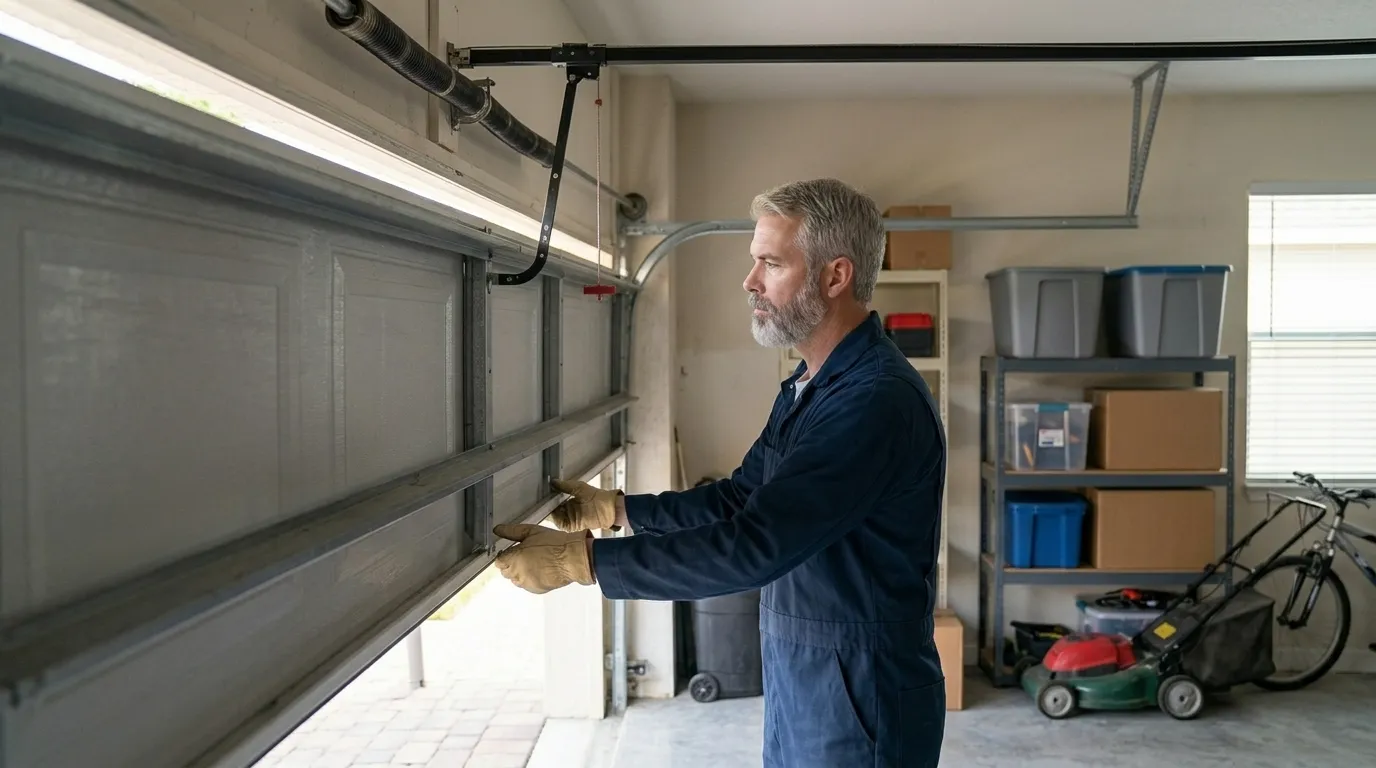
What You Are Seeing
A house built in 1963 has had sixty years to accumulate small deferred fixes, and the garage door is usually the most deferred of them all. Palos Verdes Estates sits at the median for this area's housing stock, and that median is 1963 - which means a lot of doors here are still running the springs, hinges, and track brackets that came with the house. Nobody swaps a torsion spring on a schedule. It gets replaced the day it snaps, and until then it just gets older.
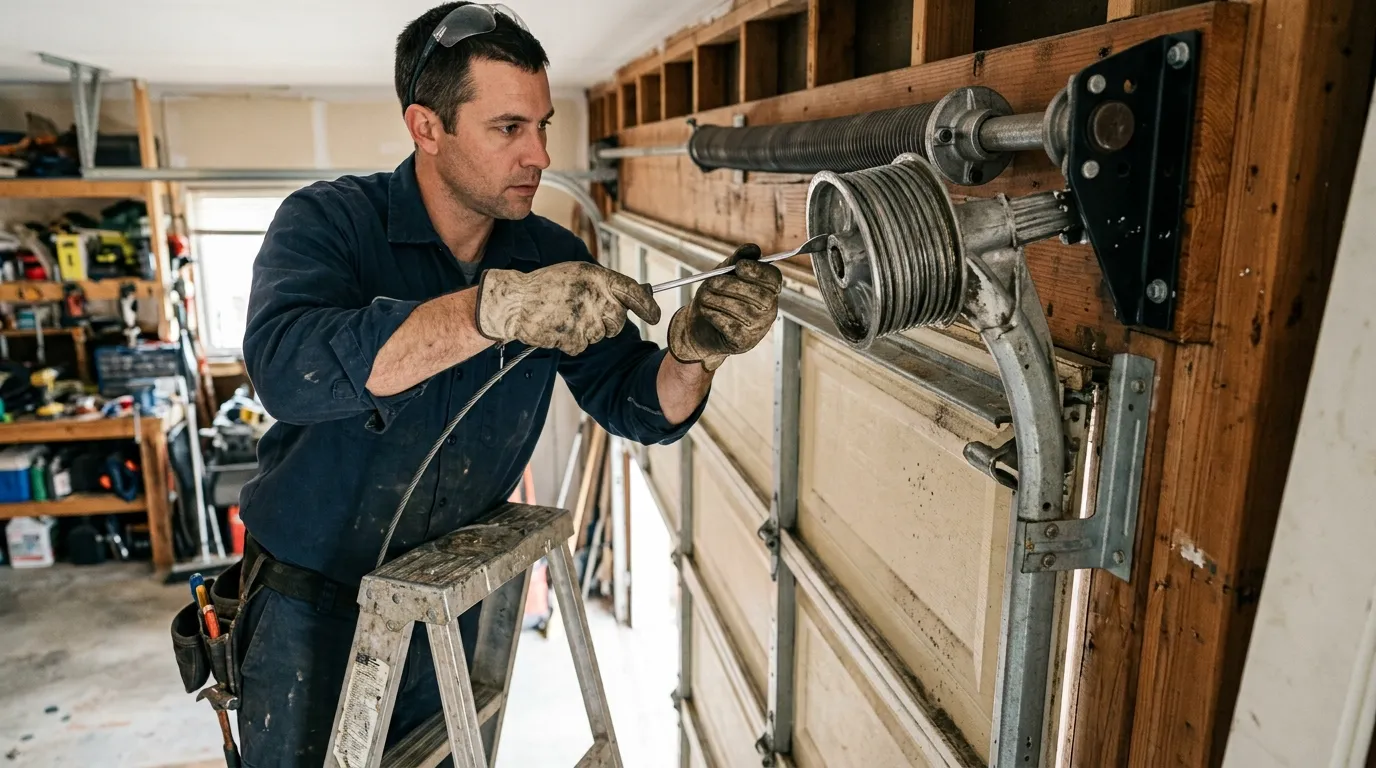
What you're likely seeing if you called us: a spring that finally let go after decades of cycles, hinges worn oval instead of round, or a track that's been reset and shimmed so many times it's out of true. None of that is unusual for a door this age. It's also not something you patch with WD-40 and hope. The mild coastal climate here has been kind to the metal - no deep freeze-thaw, no road salt - but it hasn't stopped the springs from fatiguing or the cable ends from fraying.
We travel to Palos Verdes Estates from Manhattan Beach, about 9 miles down the coast, so we're not guessing at what's common on this stretch - we see the same 1960s hardware fail the same ways call after call.
Parts We Carry
Original hardware from the early 1960s doesn't match what's sold today - the spring winding, the track gauge, and the hinge spacing on a lot of these older doors are sized differently than current stock parts. We carry springs and rollers sized to fit older torsion setups, not just the current standard, because a house with 5,032 households in a suburb built mostly around that same era needs parts that actually match what's already on the door.
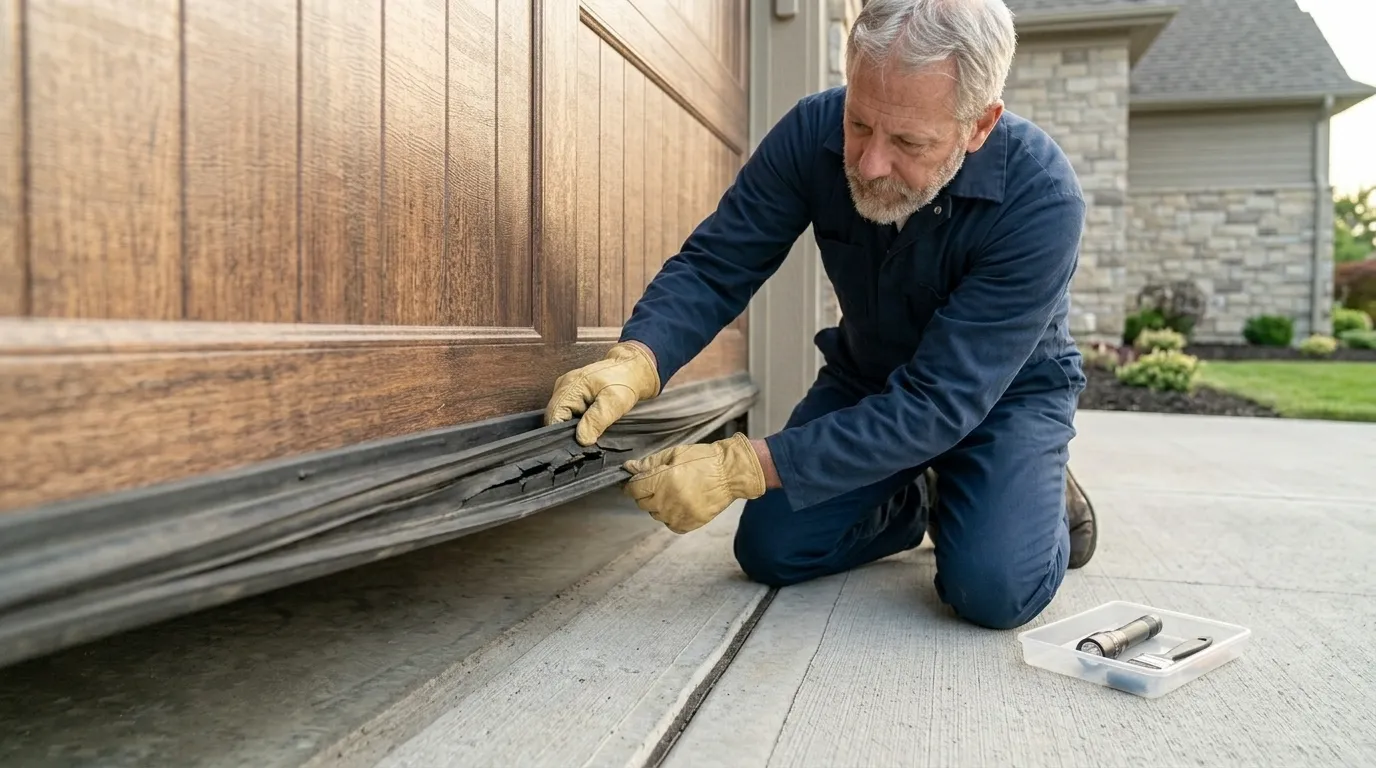
We stock common panel hardware, cable, and roller assemblies on the truck. What we don't always have on hand is a matching wood panel for a door that's been discontinued for decades - if a section's rotted or dented beyond patching on an original door, that sometimes means sourcing a panel or, more often, replacing the whole door rather than chasing a part that doesn't exist anymore. That's the honest limitation: we won't pretend a 60-year-old panel is a same-day fix when it isn't.
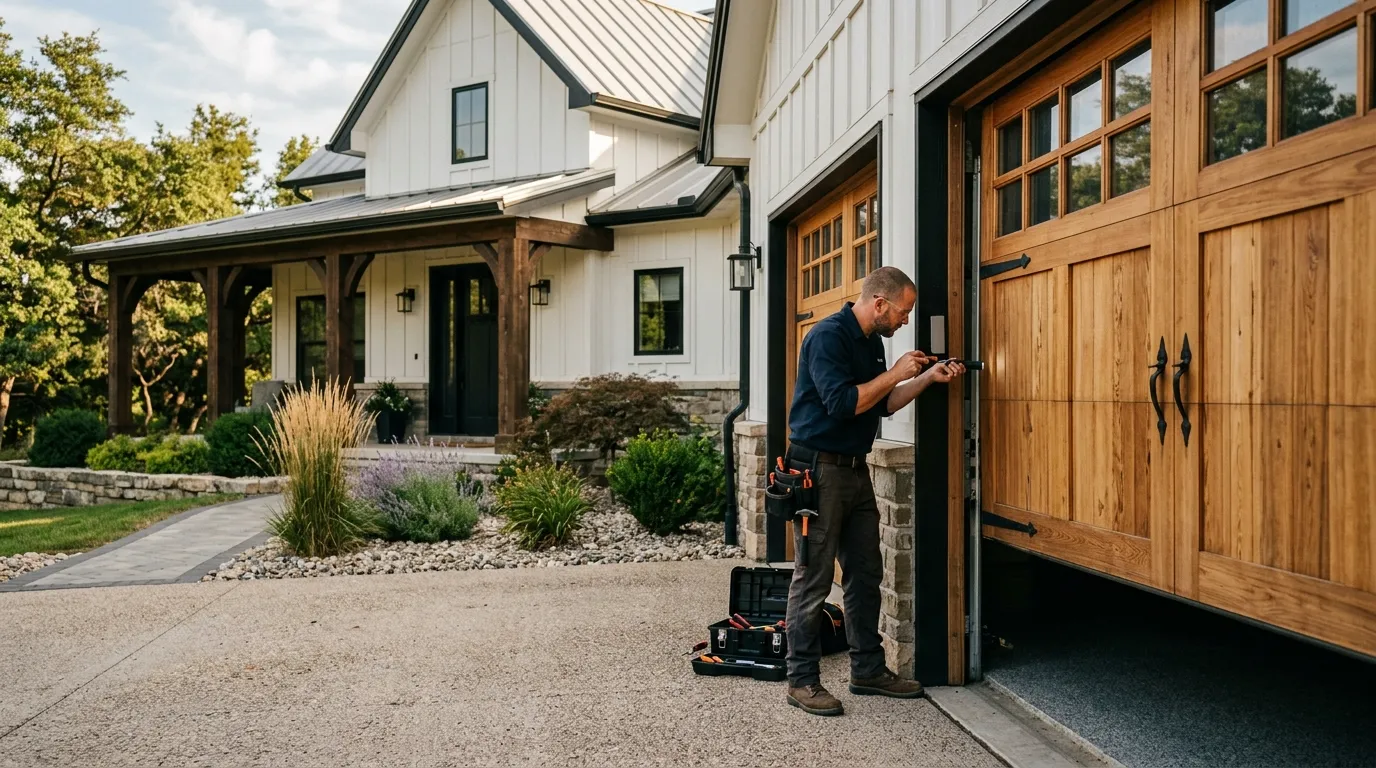
What we can usually match same-visit: springs, cables, rollers, hinges, and standard track sections.
What the Fix Involves
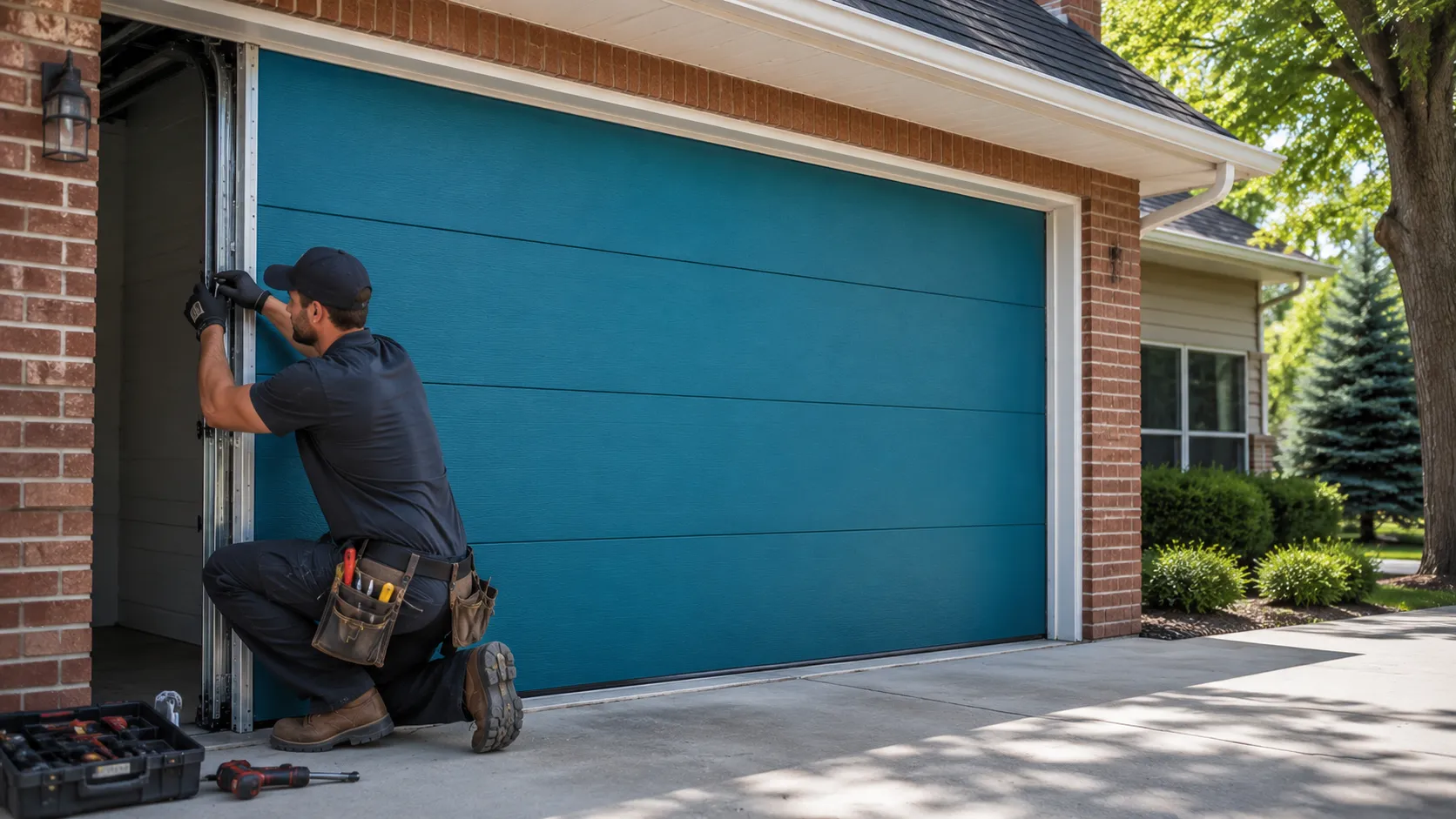
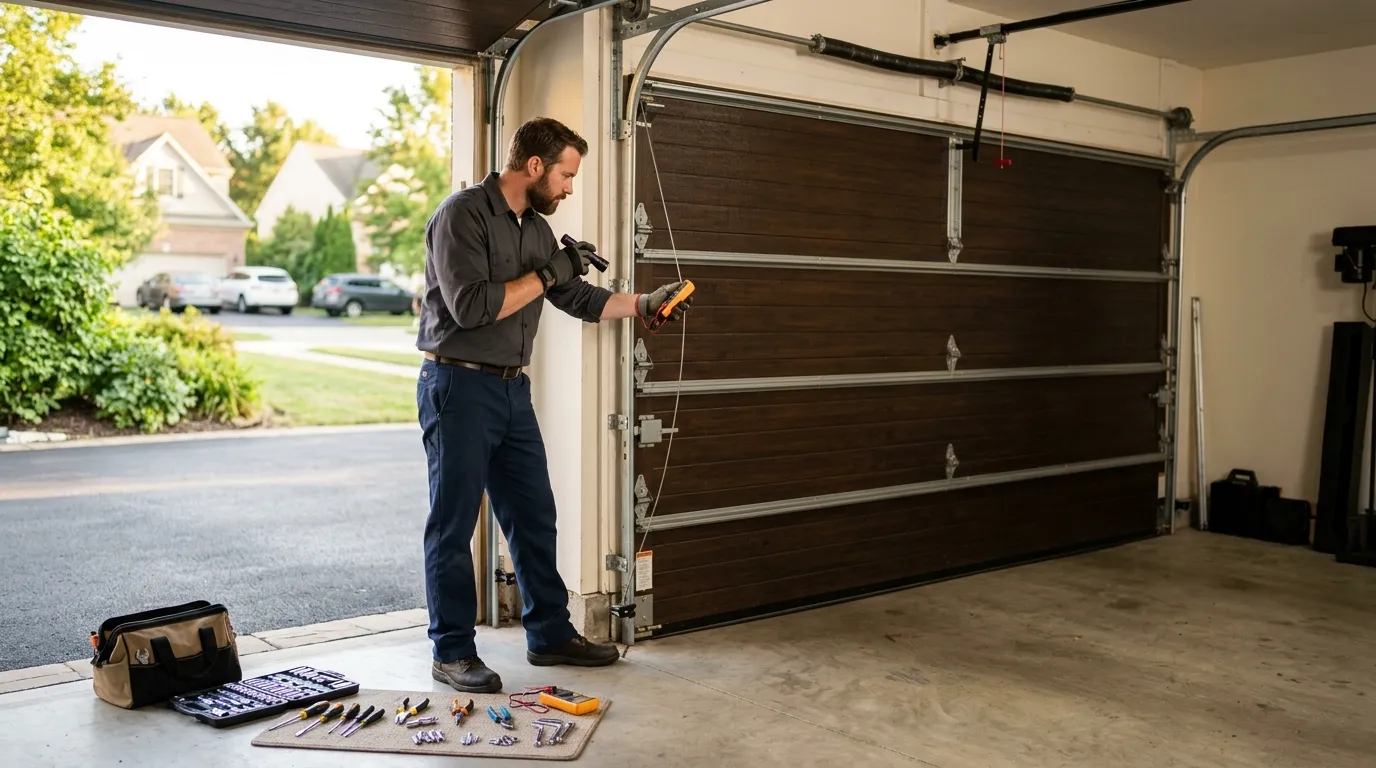
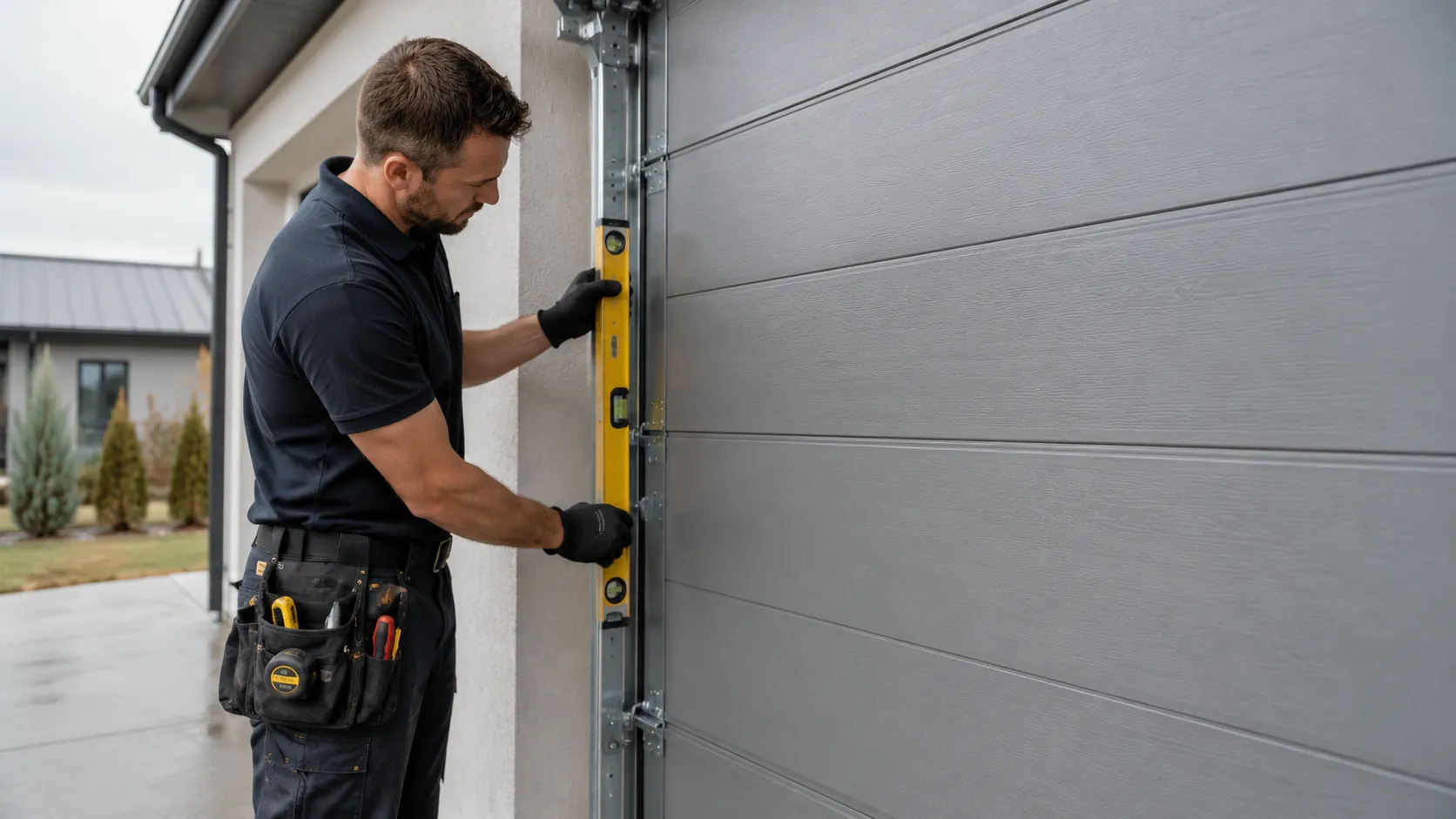
Most calls in this area start with a look at the whole door, not just the part that failed, because on a house this old the failed part is rarely alone. We check spring tension, hinge wear, track alignment, and the cable drums before touching anything, since a door built around 1963 has usually had at least one other component quietly wearing out alongside whatever finally gave.
If it's a spring, we replace it under tension with the right size for the door's weight - guessing at spring size on an older door is how you end up with a door that slams down or won't stay open. If it's track or hinge wear, we true up the track and swap what's bent rather than trying to hammer it back into shape, which never holds on hardware this old.
The mild year-round climate on this coast means we're not fighting rust or ice the way a colder region would, so most of what we're correcting is straightforward mechanical fatigue, not weather damage. That's some good news buried in an otherwise aging-hardware problem: the fix is usually mechanical, not structural.