Serving Manhattan Beach, CA & nearby
(424) 563-5925
Manhattan Beach, CA

Garage Door Maintenance for Beverly Hills' 1959-Era Homes

Beverly Hills homes date to about 1959, older than this area's 1963 median, with different spring hardware. Here's what maintenance on these doors involves.

Garage Door Maintenance for Beverly Hills' 1959-Era Homes
Manhattan Beach, CA
8 services
6 service areas
Diagnosis first, then the fix

What You Are Seeing

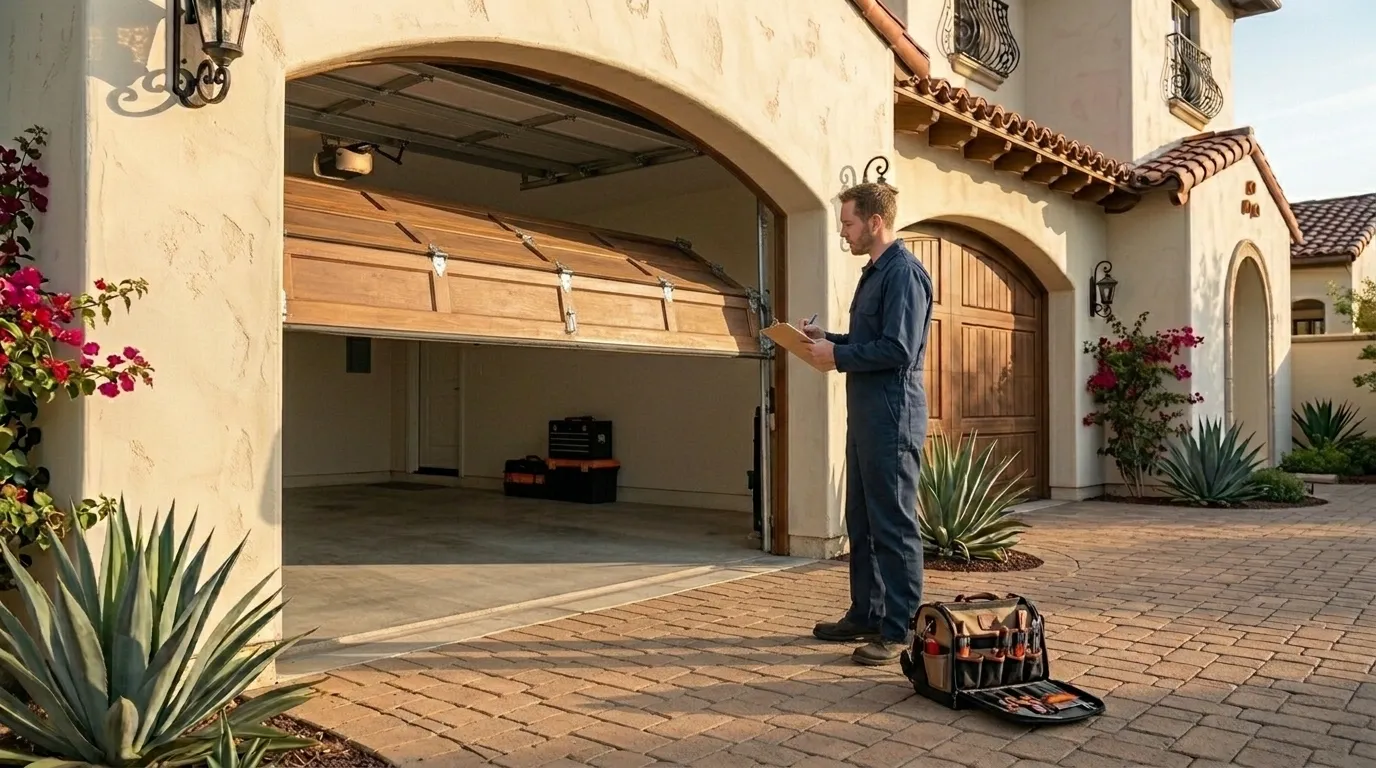
The median home in Beverly Hills went up around 1959, which puts it a few years ahead of the 1963 median across the wider service area we cover from Manhattan Beach. That gap matters more than it sounds. A door installed in 1959 almost never shipped with a torsion spring mounted on a shaft above the opening - that hardware wasn't standard on most tract garages of the era. What you're more likely to find is a pair of extension springs stretched along the horizontal tracks, hooked to pulleys and a safety cable that may or may not have been added later. Panels from this period also tend to be lighter gauge steel or, on some of the older builds, wood, with none of the foam-core insulation that shows up on doors made after the 1980s. None of that is a defect. It's just what a garage door looked like the year it went in, and it changes what a maintenance visit needs to check. We're not looking at the same wear points on a 1959 door that we'd check on a 2005 door, and treating them the same is how small problems get missed.

The Cost of This Job

We don't publish a flat number for maintenance here because the visit depends on what's on the door - a straightforward lube-and-adjust on a well-kept extension-spring setup is a different job from one where the pulleys are seized and the cable's frayed. What we can say is that Beverly Hills runs a median household income of $127,979, well above the roughly $94,152 median across the broader service area, and in practice that correlates with more owners calling us for a scheduled check-up rather than waiting for a spring to let go on a Sunday. Maintenance is cheaper than the emergency it prevents, but we're not going to pretend we can quote a number without seeing the door. If you want a firm figure, that's a conversation for the visit, not this page.

What the Fix Involves

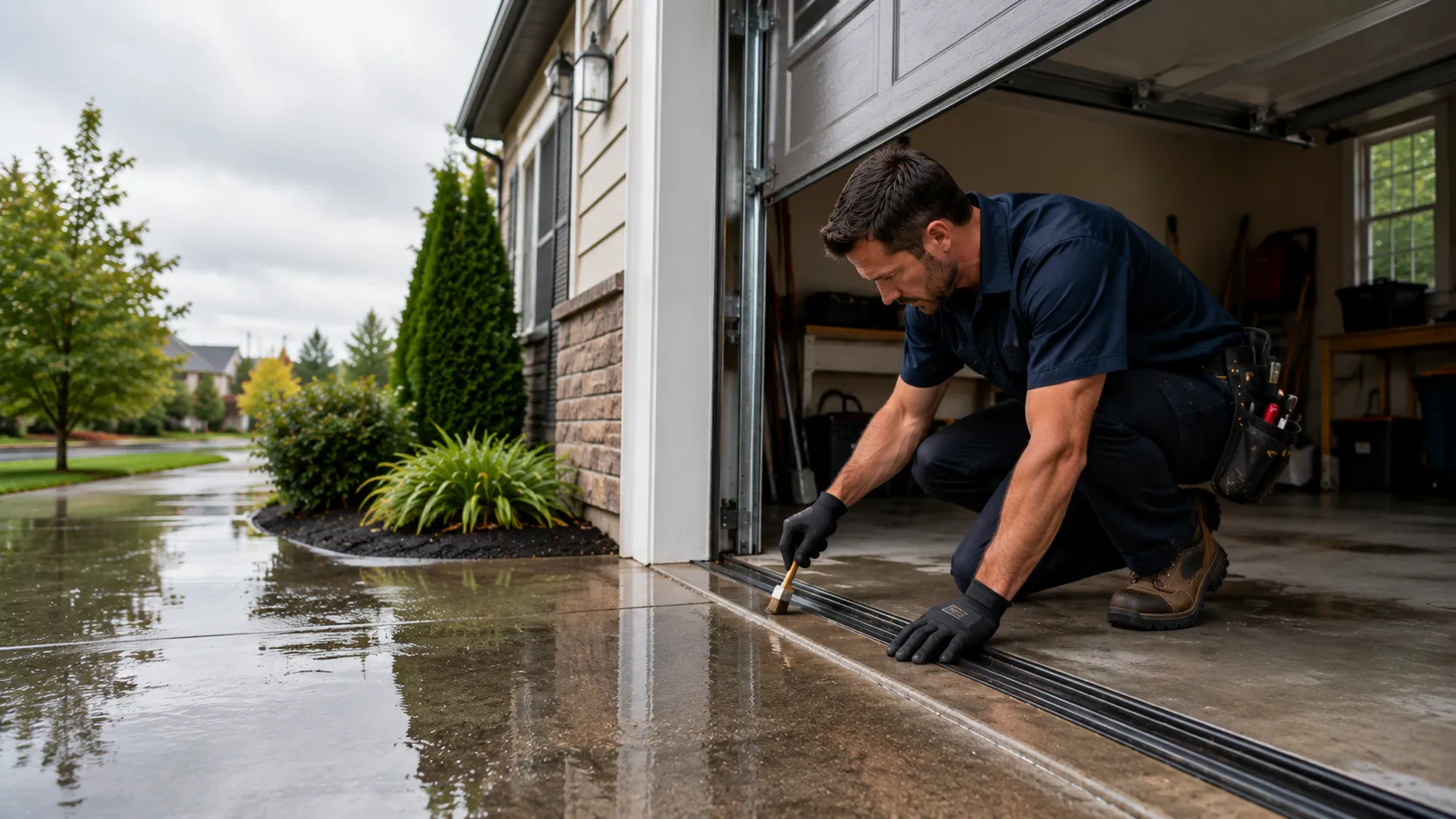
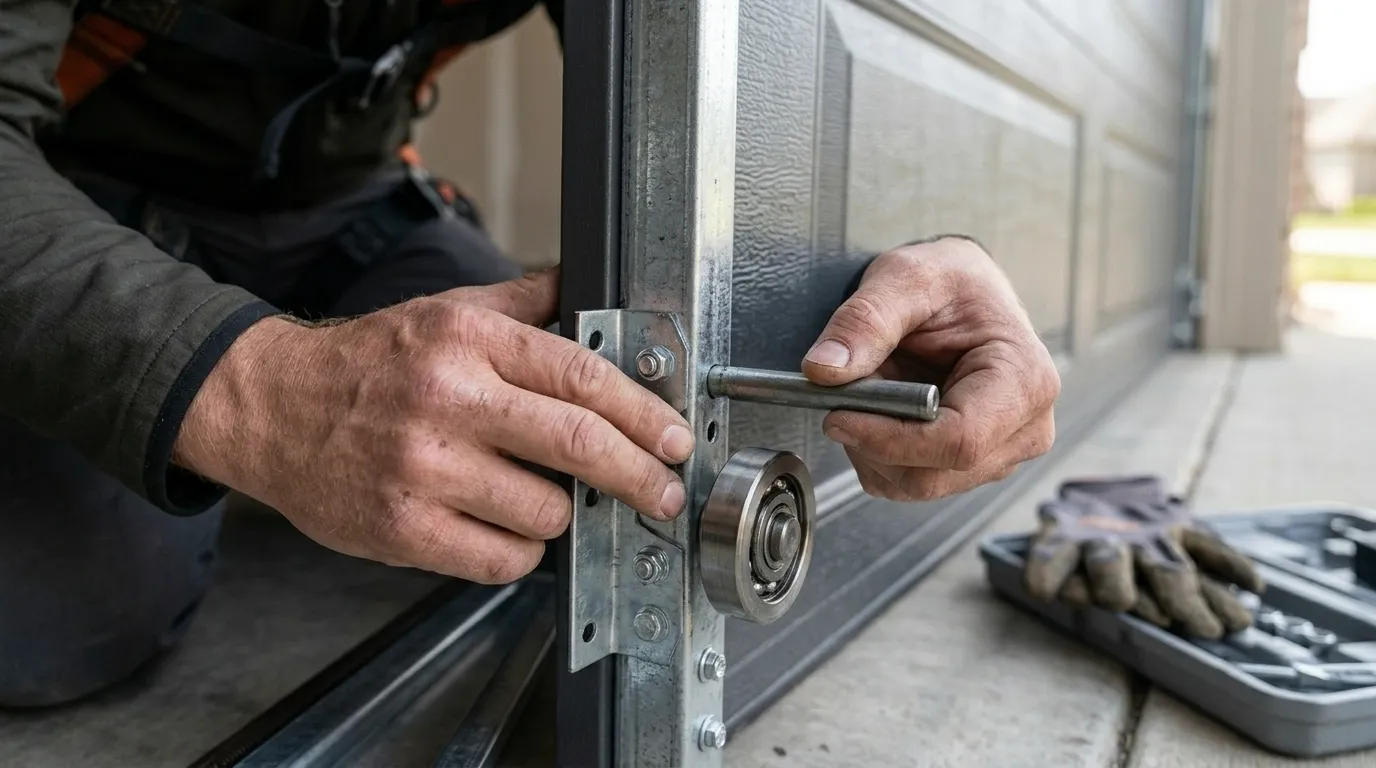
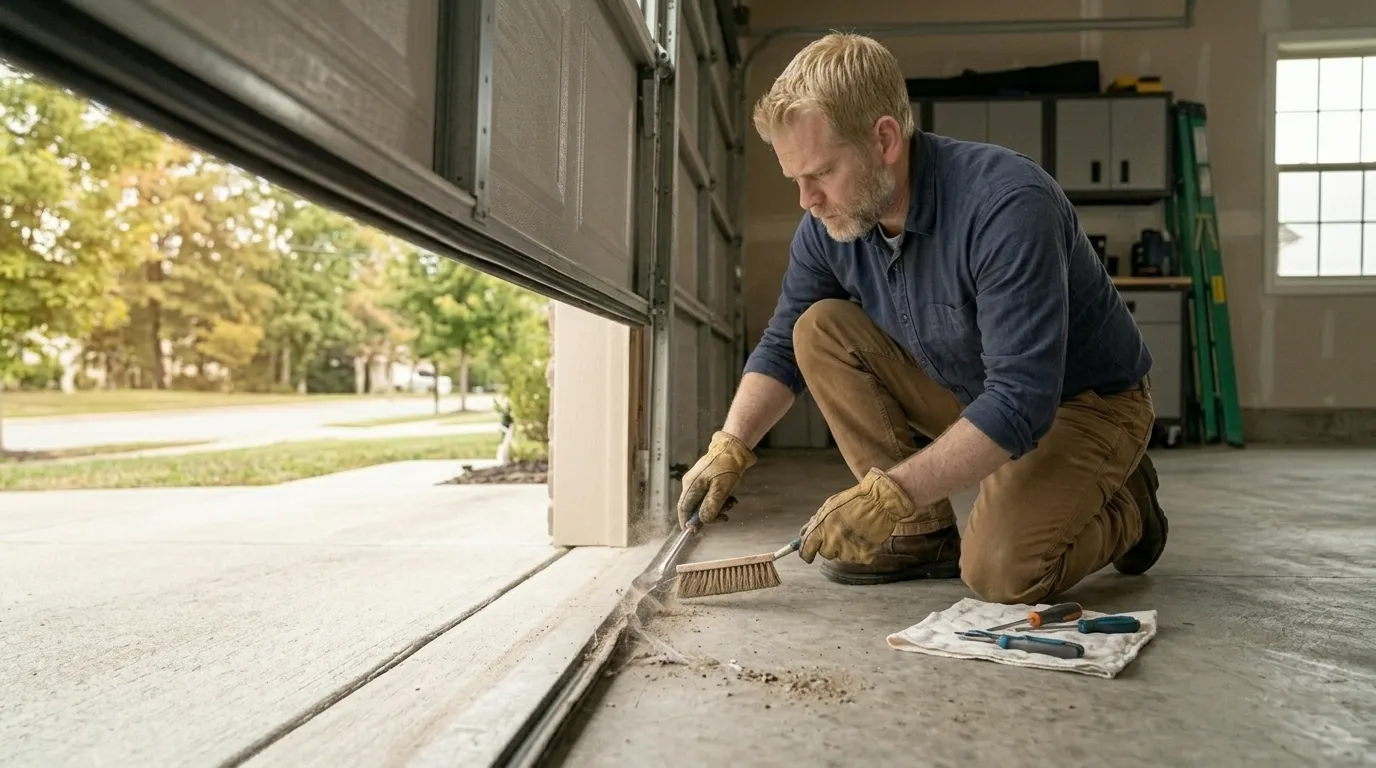
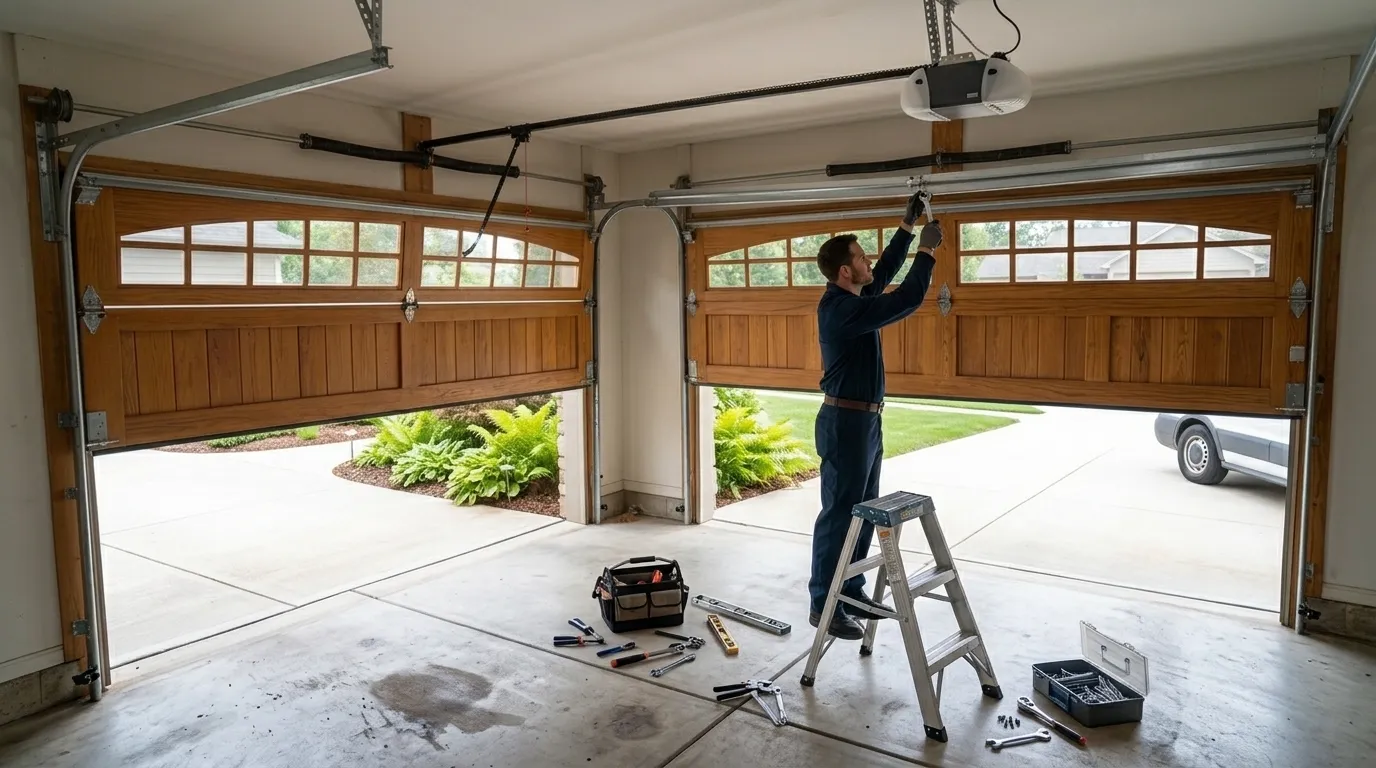
On a 1959-era door, the maintenance visit centers on the extension-spring hardware and the tracks it rides in. We check spring tension and look for stretched or corroded coils, since extension springs don't hold calibration the way torsion springs do and they lose it unevenly. We inspect the pulleys and the cable running through them - on an older setup this cable often predates any safety-containment retrofit, so we look at whether one's been added and whether it's still doing its job. Track alignment gets checked next, because horizontal track on a house this age has usually been bumped, bent, or re-shimmed at least once over sixty-plus years. Rollers get lubricated or replaced if they're worn oval instead of round. We also check the opener's force settings if one's been added to an original manual door, since retrofit openers on lightweight older panels are a common source of over-travel. What we don't do on this visit is repaint or refinish the panel - that's a cosmetic job, not a mechanical one, and we tell owners that up front.

How Long You Are Without the Door

A maintenance visit isn't a teardown. In most cases the door stays operable through the whole appointment - we work a section at a time, test, and move on, rather than pulling the door apart. If the inspection turns up a part that needs replacing on the spot, like a cracked pulley or a cable past its safe life, that portion of the door is out of service only for the time it takes to swap the part, not the whole visit. We travel from our Manhattan Beach location, about twelve miles from Beverly Hills, so the appointment itself is scheduled rather than same-hour, but once we're on site the goal is to leave the door working, not partway through a repair.

The DIY Question

There's a real list of things an owner can check without tools: whether the door reverses cleanly when something's under the sensor beam, whether the tracks look visibly bent, whether the rollers are grinding instead of turning quiet. Wiping down and lubricating the hinges and rollers with a light garage-door lubricant is fine for most owners to do themselves. What we'd tell a Beverly Hills owner not to touch is the spring hardware. On an extension-spring door from this era, the springs are under load even when the door's down, and the pulleys and cable can whip if a coil lets go while someone's adjusting it. That's not a scare tactic - it's the actual failure mode, and it's why spring work on a door this age is a call, not a weekend project.

Why It Happens Here

This whole service area sits in a mild temperate climate, so we're not dealing with the freeze-thaw cycling that snaps hardware in colder regions - the springs and cables here don't fail from cold contraction. What ages them instead is straightforward time on the same original parts. A door installed in 1959 that's never had its extension springs swapped is running on hardware pushing sixty-five years old, and steel fatigues on a schedule whether or not the weather's mild. Add in that Beverly Hills' roughly 14,263 households mostly share that same build era, and the failure pattern across the area is consistent rather than random: worn pulleys, stretched springs, and tracks that have shifted slightly over decades of use, not storm damage or sudden temperature swings.
How it works

From “it’s stuck” to “it’s fixed”

1
Tell us what’s wrong - Manhattan Beach garage door service

Tell us what’s wrong

Describe the symptom - won’t open, loud bang, opener runs but the door won’t move.

2
On-site diagnosis - Manhattan Beach garage door service

On-site diagnosis

A technician tests the door under power and by hand and finds what actually failed.

3
Clear, up-front plan - Manhattan Beach garage door service

Clear, up-front plan

You get the fix that’s needed and what drives the cost - before any work starts.

4
Repaired & tested - Manhattan Beach garage door service

Repaired & tested

The repair is done, the door is set true and tested, and the work area left clean.

Serving Manhattan Beach, CA - tell us what your door’s doing and we’ll take it from there.

How we work

What to expect

Diagnosis firstEvery visit starts by finding what actually failed - not a pre-written parts list.
The right part for the doorSprings and openers matched to the door’s weight and age, so the fix holds up.
Straight answersWhen a repair makes more sense than a replacement - or the reverse - you hear it plainly.
Clean, careful workTension released safely, hardware set true, the door tested under power before we leave.
35,818
Residents in Manhattan Beach
8
Garage door services
6
Neighborhoods & suburbs
CA
Serving Manhattan Beach, CA
Questions

Frequently asked

Straight answers about garage door repair in Manhattan Beach. Still unsure? Ask us directly.

How old is my garage door likely to be if my house was built around 1959?

If the door hasn't been replaced, it's probably close to that age itself, since builders installed doors along with the house. At that age you're most likely looking at extension springs on horizontal tracks rather than a torsion spring, and a steel or wood panel without foam insulation. That changes what a maintenance check needs to look at compared to a newer door.

Do you have a branch in Beverly Hills?

No. We work out of Manhattan Beach, about twelve miles away, and schedule visits into Beverly Hills rather than dispatching from a local depot. That means appointments are scheduled ahead rather than same-hour.

Can I lubricate my own garage door hardware?

Yes, that part is fine for most owners - a light lubricant on hinges and rollers is basic upkeep. What you shouldn't do yourself is adjust or replace the springs, especially on an older extension-spring door, since those parts are under load and can whip if handled wrong.

Why does my door feel heavier than it used to?

On an extension-spring door this usually means the springs have stretched or lost tension over the years, so they're no longer offsetting the panel's weight the way they did when installed. It's a common finding on doors from the late 1950s and 1960s that haven't had the springs replaced.

Ready to get your garage door sorted?

Tell us what it’s doing and where you are in Manhattan Beach - we’ll take it from there.

Request a QuoteCall