What You Are Seeing
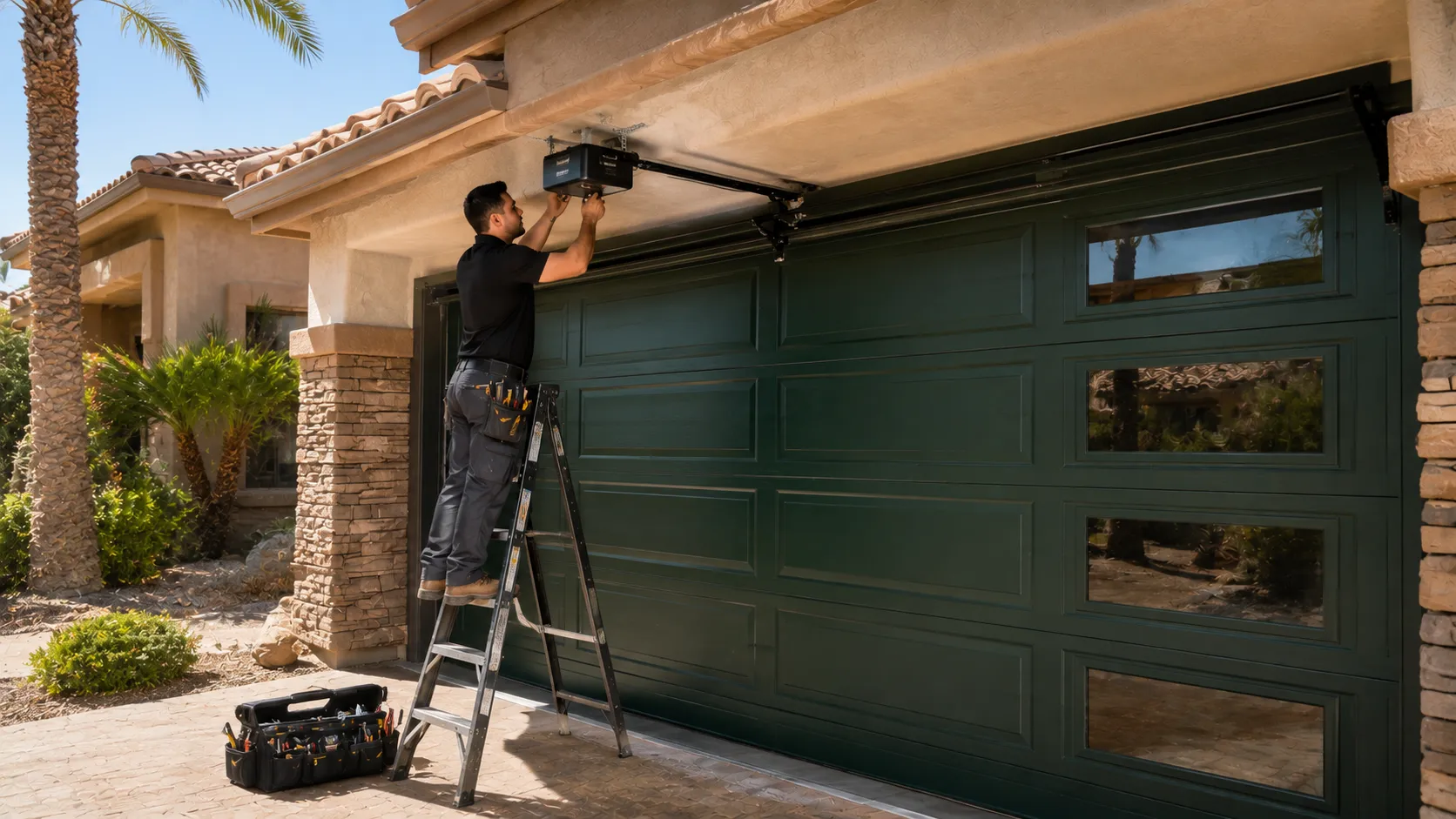
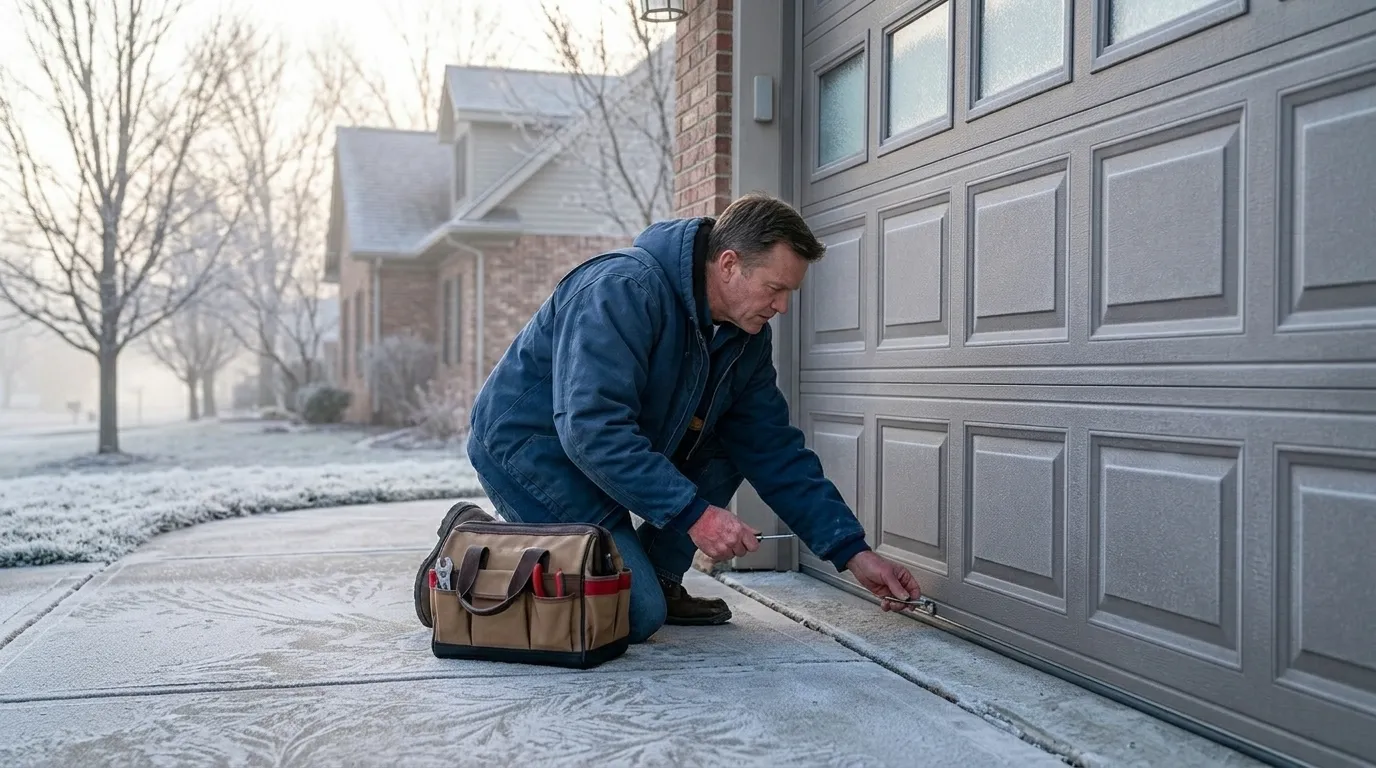
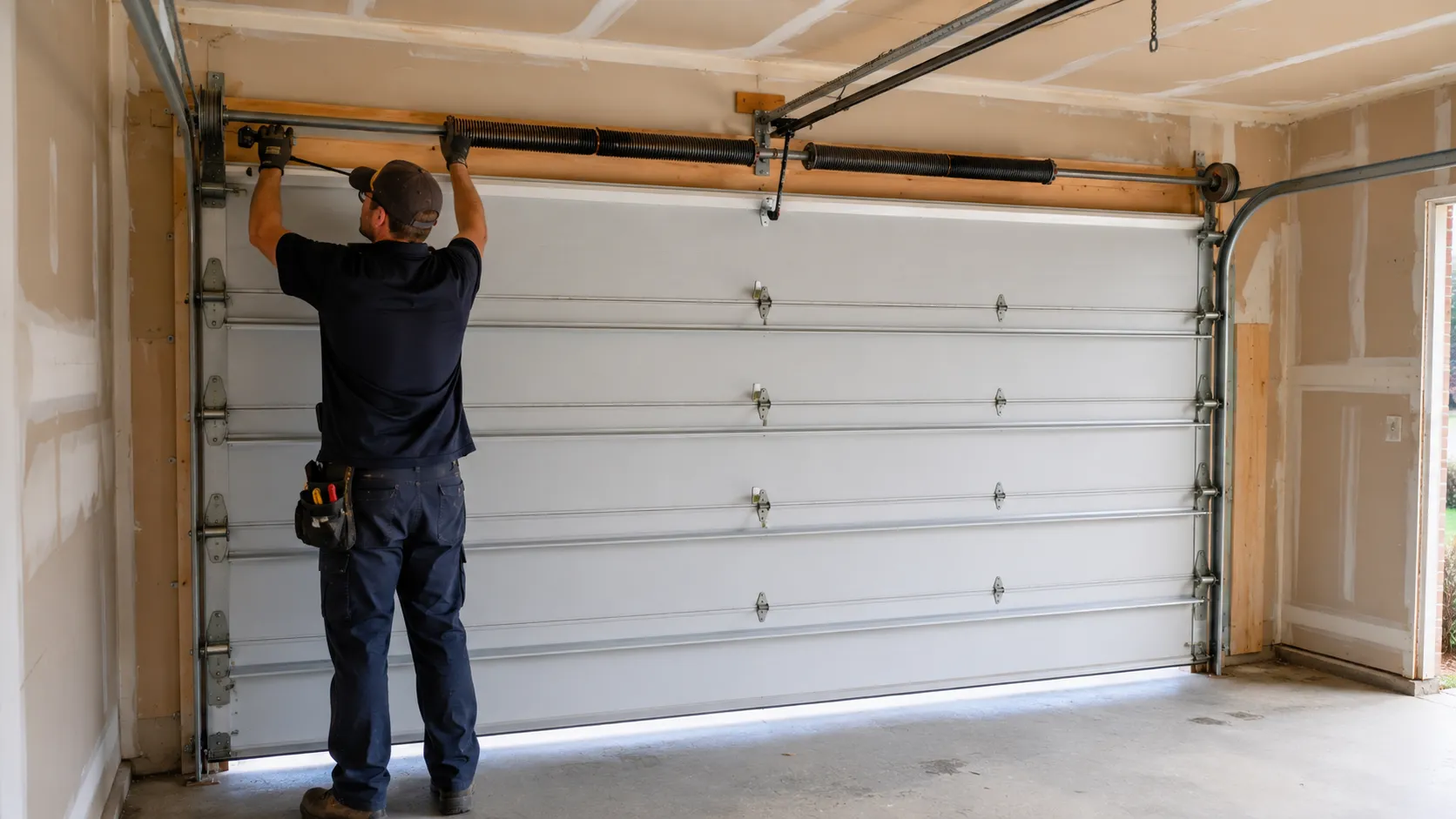
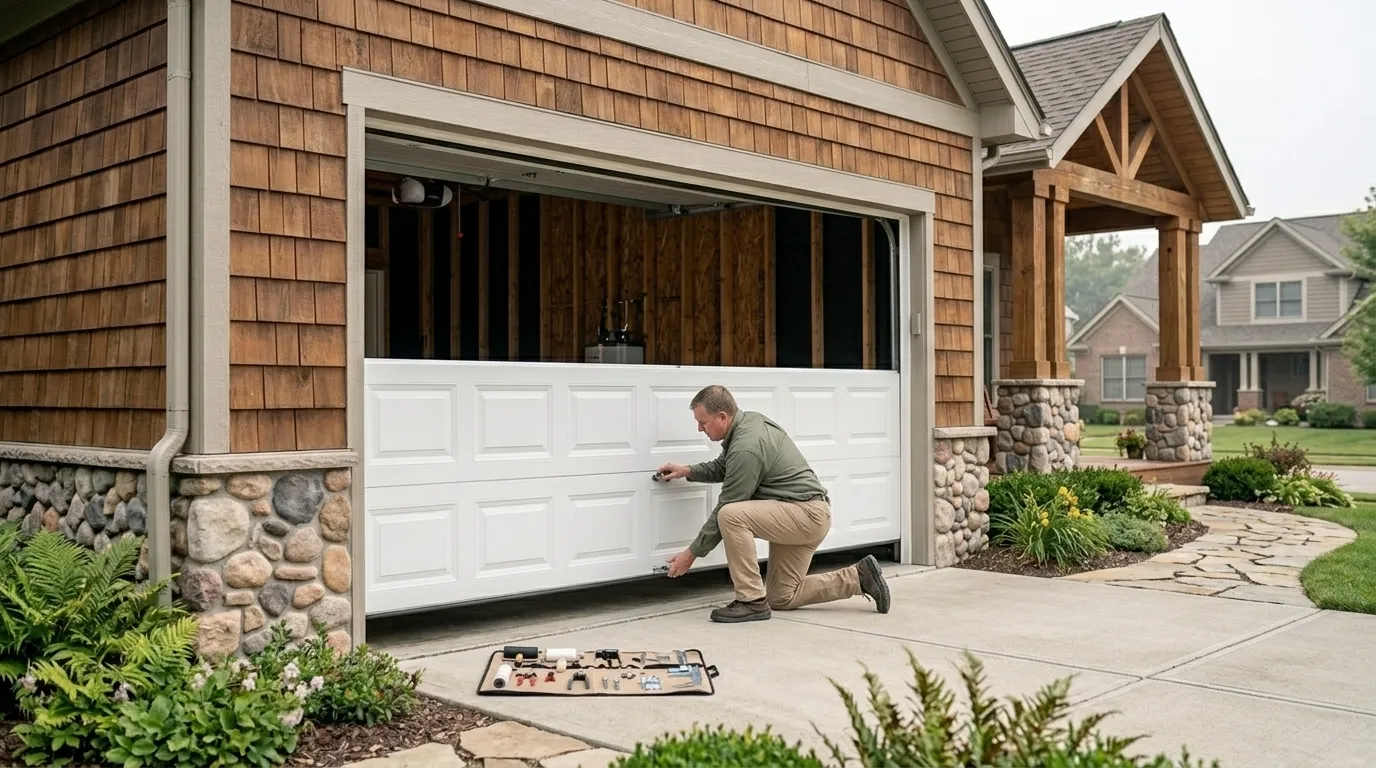
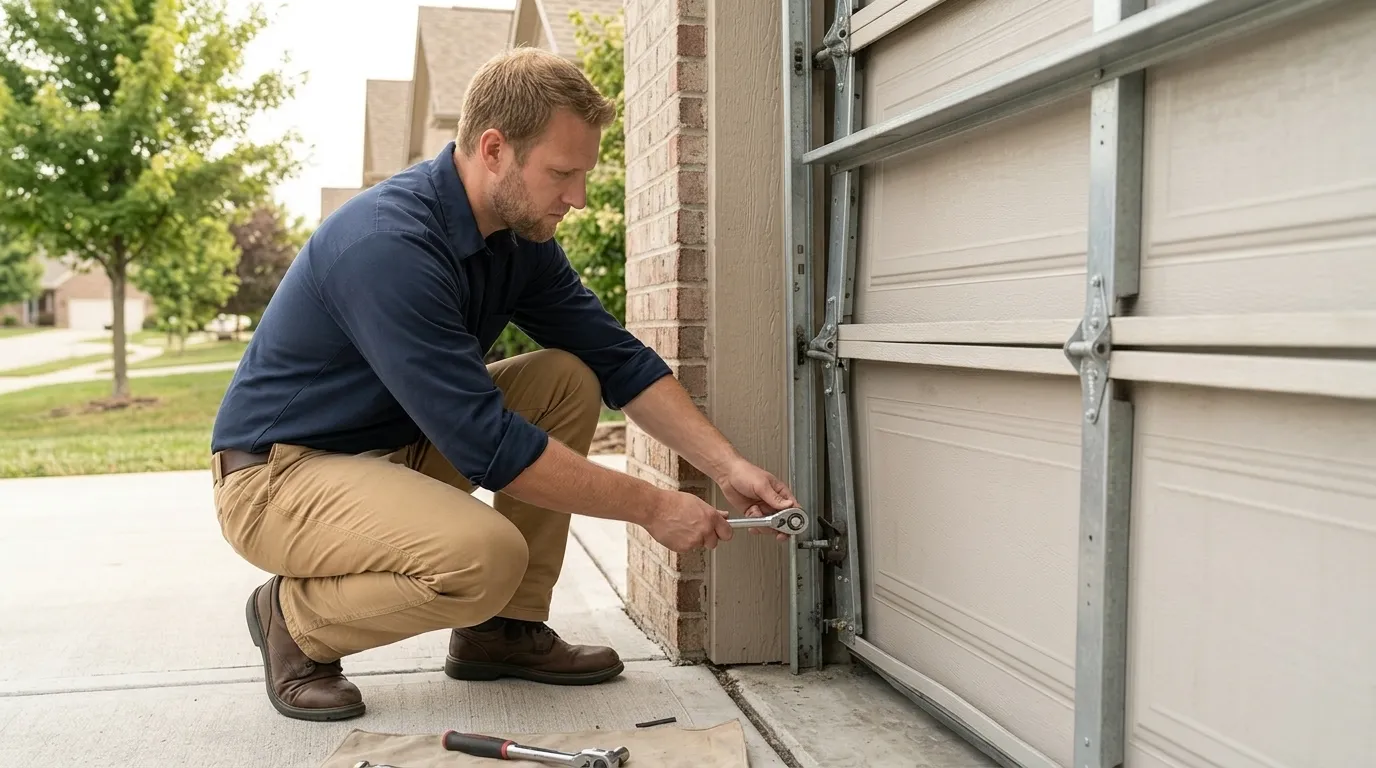
Beverly Hills homes cluster around a 1959 build year, which means a lot of these garage doors have never had their lift cables swapped out. If your door is original to the house, that cable has been winding and unwinding on the same drum for over six decades, and galvanized aircraft cable from that era doesn't have the corrosion coating you'd get on a cable made today. What you're usually seeing is one of three things: a frayed cable near the bottom bracket where road grit works into the strands, a cable that's jumped the drum groove and is bunching up on one side, or a full snap that dropped one corner of the door and left it hanging crooked in the track. If the door is sitting tilted at an angle instead of flat on the floor, that's a cable problem, not a spring problem, even though people usually call it in as "my spring broke." The two failures look similar from across the garage but the fix is different, and pulling the wrong part off the wall wastes a trip.
What the Fix Involves
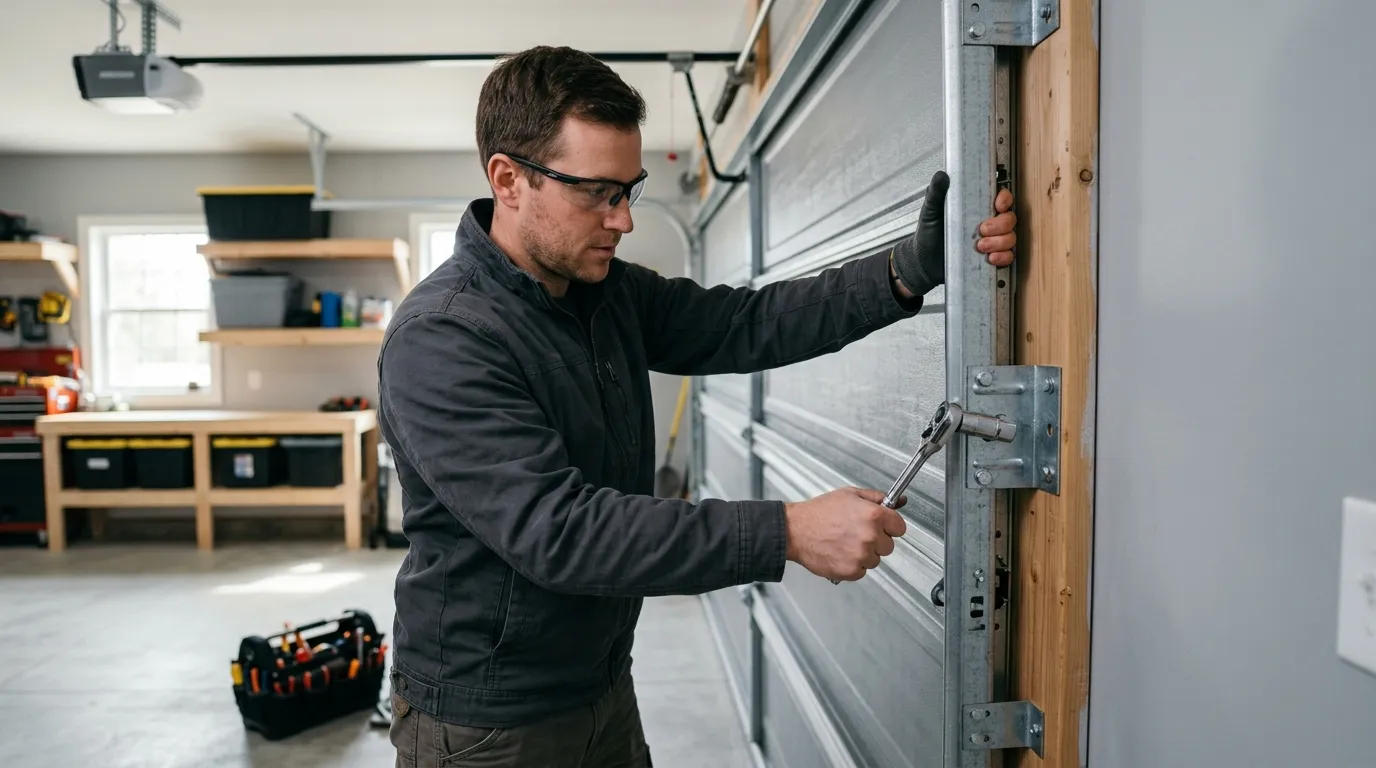
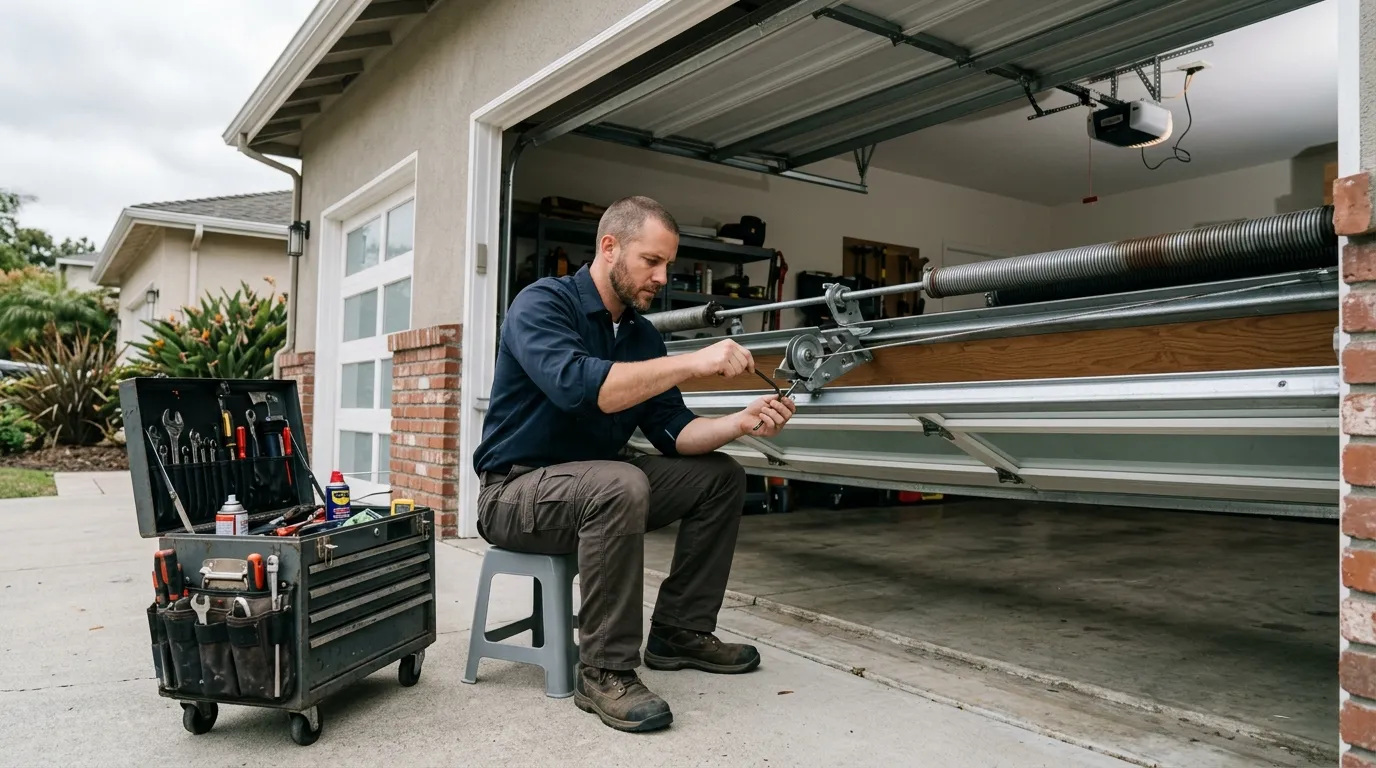
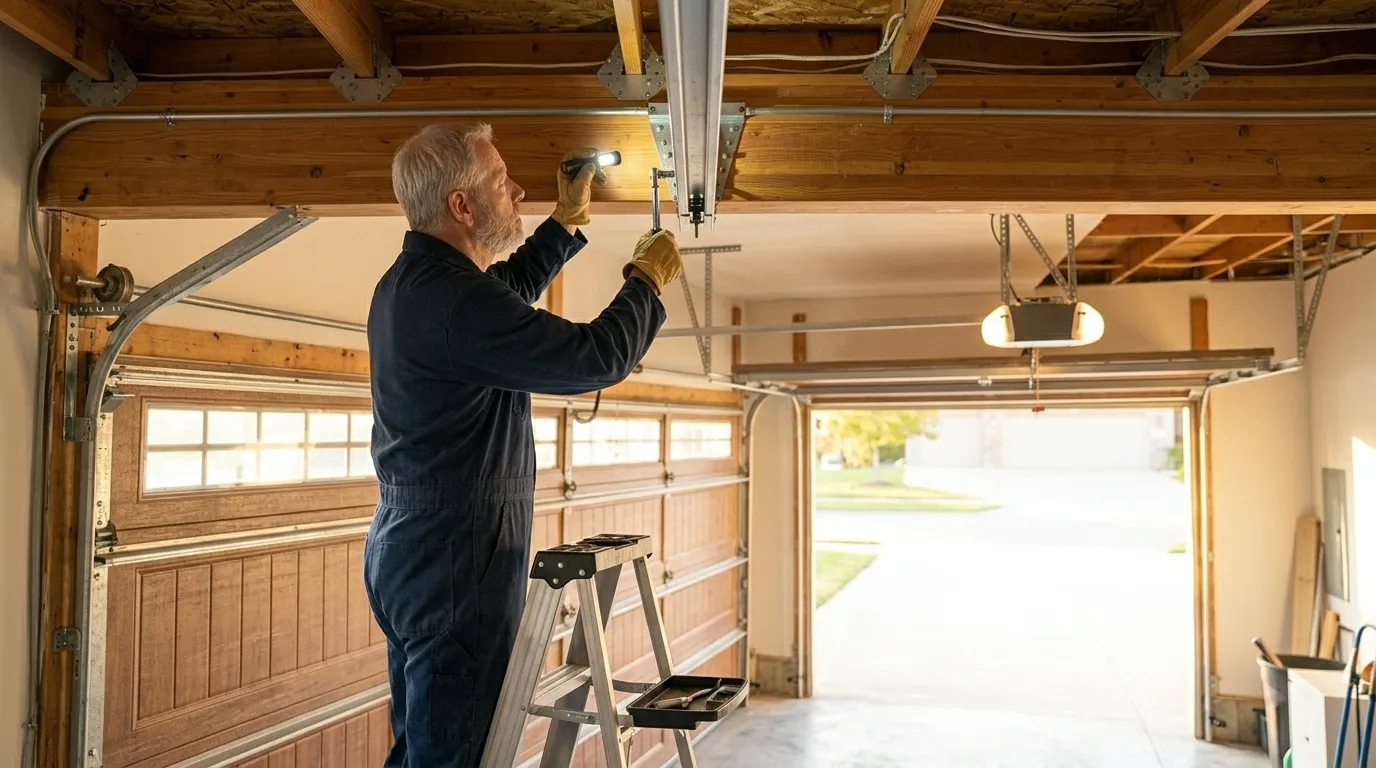
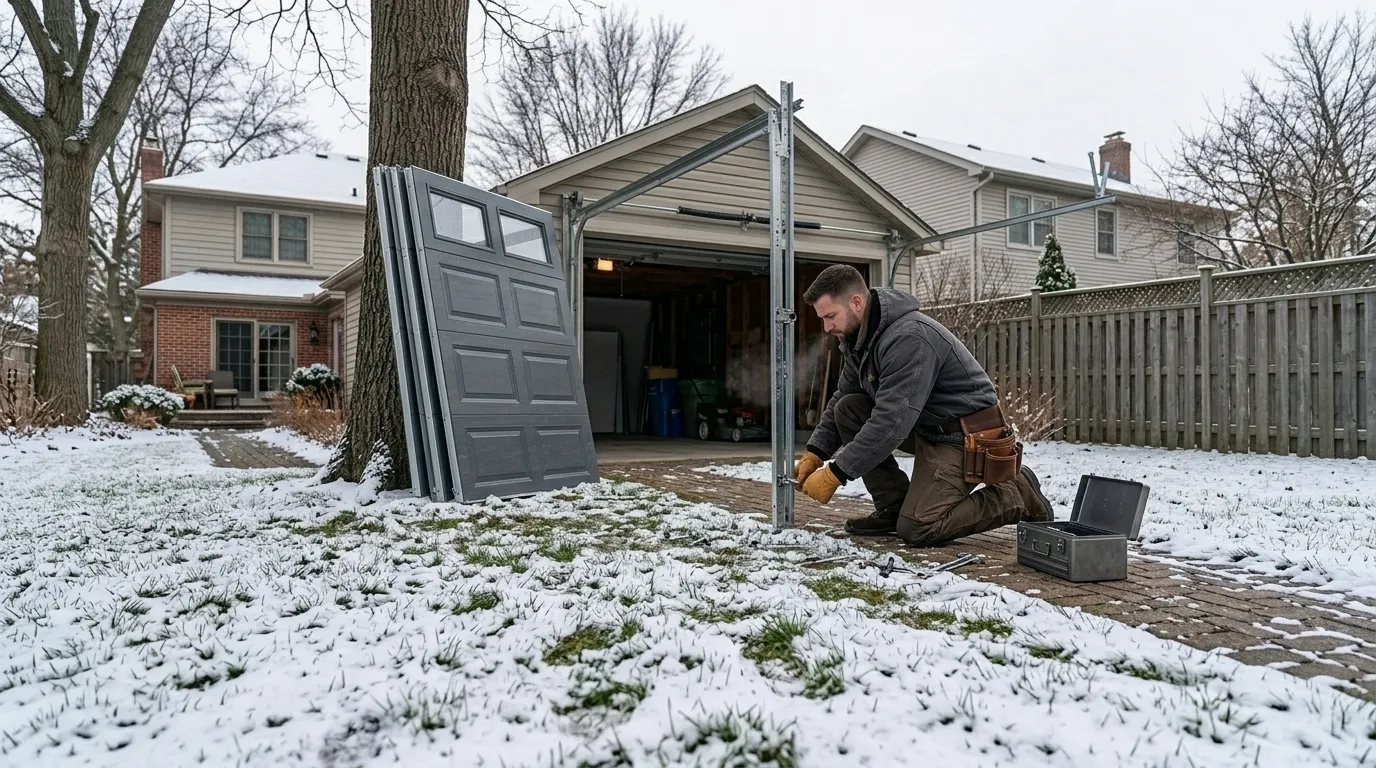
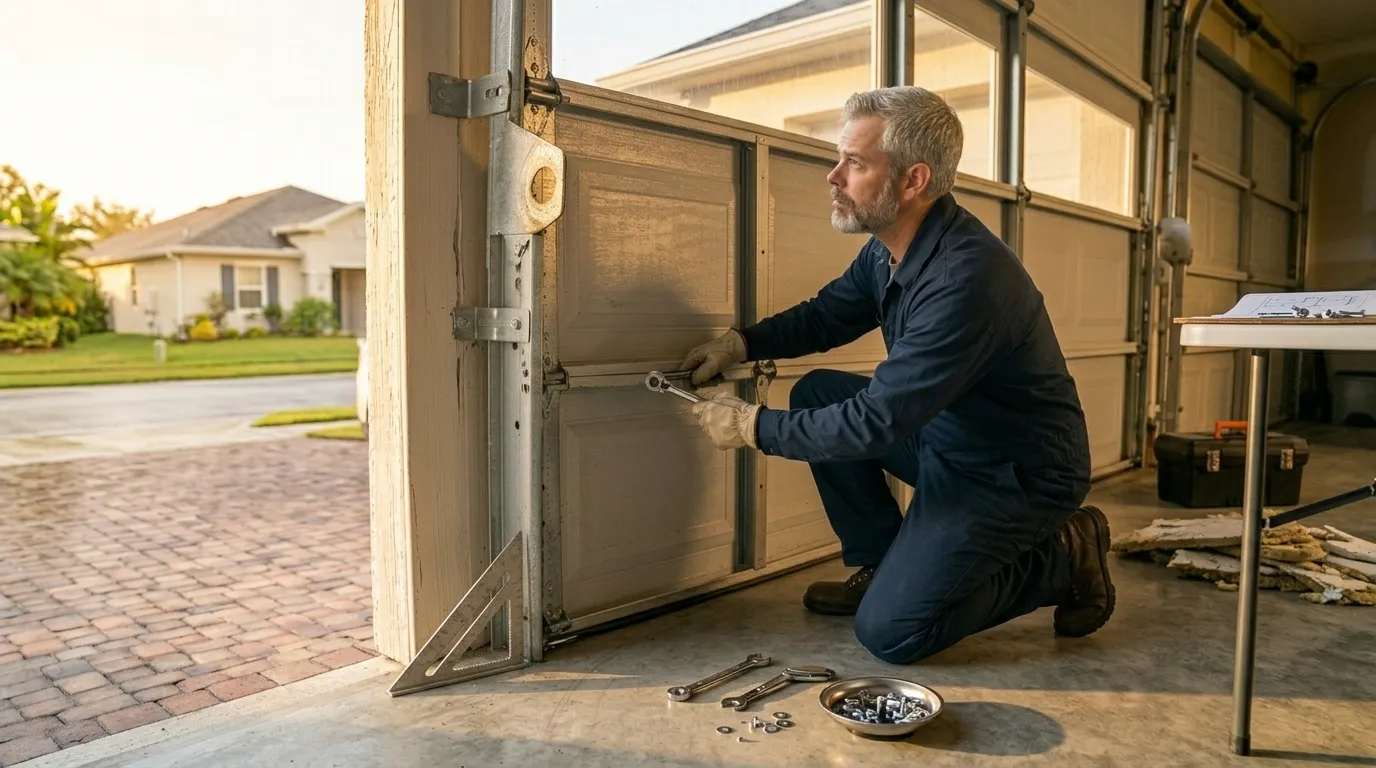
A cable job starts with releasing tension safely, which on most Beverly Hills doors means the torsion spring above the door, not the cable itself. We clamp the door in place, unwind the spring under control, then pull the old cable off the drum and bottom bracket. If the drum shows wear grooves or the bracket is rusted through, those get replaced along with the cable rather than reused, since a new cable on a chewed-up drum just fails again in a year. We check the track alignment while the door is open, since a cable snap often bends the bottom roller track on its way down. Then the new cable goes on, the spring gets rewound to the correct tension for that door's weight, and we run it up and down a dozen times watching the drum wind evenly before calling it done. One thing we won't do is patch a cable with a splice or a come-along clamp as a permanent fix. It holds for a week, then it's back on the floor, usually at a worse angle than before.
How Long You Are Without the Door
Once we're on site, a standard two-cable replacement on a single door is usually finished within the visit, not a return trip, assuming the drums and track don't need extra work. What can add time is finding the door has been running on a bent track or a cracked bottom bracket, which is common on original 1959-era hardware that's taken decades of the same cable stress. We travel from Manhattan Beach, roughly 12 miles out to Beverly Hills, so plan the visit around that drive rather than expecting a same-hour arrival. Until we get there, leave the door where it is. Don't try to force it up by hand.
Why It Happens Here
Beverly Hills sits in the same mild, temperate climate band as the rest of the coastal service area, so this isn't a story about weather beating up the hardware the way you'd get with hard freezes or heavy salt spray. It's a story about age. With a median build year of 1959, a large share of the roughly 14,263 households here are living with garage door hardware that predates modern galvanizing standards and modern spring-and-cable sizing charts. The moderate climate is actually why so much of this original gear survived this long at all, there's no ice cycling or heavy humidity swing accelerating the rust. But cable wire fatigues from cycling alone, opening and closing thousands of times, regardless of weather. A cable that's outlasted three or four opener replacements on the same door isn't unusual here, and it's usually close to the end of its life.